




Classical Revival Vase
A classical revival vase brings the architectural dignity of antiquity straight into a Victorian drawing room through bronze, porcelain and terracotta.
Classical Revival Vase
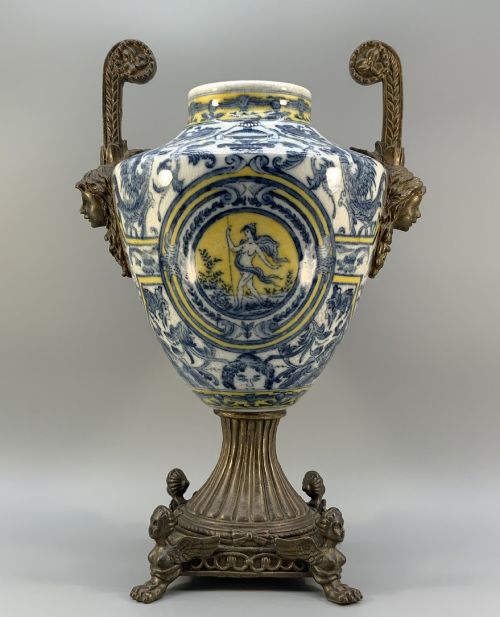
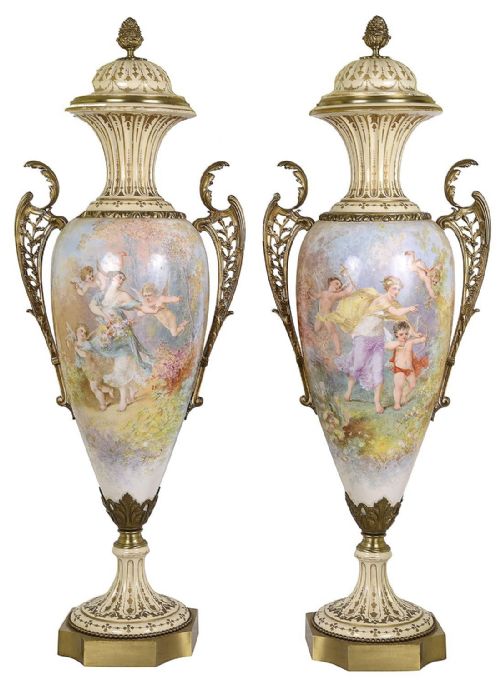
When you search for a classical revival vase, you enter a nineteenth-century world fascinated by antiquity, where European workshops reimagined Greek and Roman forms. The pieces available here range from grand bronze campana and Warwick urns to delicate porcelain lidded vessels.
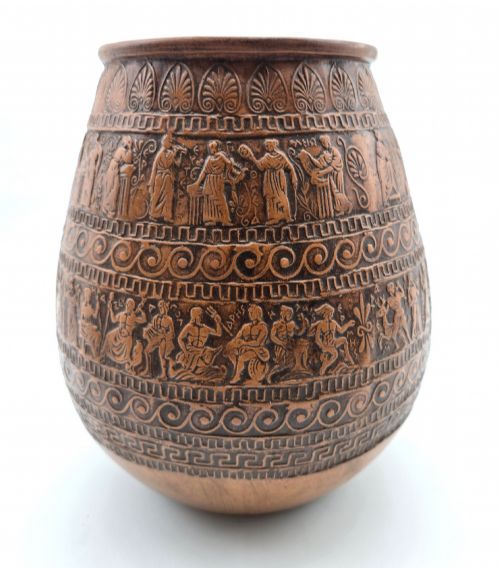
Victorian makers drew heavily on Grand Tour souvenirs brought back from Italy, translating ancient marble and bronze discoveries into domestic ornaments. You will frequently encounter Italian majolica, earthenware and Sevres style porcelain produced during the middle and late decades of the nineteenth century.
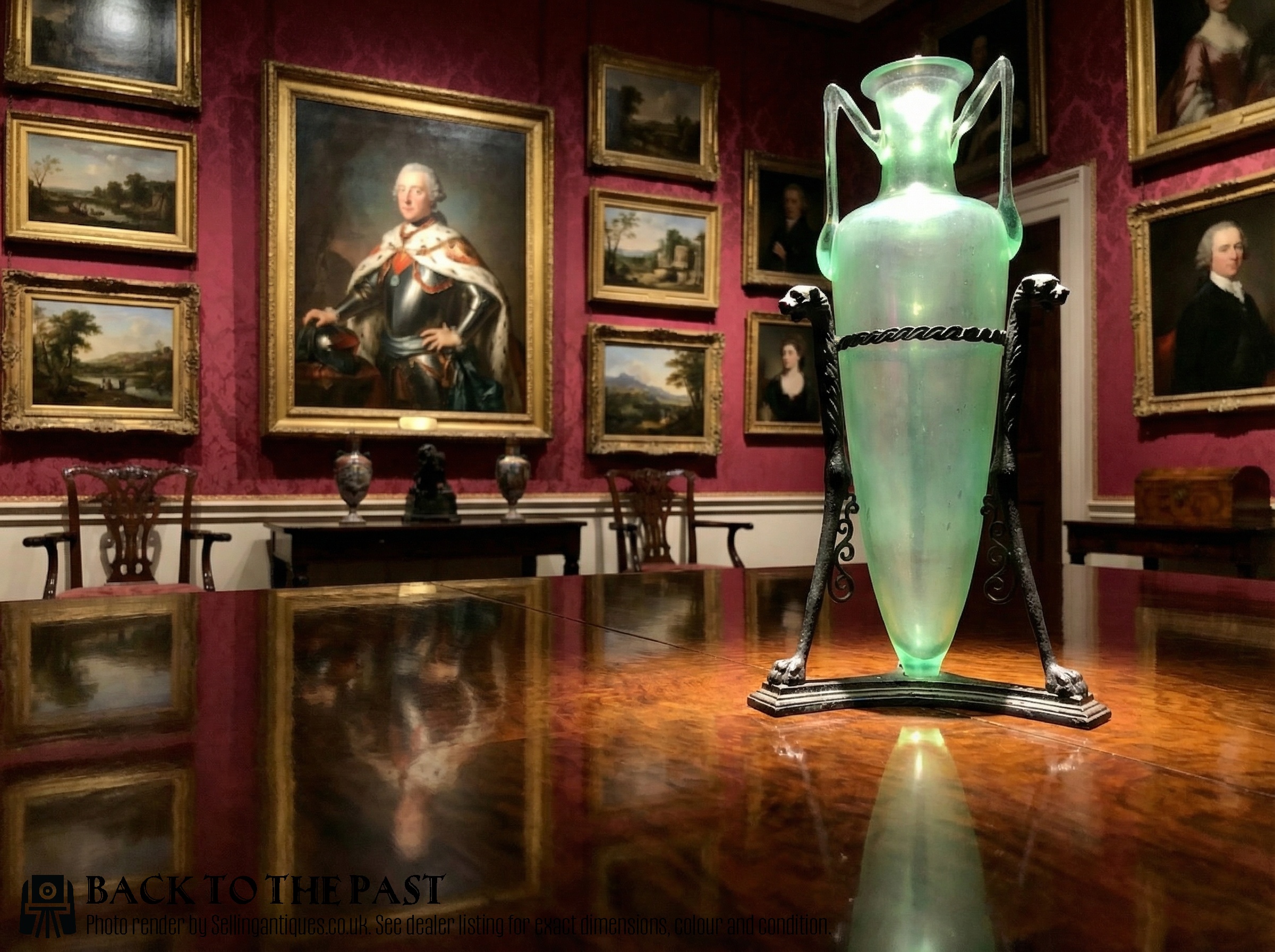
Forms stretch beyond standard vessels to include decorative ewers, tripod Atheniennes with glass amphorae, and occasional adaptations into table lamps. These objects served as scholarly statements of taste for Victorian collectors rather than mere flower holders.
Materials and construction
Foundry cast bronze forms the backbone of the heavier metal pieces, often enriched with gilt bronze or ormolu mounts to highlight classical friezes. These metal vessels frequently sit upon wooden pedestals or incorporate tripod supports cast in close imitation of ancient archaeological finds.
Ceramic pieces rely on porcelain, faience and majolica, painted with classical scenes and finished with fired enamel details. Glass appears through vitrified techniques and moulded bodies, capturing the translucent quality of ancient vessels through nineteenth-century chemical knowledge.
Grand tourists occasionally packed entire bronze tripod tables in their luggage to ensure their drawing rooms looked sufficiently Athenian.
Judging quality and execution
The division between ordinary production and superior work rests entirely on the crispness of the casting and the skill of the hand-painted decoration. Finer bronze urns display sharp relief in their classical figures and meticulous chasing to the metal surface, whereas lesser examples lose definition in the mould.
Ceramic quality shows in the depth of the glaze and the precision of the painted classical scenes rather than mere surface shine. Signed pieces and those demonstrating exceptional scale, such as towering pairs of lidded porcelain urns, command greater attention for their ambitious kiln work.
Samuel Alcock
The Classical Revival Vase Glossary
- Campana urn
- A bell-shaped vessel with a flared rim and foot, modelled directly from ancient marble wine coolers found in Roman excavations. These form a cornerstone of nineteenth-century decorative metalwork.
- Grand Tour
- The traditional journey through France and Italy undertaken by European nobility and wealthy Victorians to study classical art. Souvenirs purchased along the route generated a domestic market for antique-style vases.
- Majolica
- Tin-glazed earthenware associated with Italian Renaissance traditions and revived with enthusiasm by Victorian potters. The technique allows for vibrant polychrome painting across large decorative surfaces.
- Ormolu
- Finely ground high-carat gold applied to a bronze base through a mercury amalgamation process or later electroplating. It provides a rich, warm finish to mountings on urns and vases.
Classical Revival Vase: Frequently Asked Questions
What is a Grand Tour vase?
A Grand Tour vase is a nineteenth-century souvenir modelled after famous archaeological discoveries in Italy, such as the Warwick or Townley vases. Wealthy travellers bought these miniature bronzes and terracottas to display their classical education at home.
These pieces served as conversation starters in Victorian libraries and drawing rooms, connecting the modern interior to ancient Rome and Greece.
How do I date a classical revival vase?
Dating relies on identifying the manufacturing materials, such as mid-nineteenth-century terracotta or late-century majolica and porcelain. Stylistic clues, including Victorian registration marks or foundry stamps, help narrow the decade of production.
Most examples date from the Victorian era, specifically between eighteen-fifty and nineteen-hundred, matching the height of revivalist enthusiasm in Britain and Europe.
Were these vases used for flowers?
Many metal and ceramic urns served purely as decorative objects or architectural ornaments rather than utilitarian vessels. Some forms, particularly posy vases and lidded jars, accommodated short-stemmed floral arrangements.
Heavier bronze examples were designed to sit permanently on pedestals, mantelpieces or tables as sculptural statements of classical taste.
What does Sevres style mean?
Sevres style indicates porcelain decorated in the manner of the famous French royal manufactory, often featuring rich blue grounds and classical painted panels. Nineteenth-century makers across Europe adopted these distinct aesthetic codes to appeal to affluent buyers.
These porcelain pieces emphasise ornate gilding and painted figural scenes, contrasting with the austere look of bronze or terracotta antiquities.