




Neoclassical Tripod Stands
Neoclassical tripod stands are classical architectural forms raised on three legs, bringing sculptural presence and refined proportion to an interior.
Neoclassical Tripod Stands
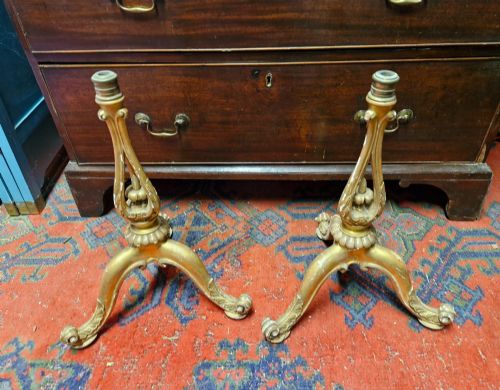
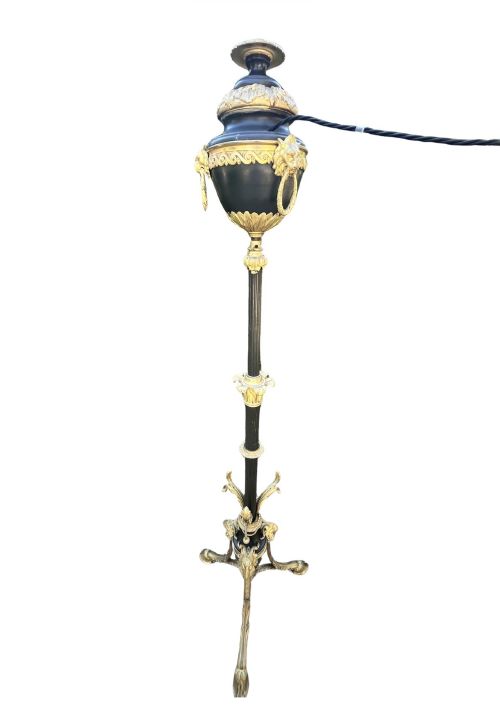
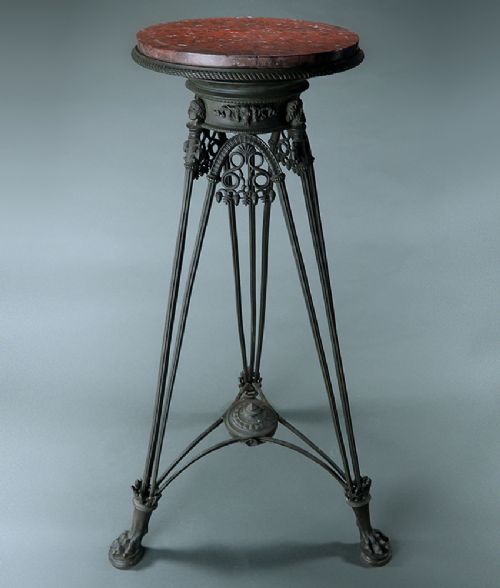
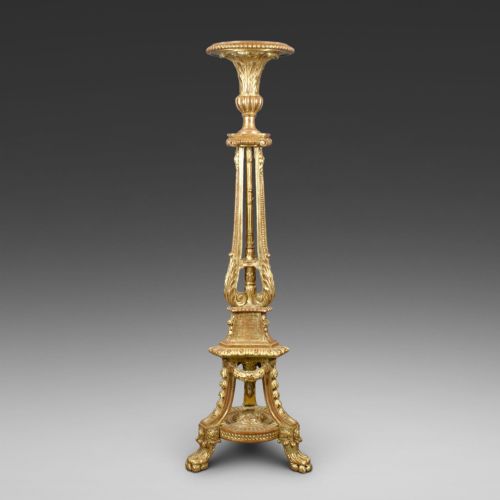
Neoclassical tripod stands combine classical antiquity with functional surfaces, taking the form of side tables, plant stands, pedestals, torcheres, lamp bases, floor lamps, gueridon tables, candelabra, and occasional tables. These pieces draw on historical design vocabularies ranging from French neoclassical and Regency to Victorian, Edwardian, and Etruscan Revival styles.
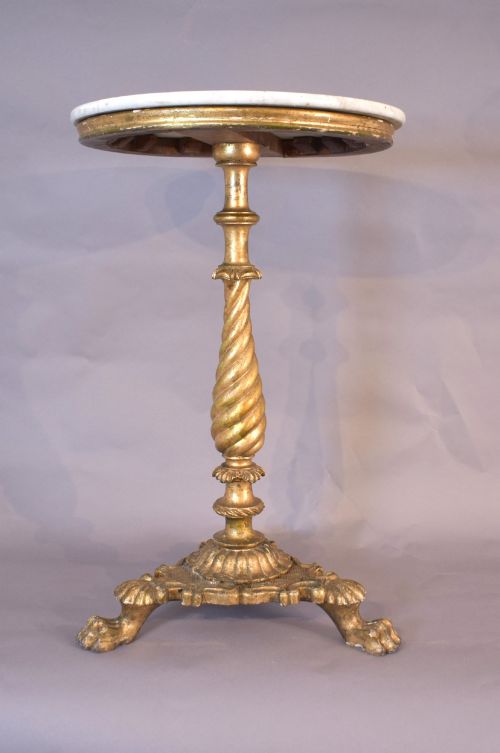
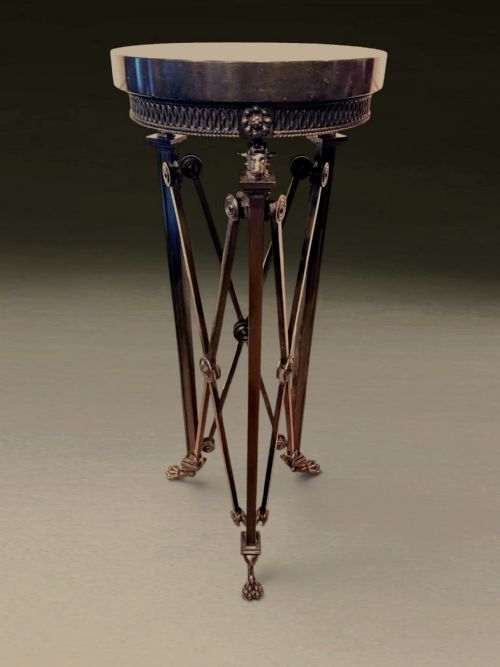
The versions most frequently met on this page include marble-topped gueridons, carved mahogany torchere stands, and patinated or gilt bronze tripod bases inspired by Greco-Roman design and Grand Tour souvenirs. Makers channel classical precedents through specific aesthetic lenses, producing items like Adam-style occasional tables, Athenienne forms, and pieces created after Weisweiler or Thomas Hope.
Forms span from the nineteenth century into the twentieth century, encompassing Regency, Victorian, and later revival periods. They serve diverse decorative purposes within a room, functioning as display surfaces for lamps, plants, and decorative objects while maintaining a distinct architectural silhouette.
How they were made
Construction relies on a combination of cabinet-making timbers and cast metals, utilising mahogany, satinwood, satin birch, and ebonised wood alongside giltwood, bronze, brass, and patinated bronze. Woods are shaped through carving and turning, whilst metals are cast and often finished with gilding or patination.
Stone elements feature prominently as inset tops, utilising marble to provide a contrasting textural surface to the wooden or metal frames beneath. Supporting structures employ three-legged tripod bases, which require precise joinery or metal casting to ensure stability beneath slender stems and decorative platforms.
Some bronze stands arrive accompanied by glass amphorae, ready to hold ancient waters or modern stems.
What varies in quality
The refinement of the carving and the crispness of the bronze casting determine the visual success of the stand. Superior examples exhibit deep, clean relief work on wooden foliage and sharp definition on classical mounts, whereas lesser pieces display softened details and simplified joints.
Material selection and surface finish drive the hierarchy of these objects, distinguishing between standard timber construction and richly figured veneers like satinwood, or between painted finishes and genuine fire-gilding and patination.
Thomas Hope·Weisweiler
The Neoclassical Tripod Stands Glossary
- Guéridon
- A small French table supported by one or more columns, often taking a round top and appearing in tripod formats during the neoclassical period.
- Torchere
- A tall, slender stand designed to support a light source, candle, or decorative object, frequently raised on three legs.
- Athenienne
- A tripod stand modeled after classical incense burners or washbasins discovered at archaeological sites like Pompeii and Herculaneum.
- Grand Tour
- A cultural journey undertaken by wealthy young Europeans that generated a demand for miniature bronzes and souvenir antiquities.
- Ormolu
- Gilded bronze mounts applied to furniture and decorative objects to add metallic contrast and classical ornament.
Neoclassical Tripod Stands: Frequently Asked Questions
What is a neoclassical tripod stand?
A neoclassical tripod stand is a small table, torchere, or plant stand supported by three legs and decorated with motifs drawn from Greek and Roman antiquity.
These pieces emerged from revivals spanning the nineteenth and early twentieth centuries, echoing archaeological discoveries and classical architecture.
Where were these stands placed?
Historically, they stood in drawing rooms, hallways, and libraries to display lamps, candelabra, urns, or decorative plants.
Their compact footprints allowed them to occupy corners and interstitial spaces without blocking circulation through a room.
How do I identify the period?
Dating relies on examining the timber species, the casting technique of the bronze components, and the specific revival style employed.
Regency and nineteenth-century pieces often display heavier classical proportions and distinct patination, while later Edwardian examples reveal different woodworking techniques.
Are marble tops original?
Many gueridons and occasional tables incorporate inset marble tops designed as an integral part of the neoclassical aesthetic.
Examining the underside and the fit within the wooden or bronze frame helps confirm how the stone relates to the base structure.