


Decorative Gilt Lamp Bases
These decorative gilt lamp bases bring warmth and metallic sheen to a room, spanning the nineteenth century up to nineteen-ten in various regional styles.
Decorative Gilt Lamp Bases
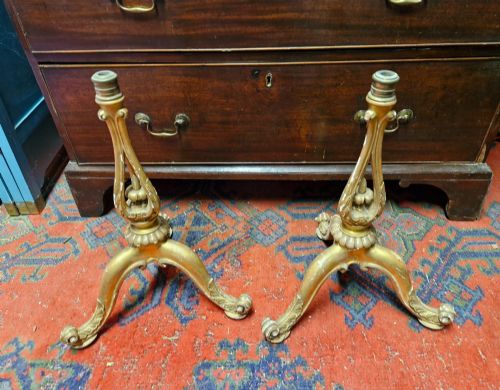
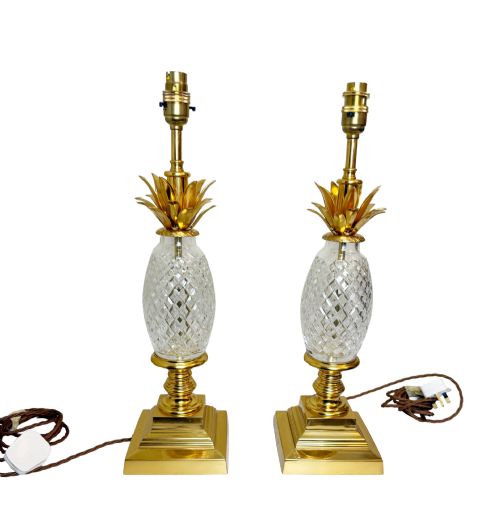
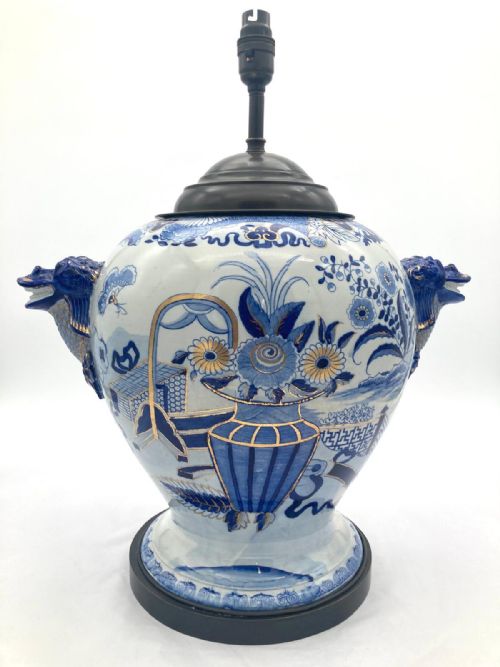
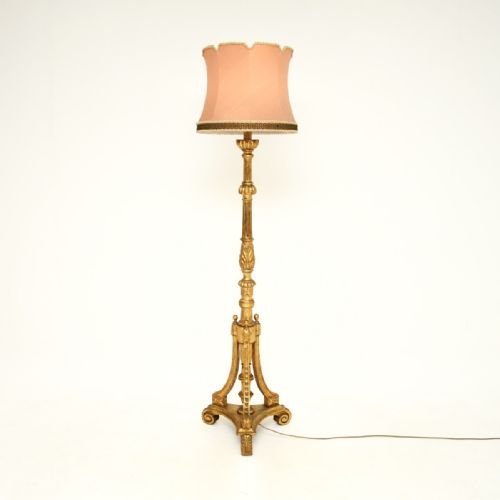
Decorative gilt lamp bases encompass table lamps, floor lamps, and standard lamps shaped from earlier vessels, candlesticks, and urns. Buyers searching for decorative gilt lamp bases encounter converted nineteenth-century porcelain, ironstone, and tea-canisters alongside carved wooden floor standards.
The selection ranges from compact pairs of tripod and urn designs to large floor-standing columns reaching substantial heights. Many pieces originate from French workshops or incorporate Asian ceramics mounted in metal mounts during the nineteenth century.
How they were made
Maker's ateliers employed materials such as gilt bronze, ormolu, brass, and gold leaf applied to timber, marble, and crystal components. Metal casting and fire-gilding techniques created rich metallic surfaces on torch bases, classical urns, and tripod supports.
Wood elements received layers of giltwood or black japanned tin with hand-painted Chinese style decoration. Artisans frequently adapted existing items like porcelain vases and ironstone vessels by drilling them to house electrical fittings.
Listings feature nineteenth-century materials including gilt bronze, ormolu, marble, fabric, lacquer, and gold leaf.
What varies in quality
Quality rests in the crispness of the cast metal ornamentation and the depth of the gilding across the ormolu and bronze surfaces. Superior examples display refined hand-chasing on mounts and well-preserved rock crystal or marble columns.
The integrity of the conversion from original object to lamp affects the overall balance and proportion of the piece. Matching pairs demonstrate greater consistency in patination and decorative detail than assembled items.
The Decorative Gilt Lamp Bases Glossary
- Ormolu
- Gilt bronze produced by applying a mercury and gold amalgam to a bronze base and heating it. This technique creates a durable golden finish characteristic of French decorative objects.
- Japanned
- European imitation of East Asian lacquer work achieved through layered varnishes and decorative painting. It appears on tin tea-canister bodies and wooden furniture.
- Tripod base
- A three-legged support structure providing stability for tall lamp columns and torch standards. These structures often feature curved or claw feet.
- Famille rose
- A Chinese ceramic palette dominated by opaque pink enamel introduced during the Qing dynasty. Vases decorated in this style frequently appear mounted as lamps.
- Standard lamp
- A tall floor-standing lighting fixture designed to illuminate a room from a vertical shaft. They often incorporate heavy weighted bases to support extended heights.
Decorative Gilt Lamp Bases: Frequently Asked Questions
What periods do these lamps come from?
The available pieces date predominantly from the nineteenth century, including Regency, Victorian, and early twentieth-century eras.
Maker styles range from French Rococo and Belle Epoque to Chinoiserie and Japanese Meiji designs.
Are these original lamps or conversions?
Many examples began life as vases, tea-canisters, candlesticks, or wine tables before conversion into lamps.
This adaptive history means historical vessels now serve a dual decorative and functional purpose.
How do I place a floor lamp in a room?
Floor standards and standard lamps provide vertical presence and ambient lighting in corners or beside seating areas.
Their substantial height and gilded surfaces help balance heavier nineteenth-century furnishings.
What materials make up the bases?
Construction materials include cast gilt bronze, ormolu, brass, and gold leaf on wood.
Combinations frequently pair metal mounts with marble, crystal columns, porcelain, or lacquered tin.