

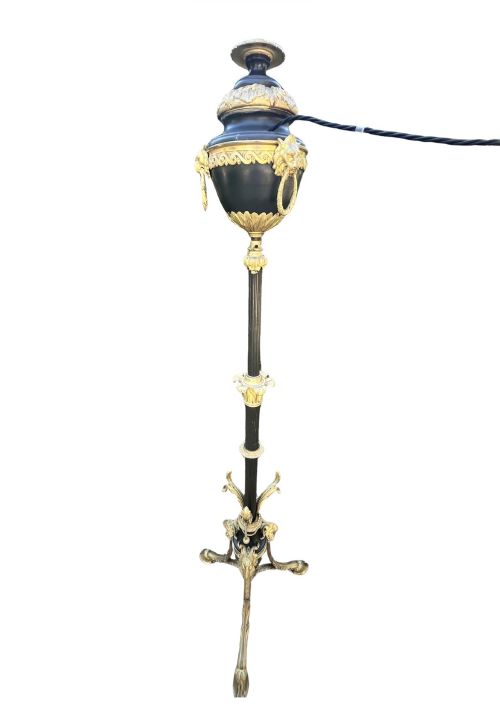
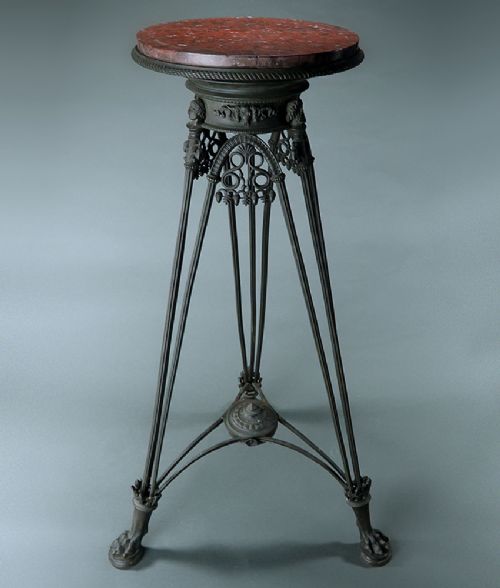


Bronze Tripod Stand
A bronze tripod stand brings classical or archaic form to a room, offering a sturdy yet elevated base for displays, lighting, or burning incense.
Bronze Tripod Stand
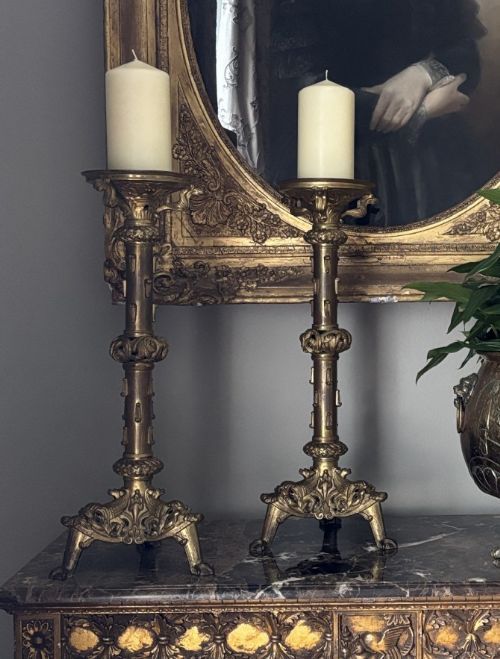
When you search for a bronze tripod stand, you encounter a variety of forms including plant stands, side tables, candlesticks, censers, and floor lamps spanning multiple centuries. The selection ranges from Chinese archaic and Qing dynasty ritual pieces to Regency and Victorian classical revivals, as well as Grand Tour souvenirs.
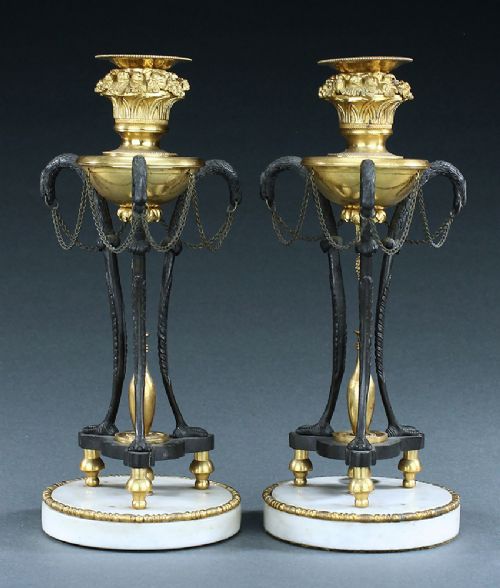
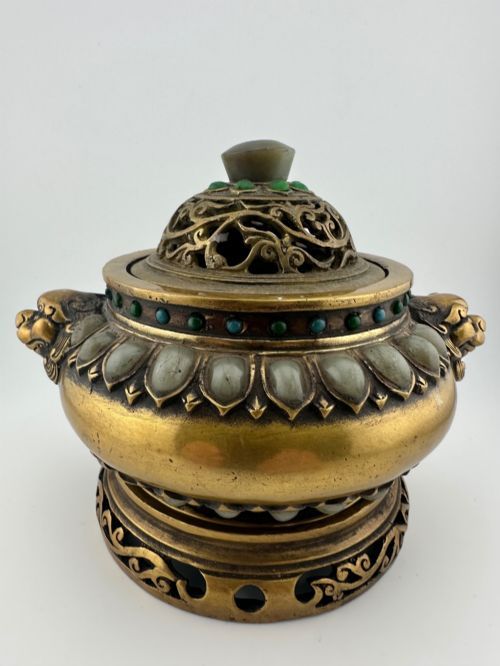
You are most likely to meet pieces modelled on ancient Greco-Roman or Etruscan designs, such as the Athenienne, alongside Asian bronze censers complete with matching hardwood stands. These objects bridge decorative utility and classical sculpture, serving as focal points in period interiors.
The materials paired with the bronze vary by origin and era, incorporating marble tops, glass inserts, or exotic hardwoods like zitan and custom timber bases. This combination of cast metal and secondary materials defines the practical function of each piece, whether it supports a table top or elevates a burner.
How they were made
Construction relies heavily on traditional casting methods, resulting in finely cast patinated bronze, gilt bronze, or ormolu details that catch the light. Metal components are frequently paired with carved hardwood stands, inset marble slabs, or blown glass elements.
Makers utilised patination techniques to achieve deep, rich surface tones on the bronze, contrasting with the pale grain of marble or the dark finish of zitan and hardwood. Assembly often involves threaded or pinned joints to secure the three legs to the central ring, bowl, or platform.
Bronze Tripod Stand Retail Price Guide 2026
Typical asking prices for bronze tripod stand among the pieces listed under this phrase on Sellingantiques today, from the lower quarter to the upper quarter. They describe what is for sale here now, not the wider market.
Listings feature periods spanning from the sixteenth century to the mid-twentieth century, with strong representation from the Regency and Victorian eras.
What varies in quality
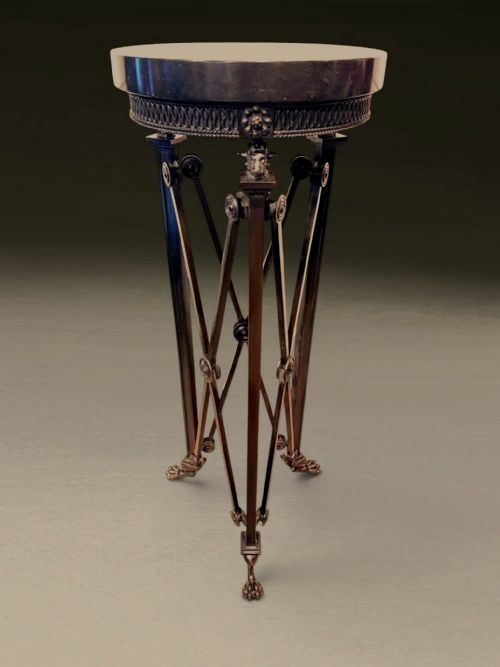
The sharpness of the cast ornament dictates the visual success of the piece, distinguishing finely chased surfaces from softer, more generalised production. Attention to detail in the animal paw feet, masks, or archaic strapwork reveals the skill of the original foundry.
The integrity of the partnership between the bronze element and its associated stand or top marks a higher grade of object. Original custom components, such as a matched zitan or hardwood base, retain the structural and aesthetic harmony intended by the maker.
The Bronze Tripod Stand Glossary
- Athenienne
- A classical tripod stand taking the form of a ceremonial incense burner or wash basin, popular during the Regency and French Neoclassical periods. These pieces often feature three slender legs terminating in animal paw feet.
- Censer
- A vessel used for burning incense, frequently cast in bronze with ritual archaic motifs and paired with a fitted wooden stand. They appear in Ming and Qing dynasty forms with intricate handles and covers.
- Guéridon
- A small circular table supported by a column or three legs, often topped with marble during the nineteenth century. The form draws on French design principles and frequently incorporates patinated bronze frameworks.
- Grand Tour
- A nineteenth-century travel phenomenon that produced miniature bronzes and architectural souvenirs for European travellers. These items often emulate classical antiquities discovered in Italy.
- Archaistic
- A style that consciously imitates ancient or archaic art forms, common in Chinese bronzes referencing early ritual vessels. This aesthetic values ancient vessel shapes and symbolic surface decoration.
Bronze Tripod Stand: Frequently Asked Questions
What were bronze tripod stands used for?
These pieces served various domestic and ritual functions across different cultures and periods. In classical European interiors, they functioned as candlesticks, torchieres, or small side tables holding glass and marble.
In Asian traditions, comparable tripod forms operated as ritual censers for burning incense, supported by custom hardwood stands to protect fine surfaces.
How do I style a bronze tripod stand?
A bronze tripod stand works effectively as a standalone sculptural accent or a functional surface in a traditional room. Marble-topped guéridons hold small decorative objects, while floor-standing versions provide ambient illumination.
Pairing a bronze censer with its original wooden stand creates a balanced focal point on a low table or cabinet.
How can I tell the period of a bronze tripod?
Dating relies on examining the casting technique, patination style, and stylistic revival markers such as Regency classical proportions or Victorian eclecticism. Tool marks, wear patterns, and the integration of secondary materials like hardwood or marble provide further chronological clues.
Comparative study of known nineteenth-century Grand Tour items and eighteenth-century Qing dynasty pieces helps establish specific eras.
Are the stands usually original to the bronzes?
Many Asian censers and certain European vessels retain their custom-made hardwood or marble components, which were designed specifically to fit the bronze base. Checking for proportional harmony and matching wear helps confirm the relationship between the metal body and its stand.