




Dark Bronze Pedestals
Dark bronze pedestals bring classical weight and rich patination to a room, lifting sculptures, lamps and urns onto architectural footings.
Dark Bronze Pedestals
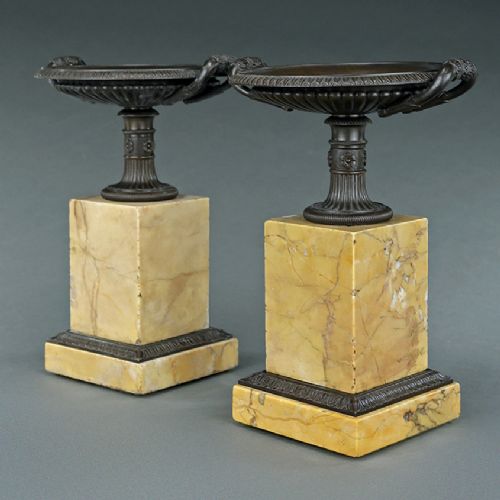
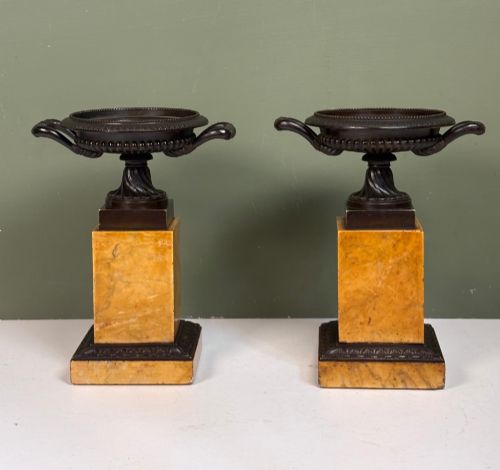
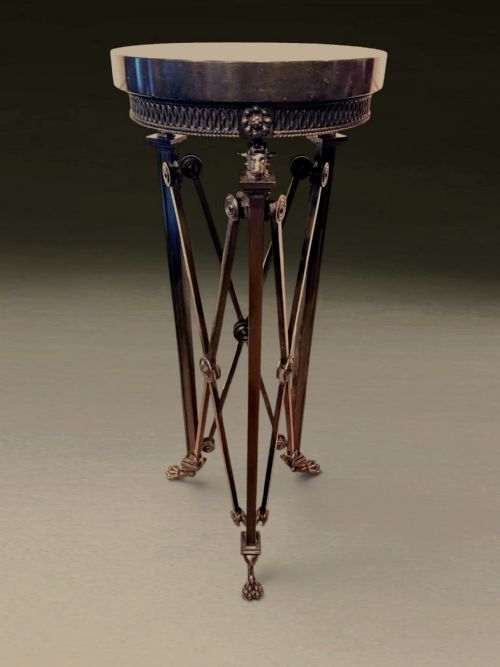
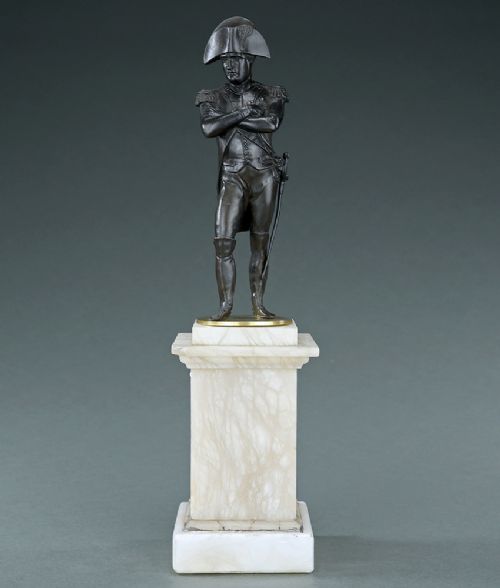
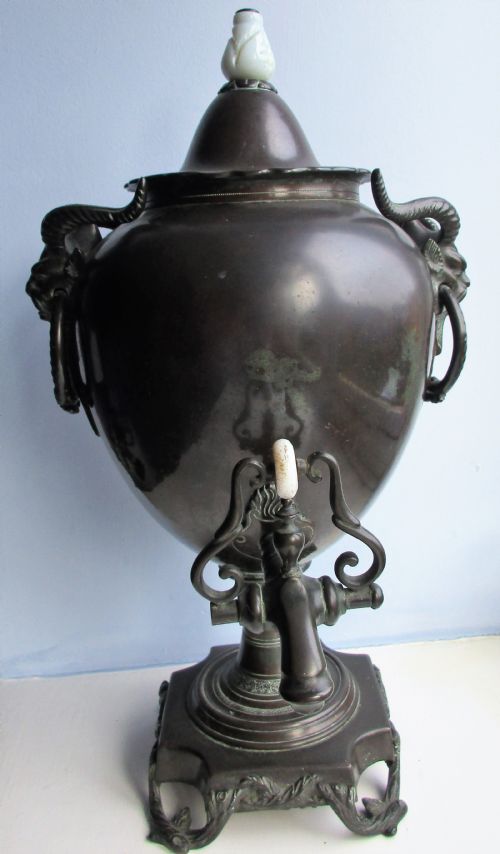
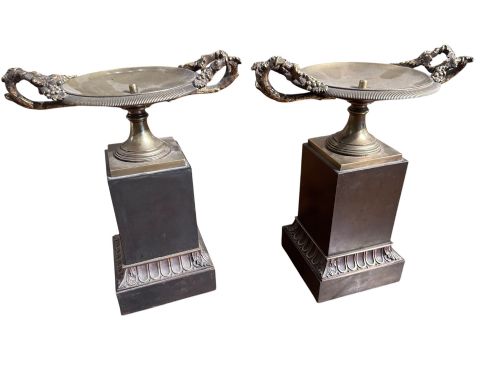
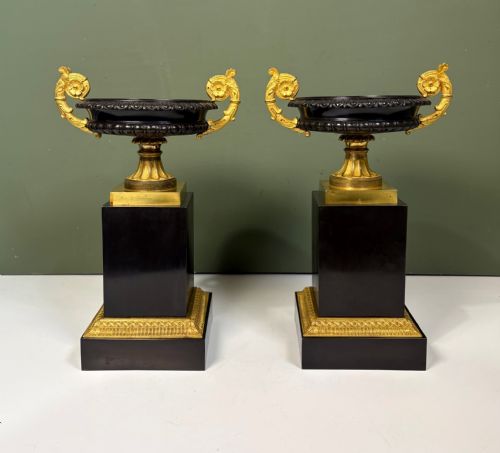
Dark bronze pedestals are substantial architectural supports and display stands designed to elevate decorative objects like urns, tazzas, and sculptures. When you search for dark bronze pedestals, you encounter pieces rooted in the nineteenth century, drawing heavily on Regency, Victorian, and French Empire styles.
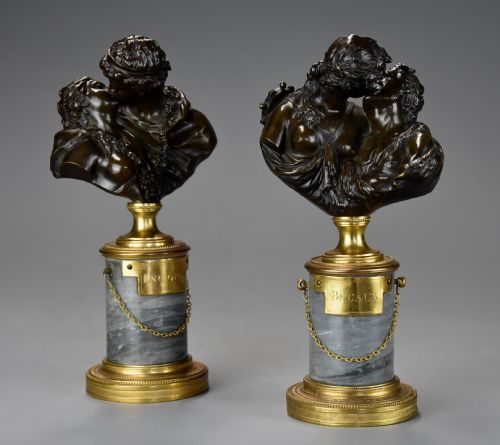
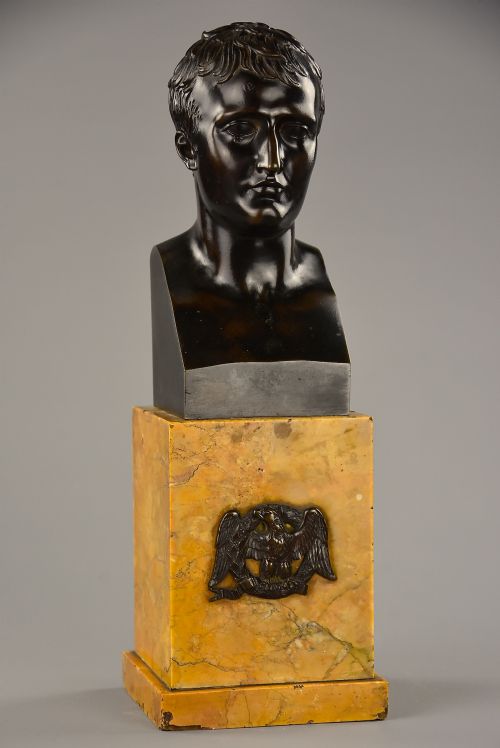
The material vocabulary of these pieces extends beyond simple metal casting. You will regularly find dark bronze combined with contrasting white or coloured marble bases, polished mahogany, gilded brass, or patinated slate, creating a disciplined neoclassical profile.
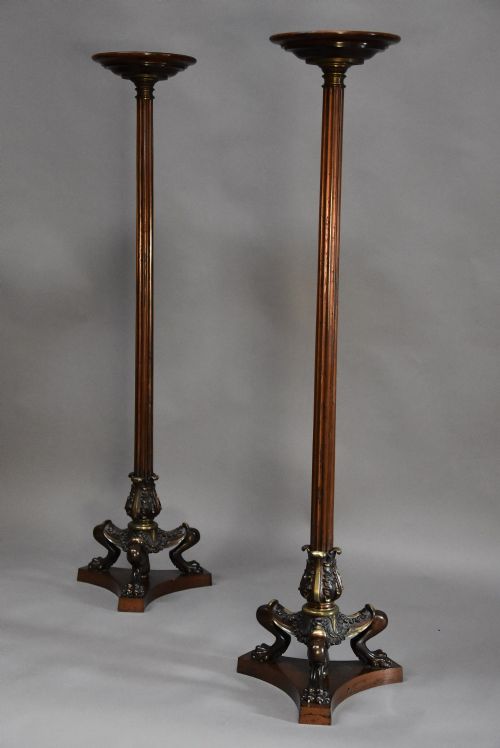
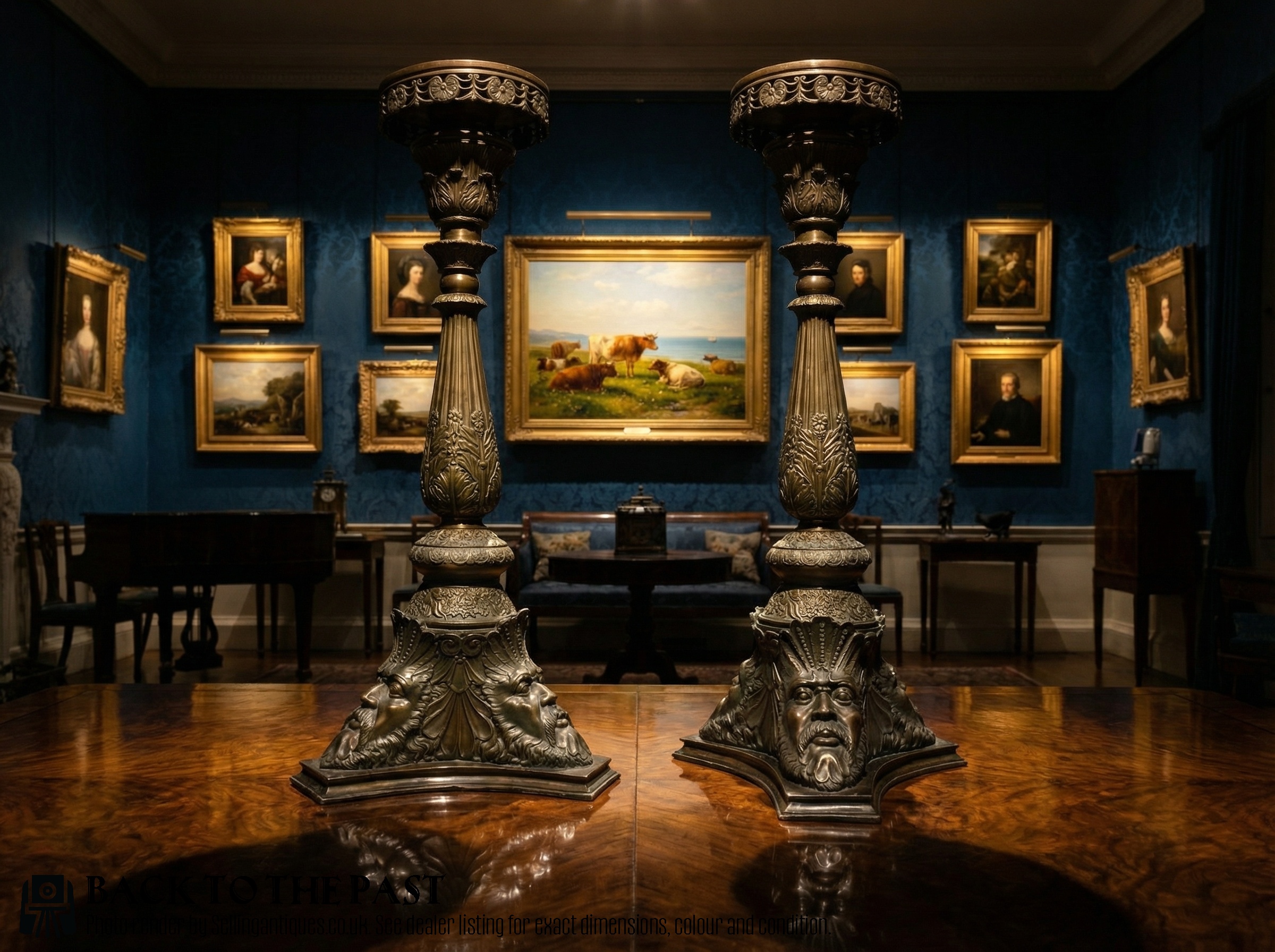
Makers of the period often turned to classical antiquity for their vocabulary, producing columnar stands, stepped plinths, and torchere forms that recall archaeological finds brought home from Grand Tour travels.
Materials and Construction
The construction relies on the union of heavy cast bronze with dense secondary materials like marble, slate, and seasoned hardwoods. Foundry workers utilised lost-wax or sand-casting techniques to achieve crisp architectural mouldings and figural reliefs, which were then treated with dark chemical patinations.
Ormolu mounts, gilded brass accents, and turned wooden columns provide structural contrast to the dark patinated bronze surfaces. Joinery on the timber elements and secure pin-fixings through stone bases ensure these heavy supports remain stable under weighty decorative objects.
Listings feature nineteenth-century materials including patinated bronze, white marble, mahogany, and gilded brass.
Judging Quality and Execution
Quality in these supports is determined by the crispness of the bronze casting and the depth of the hand-applied patination. Superior examples show refined chasing work on the metal surface, where details remain sharp rather than softened by worn moulds.
The selection of the accompanying materials dictates the overall calibre of the piece. Finely figured mahogany, solid architectural marble without unsightly repairs, and heavy, well-balanced bronze components distinguish masterwork stands from more utilitarian nineteenth-century productions.
Emile Guillemin·Jean Antoine Houdon·Sir Thomas Brock·E. Villanis
The Dark Bronze Pedestals Glossary
- Patinated bronze
- Bronze that has been treated with chemical solutions to produce a dark, aged surface finish. This treatment protects the metal while giving it a deep, historic tone.
- Campana
- A bell-shaped vessel form derived from ancient Roman pottery. These profiles are frequently utilised in classical urns and pedestals.
- Torchere
- A tall stand or pedestal originally designed to support a torch or candle lamp. Nineteenth-century examples often take the form of slender columns or figural shafts.
- Tazza
- A shallow cup or vase set upon a pedestal foot. They appear frequently in neoclassical table arrangements and grand tour collections.
- Ormolu
- Gilt-bronze mounted onto furniture, clocks, or decorative stands. The technique involves applying a mercury-gold amalgam to a bronze base.
Dark Bronze Pedestals: Frequently Asked Questions
What periods do these pedestals represent?
The pieces span the nineteenth century, drawing on Regency, Victorian, and French Empire aesthetics.
They reflect the nineteenth-century passion for classical antiquity and Grand Tour souvenirs.
How were these stands used originally?
They served to elevate lamps, bronzes, and decorative urns within formal nineteenth-century interiors.
Tall torchere versions held lighting fixtures, while smaller plinths displayed portrait busts and tazzas.
How do I care for bronze and marble?
Dust the bronze gently with a dry microfiber cloth and avoid harsh chemical cleaners that strip the dark patina.
Protect marble bases from acidic liquids and moisture by using protective pads beneath heavy objects.
Are these pieces strictly decorative?
While primarily designed to elevate art objects, many incorporate functional elements like adjustable mirrors or lamp wiring.
Their robust construction allows them to support substantial weight without structural compromise.