

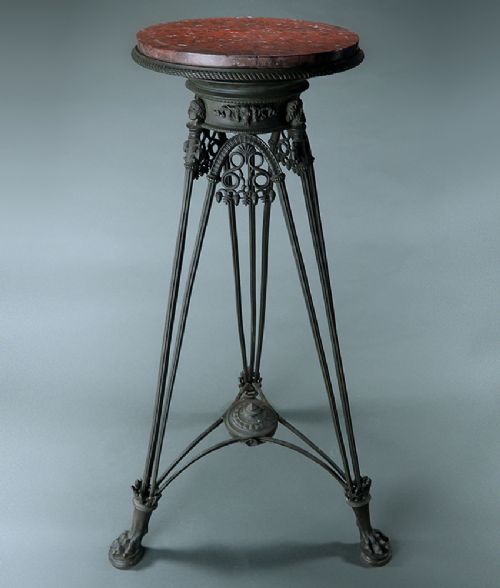
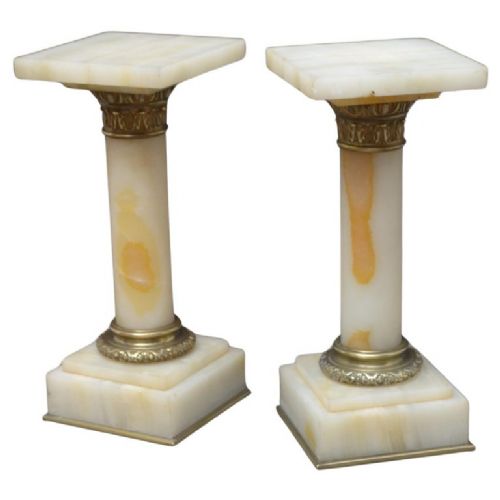


Bronze Display Pedestals
These bronze display pedestals elevate sculpture and porcelain, bringing classical dignity and decorative presence to interior spaces.
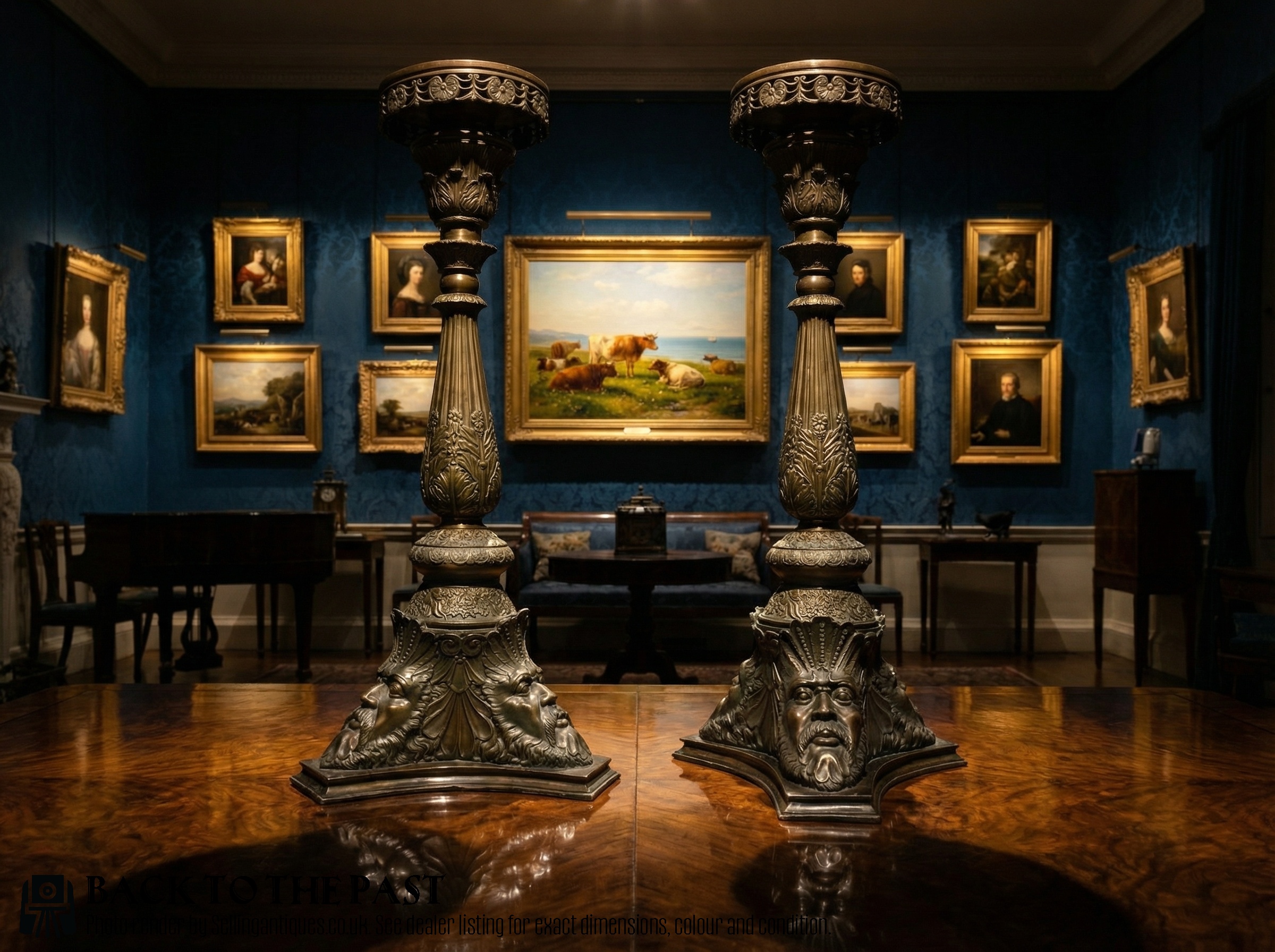
Bronze Display Pedestals
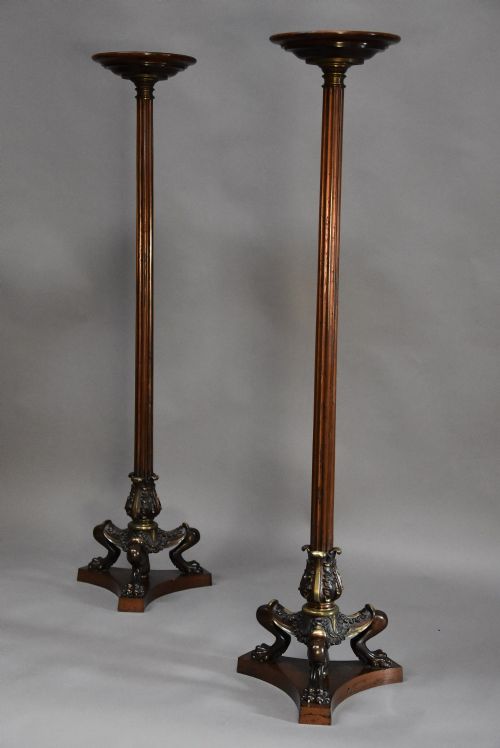
Bronze display pedestals provide a sturdy and decorative platform for raising objets d'art, urns, and figures to eye level. When searching for bronze display pedestals, collectors frequently encounter tall columns, torcheres, and stands designed in the nineteenth century.
The selection ranges from slender nineteenth century shafts to substantial pairs featuring classical proportions and decorative mounts. These architectural supports incorporate varied forms including fluted columns, square plinths, and revolving display tops.
Originating largely from French and English workshops, these pieces draw heavily upon neoclassical and rococo vocabularies. They serve both a utilitarian role as structural supports and a decorative function within formal interiors.
Materials and Construction
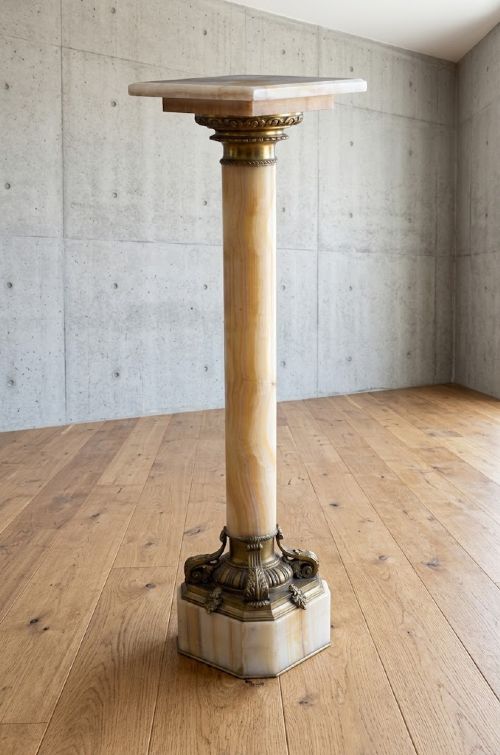
Foundry cast bronze and ormolu form the metal mounts, collars, and bases of these pieces, often combined with contrasting natural stone. Columns and shafts frequently utilise solid marble, banded onyx, or figured hardwoods such as mahogany, kingwood, and walnut.
Gilding, chasing, and patination transform the cast metal elements into crisp neoclassical ornamentation. Cabinetmakers and metalworkers joined timber cores with cast bronze capitals, bases, and foliate collars using traditional dowels and mechanical fasteners.
Assessing Quality and Execution
Superior examples distinguish themselves through the crispness of the bronze chasing and the weight and figuring of the marble or onyx shafts. Finer pieces demonstrate meticulous hand-finishing on ormolu mounts, where intricate foliage and classical motifs remain sharp and well-defined.
The architectural balance of the column and the integration between stone and metal components dictate the overall success of the piece. Master ateliers ensured that timber carcase work, parquetry veneers, and cast metal elements aligned seamlessly without visible structural compromise.
Mercier Frères·François Linke·George Smith·Thomas Hope
The Bronze Display Pedestals Glossary
- Ormolu
- Gilded bronze, typically produced by applying a mercury amalgam to cast brass or bronze. This technique creates a rich, durable golden surface characteristic of fine nineteenth-century French furniture mounts.
- Torchere
- A tall, slender stand originally designed to support a candle or lamp. In nineteenth-century interiors, these tall columns function primarily as display pedestals for sculpture.
- Guéridon
- A small, round table supported by one or more central columns. These stands often feature marble tops and decorative metal mounts.
- Plinth
- The flat, solid base upon which a column, pedestal, or statue rests. It provides structural stability and grounds the vertical composition.
- Neoclassical
- A style drawing inspiration from the classical art and architecture of ancient Greece and Rome. It emphasises symmetry, restraint, and classical architectural orders.
Bronze Display Pedestals: Frequently Asked Questions
What were bronze display pedestals used for?
These tall stands served to elevate decorative urns, bronze sculptures, and exotic plants within nineteenth-century drawing rooms and galleries. By raising objects to eye level, they allowed guests to admire fine details and craftsmanship more closely.
In addition to their practical function as supports, the stands acted as significant decorative statements in their own right, reflecting the owner's taste and the formal interior architecture of the period.
How do I style a bronze display pedestal at home?
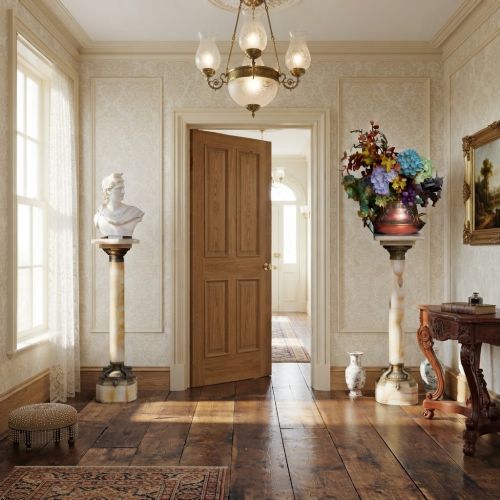
Place a single tall column in an empty corner to add verticality and architectural interest to a room. You can top it with a contrasting nineteenth-century bronze figure, a marble bust, or a porcelain vessel.
Ensure the weight of the object placed on top balances harmoniously with the proportions of the pedestal beneath. Pairing identical columns on either side of a doorway or fireplace creates a symmetrical, formal focal point.
How do I identify nineteenth-century pieces?
Examine the construction methods of the timber carcase and the patination on the bronze mounts. Nineteenth-century examples frequently employ dense hardwoods, hand-cut dovetails, and fire-gilt or cast ormolu collars that show genuine age and wear.
The integration of natural onyx and marble shafts, combined with neoclassical or French revival styling, points directly to workshop practices of the eighteen-fifties through the eighteen-eighties.
What is the difference between a torchere and a column?
A torchere typically refers to a tall, exceptionally slender stand designed specifically to lift a light source or sculptural piece high into the room. They often feature more ornate, decorative shafts.
Columns generally follow classical architectural orders such as Doric, Ionic, or Corinthian, featuring distinct capitals and bases. They provide a more robust, stone-heavy structural appearance suited for supporting heavy marble or bronze items.