




French Neoclassical Tripod
These french neoclassical tripod pieces are striking works of classical design, offering timeless proportion and utility for any interior.
French Neoclassical Tripod
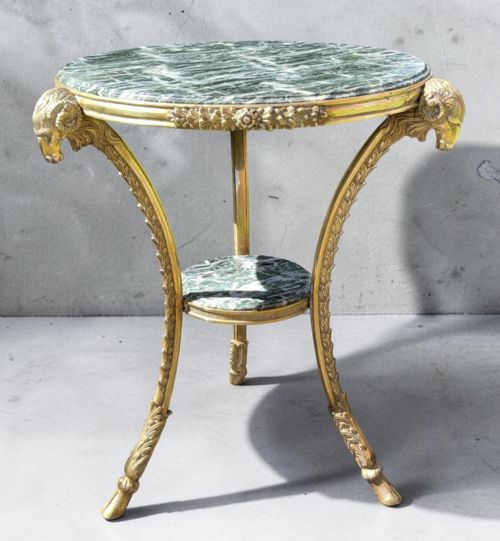
When you search for french neoclassical tripod, you encounter a selection of forms dominated by gueridon tables, side tables, and table lamps resting upon three-legged supports. The majority of these pieces originate from the nineteenth century, reflecting enduring revivals of ancient Greco-Roman and Etruscan aesthetics.
You meet diverse expressions of the form, from mahogany side tables featuring marble tops to cast brass standard lamps and gilt bronze candelabra. The selection spans distinct revivals including French Empire and Etruscan styles, each utilising the stability and visual balance of the three-legged base.
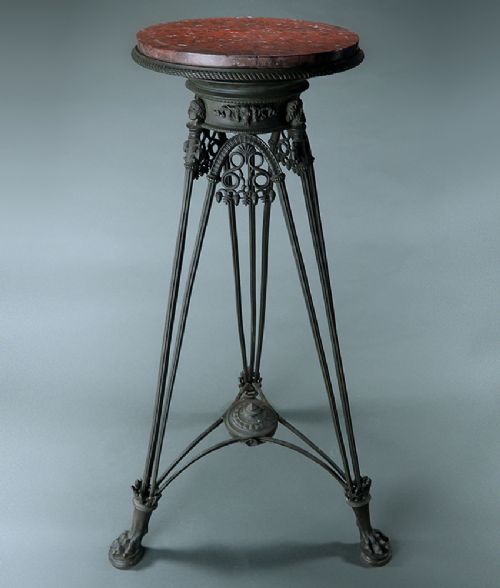
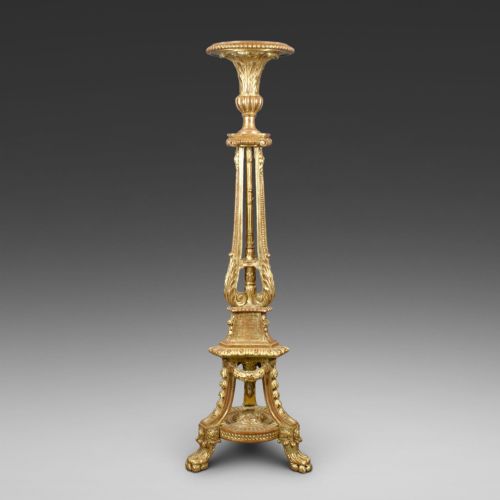
The objects serve multiple functions within a room, operating equally as centre tables, torcheres, or monumental lamp bases. Their defining characteristic remains the tripod structure, which elevates materials such as marble, mahogany, and patinated bronze with classical equilibrium.
How they were made
The construction of these items relies heavily on the combination of rich hardwoods such as mahogany with fine metals like ormolu, brass, and bronze. Artisans shaped structural elements through precise joinery and metal casting, frequently employing parcel-gilt-bronze or patinated bronze for decorative emphasis.
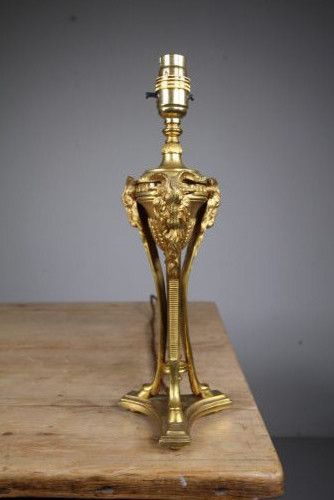
Surface ornamentation integrates carved giltwood and detailed cast metal elements, including rams heads, swan details, and laurel motifs. Marble slabs form inset tops for gueridon tables, requiring careful masonry to fit snugly within mahogany or brass framing.
Listings feature items dated across the nineteenth century, including specific years such as 1860, 1890, and 1900.
What varies in quality
The distinction between tiers of quality rests upon the crispness of the metal casting and the depth of the carving in wood elements. Superior examples display sharply defined rams heads and laurel swags, whereas lesser pieces exhibit softened details from worn or secondary moulds.
Material selection also dictates the standing of a piece, with dense marbles and heavy ormolu mounts indicating superior craftsmanship compared to lighter brass or copper alternatives. The integration between the three-legged base and the upper surface reveals the maker's structural competence.
The French Neoclassical Tripod Glossary
- Guéridon
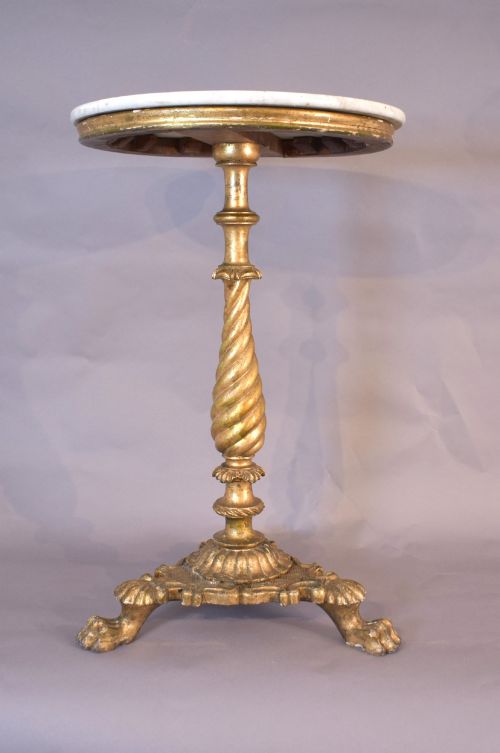
- A small circular table supported by a central column or, in this context, a tripod base. These tables frequently feature marble tops and were originally designed to hold candlesticks or small decorative objects.
- Ormolu
- Gilded bronze, where a finely ground high-carat gold-mercury amalgam is applied to a bronze object. This technique imparts a rich, durable golden finish highly characteristic of nineteenth-century decorative arts.
- Torchere
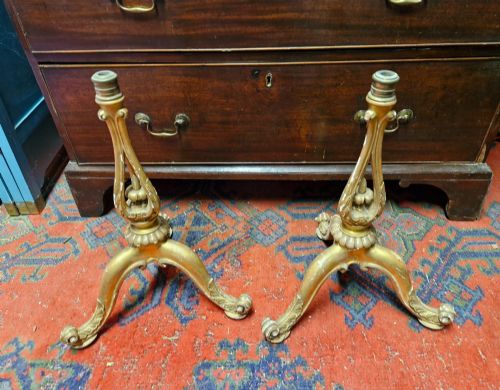
- A tall stand or candlestick holder designed to support a light source. In the evidence, these appear as carved gilt wood structures intended for elevated illumination.
- Etruscan Revival
- A nineteenth-century design style drawing inspiration from ancient Etruscan art and artefacts. It frequently incorporates specific classical motifs and archaeological forms into nineteenth-century furniture.
French Neoclassical Tripod: Frequently Asked Questions
What is a French neoclassical tripod table?
It is a small table, often a gueridon, supported by three legs and decorated with motifs drawn from ancient Greece and Rome. These pieces date predominantly from the nineteenth century.
They combine materials like mahogany, marble, and bronze to create balanced, symmetrical centerpieces for traditional and eclectic interiors.
How do I identify an Empire style tripod piece?
Empire style items typically feature dark mahogany timbers contrasted with bright ormolu or gilt bronze mounts. Common decorative motifs include swans, rams heads, and classical laurel wreaths.
The overall silhouette is architectural and imposing, reflecting the aesthetic preferences of the early nineteenth century.
Were these tripod stands originally used as lamps?
Many surviving pieces started life as tables, torcheres, or candelabra before being adapted later for electrical lighting. Standard lamps and table lamps in this category often incorporate antique bronze or brass bases.
This adaptation allows nineteenth-century metalwork and woodwork to function practically within modern domestic lighting schemes.
What materials are common in these pieces?
The listings show a frequent combination of cast brass, bronze, gilt bronze, and ormolu paired with solid mahogany. Marble tops, both white and black, are particularly prevalent on gueridon tables.
Carved giltwood also appears among the eighteenth-century style torcheres and standard lamps.
How do I care for marble-topped gueridon tables?
Marble surfaces require gentle cleaning with mild, pH-neutral soap and water to avoid dulling the stone or damaging the surrounding wood and metal frame. Avoid acidic cleaners entirely.
Polishing the mahogany and dusting the bronze mounts regularly will maintain the overall condition of the nineteenth-century materials.