

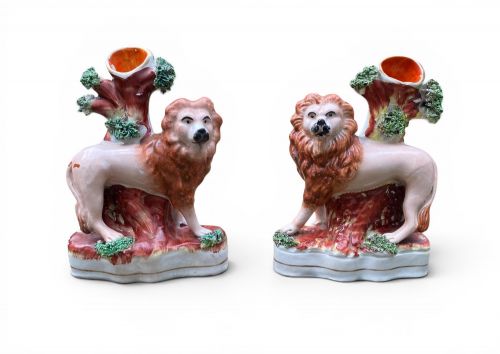


Pair Victorian Pottery Vases
When you search pair victorian pottery vases, you open the door to matched pairs of nineteenth-century ceramic vessels shaped for the mantelpiece.
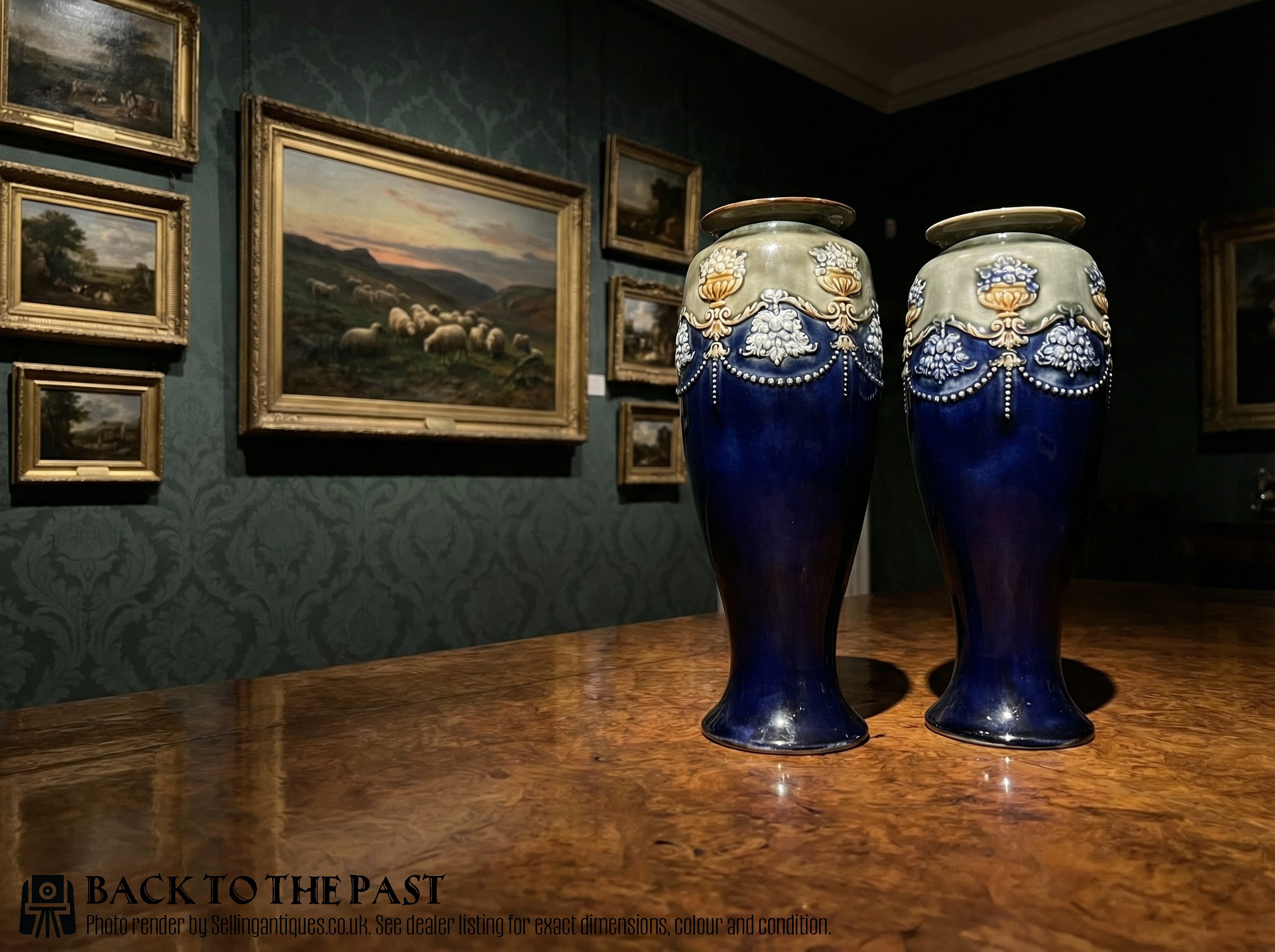
Pair Victorian Pottery Vases
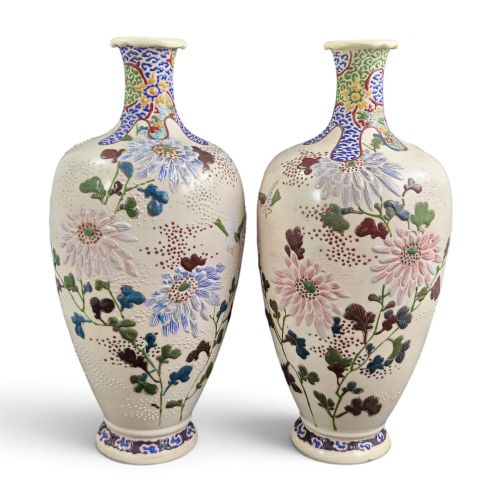
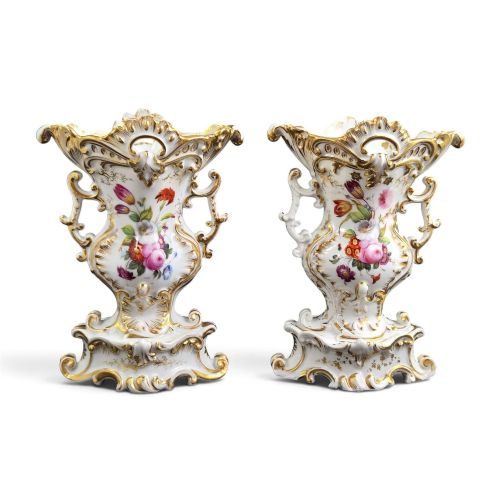
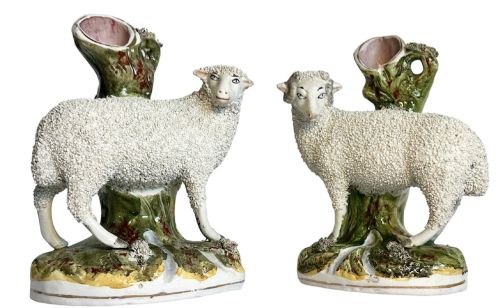
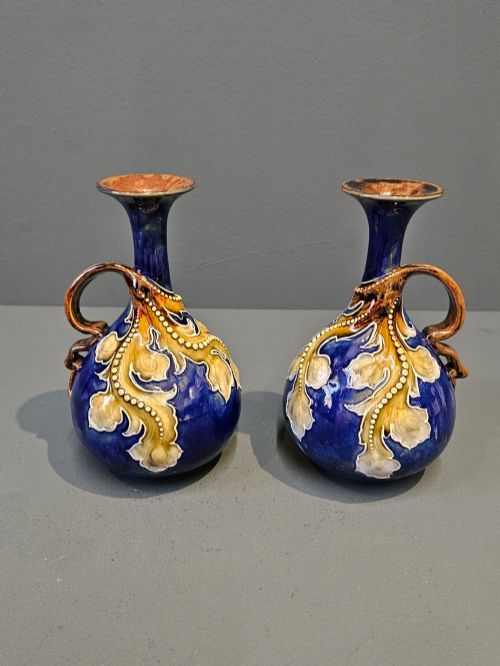
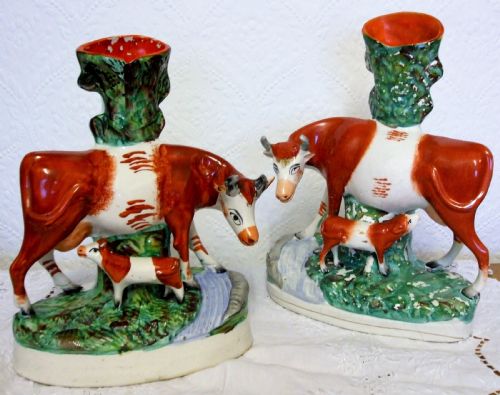
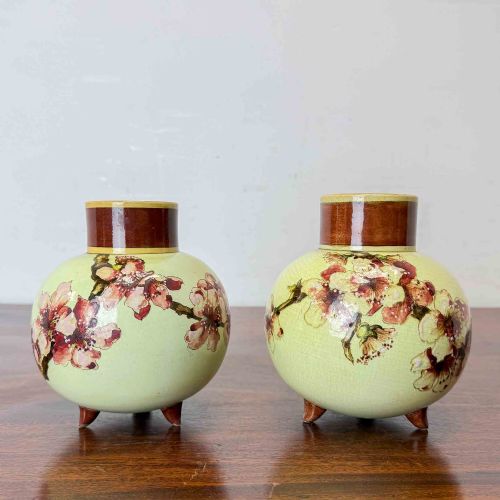
A pair victorian pottery vases brings together matching vessels produced in earthenware, stoneware, and porcelain during the nineteenth century. These objects include spill vases designed to hold wooden matches, decorative jars, and baluster shapes meant for symmetrical mantelpiece display.
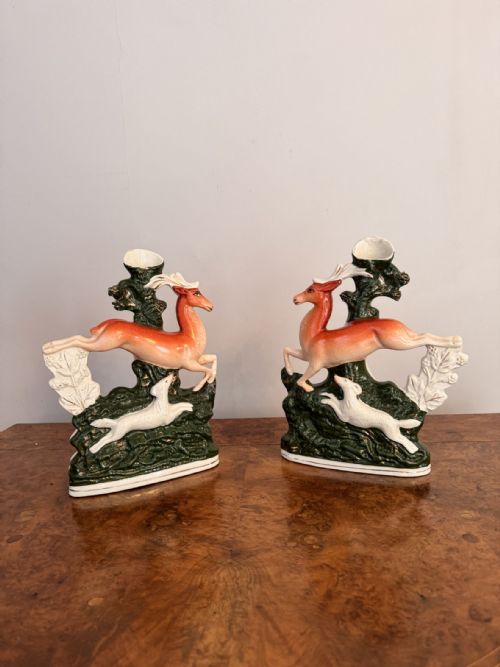
Staffordshire figures and animal spill vases depicting sheep, cows, and lions appear frequently alongside factory-made art pottery. Makers from England, France, Germany, Japan, and Austria contribute to the variety of forms seen within this group.
The selections range from utilitarian earthenware figures to sophisticated glazed ceramic pieces reflecting Japanese Meiji taste, French Rococo Revival, and Art Nouveau design. Buyers encounter both vernacular Staffordshire pottery and ambitious studio wares.
Materials and methods
Potters shaped these vessels using earthenware, stoneware, and porcelain, applying rich glazes and enamel colours to the surfaces. Gold leaf accents and raised relief decoration frequently complete the detailed ornamentation.
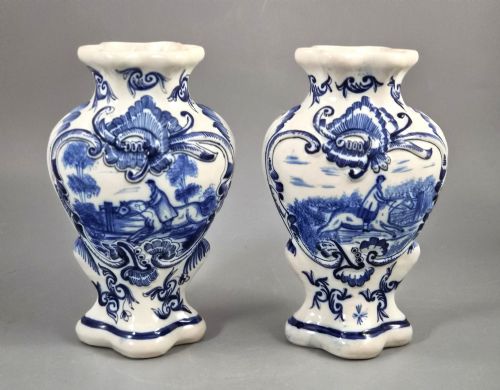
Factories utilised slip casting, moulding, and hand painting, while faience techniques allowed artists to paint directly onto unfired glaze. Earthenware bodies received protective lead or tin glazes before secondary firing.
Listings feature earthenware, stoneware, and porcelain pieces spanning the nineteenth century.
Distinctions in quality
The refinement of the modelling and the precision of the hand-painted enamels separate standard factory output from exceptional studio production. Crisp details in relief decoration indicate careful mould maintenance and skilled artisan work.
The depth and consistency of the glaze application, particularly in art pottery and faience, determine the visual success of the piece. Matching symmetry within the pair remains vital for overall ceramic harmony.
Jacob Petit·Fourmaintraux Courquin·Doulton Lambeth·Mettlach Pottery·Mason Ironstone·Bretby·Kinkozan·Royal Doulton·Wedgwood·Emily Edwards·Ernst Wahliss·Bernhard Bloch·Burmantofts Faience·Moorcroft Macintyre·Carlton Ware
The Pair Victorian Pottery Vases Glossary
- Spill vase
- A small cylindrical container designed to hold thin wooden spills used for lighting candles and fires. These pieces often take figurative or animal forms.
- Faience
- Tin-glazed earthenware decorated with colours painted directly onto an opaque white glaze before firing. This technique originated in Italy and spread widely across European potteries.
- Baluster
- A vertical architectural form shaped with a rounded lower body tapering to a narrow neck. Many ceramic vases adopt this silhouette for stability and balance.
- Majolica
- A type of earthenware coated with an opaque tin glaze and painted with brightly coloured metal oxides. Victorian makers produced heavy, ornate versions with naturalistic motifs.
- Pate
- A French term referring to the ceramic body or paste used in pottery manufacture. Different formulations create earthenware, stoneware, or porcelain.
Pair Victorian Pottery Vases: Frequently Asked Questions
What are pair victorian pottery vases?
These items are matching ceramic vessels created in the nineteenth century for decorative interior display. They span utilitarian earthenware figures and artistic studio pieces.
Makers across Europe and Japan produced them in numerous styles, including Art Nouveau and Aesthetic Movement.
How were spill vases used?
Spill vases sat upon mantelpieces to hold thin wooden tapers used for transferring flames from the hearth. Households relied on them before safety matches became common.
Victorian makers shaped them as animals, figures, and botanical cylinders to combine utility with ornament.
How do I identify a Victorian maker?
Makers stamped, impressed, or painted factory marks, monograms, and pattern numbers onto the base of the ceramic body. Stylistic clues such as glaze types and relief moulding also point toward specific potteries.
Many pieces reflect the distinct aesthetics of English, French, and German workshops active during the nineteenth century.
Where should I display these vases?
Matched pairs look best placed symmetrically on mantelpieces, sideboards, or console tables. Their balanced forms require open surfaces where both vessels can be viewed together.
Placing them away from direct heat sources protects the historic glazes and enamel decorations.