


Cobalt Blue Doulton Vases
These cobalt blue doulton vases bring rich Victorian ceramic artistry and striking glaze work into your home.
Cobalt Blue Doulton Vases
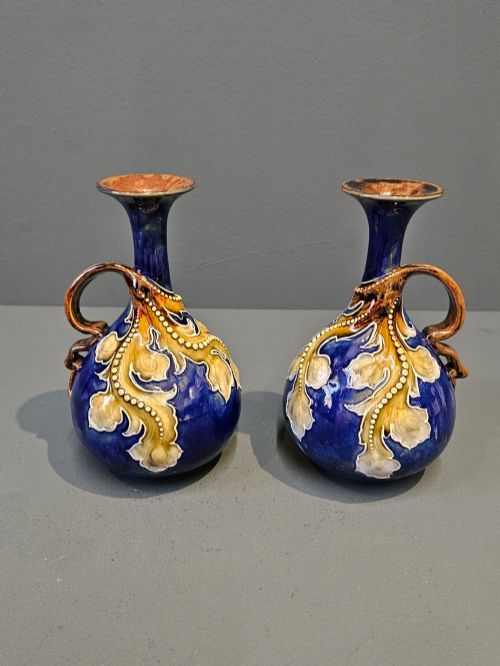
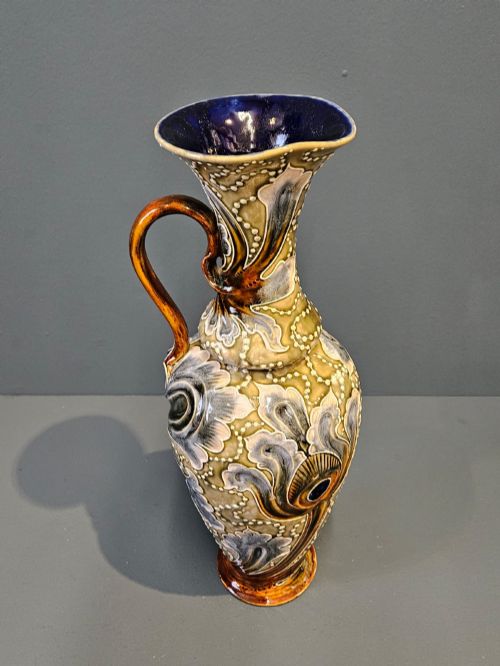
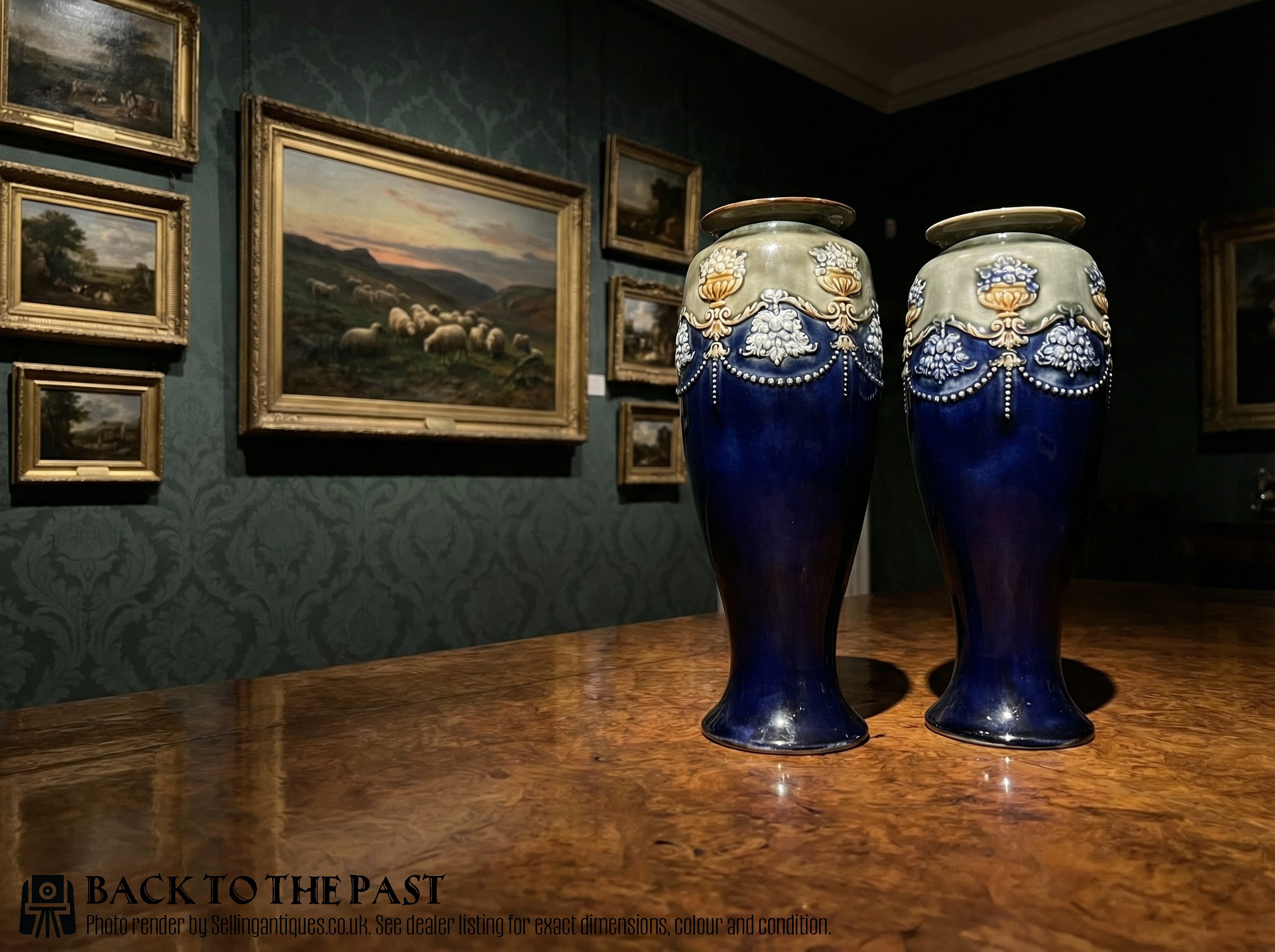
Cobalt blue doulton vases encompass stoneware and porcelain vessels originating from the Victorian era and the year 1900. Buyers encounter pairs of vases, decorative ewers, and single vessels spanning styles such as Art Nouveau and Victorian Arts and Crafts.
The objects listed on this page represent the core output of these periods, showcasing both small cabinet pieces and large display items. Most examples display the characteristic robust ceramic bodies typical of late nineteenth-century British production.
Materials and Technique
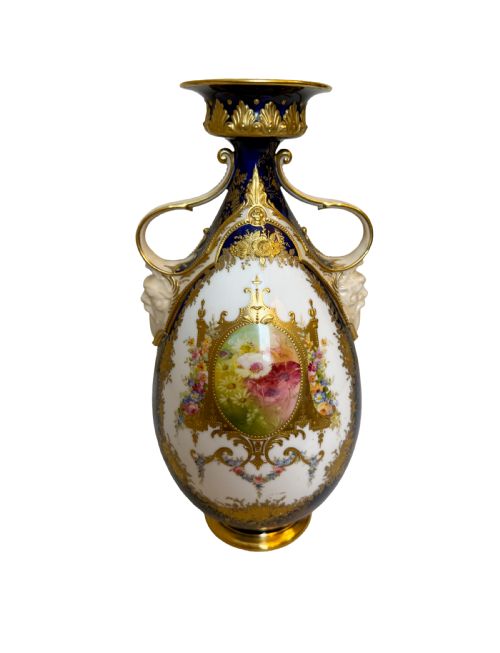
Potters shaped these vessels from ceramic, stoneware, and bone china, applying rich glazes to achieve deep blue colouration. Artisans utilised enamel and gold leaf to embellish the surfaces of specific decorative vases and ewers.
Many of these pieces bear hand-painted decoration executed by named artists working within the pottery traditions of the era. The combination of glazed stoneware and manual brushwork defines the technical execution of these works.
Current listings include both individual vases and matched pairs decorated with enamel and gold leaf.
Evaluating Quality
Quality in these ceramics rests on the precision of the hand-painted decoration and the depth of the glaze finish. Pieces bearing artist attributions often display superior hand-painting compared to standard factory production.
The scale and complexity of the vessel shape also influence distinction, with large ewers and matched pairs representing more ambitious studio output than smaller single vases.
Emily Edwards·Ethel Beard
The Cobalt Blue Doulton Vases Glossary
- Stoneware
- A dense ceramic fired at high temperatures until vitrified. This impermeable material forms the sturdy body of many Victorian pieces.
- Ewer
- A large jug with a wide spout and handle, designed originally for pouring water. Victorian makers adapted this domestic form into purely decorative display objects.
- Art Nouveau
- A design movement characterised by flowing, organic lines and natural motifs. Pieces in this style emerge around the transition into the twentieth century.
- Bone china
- A type of porcelain incorporating animal bone ash for added strength and translucency. This material allows for finer vessel walls than standard earthenware.
Cobalt Blue Doulton Vases: Frequently Asked Questions
What periods do these pieces date from?
These ceramic works date primarily from the Victorian era, spanning the late nineteenth century and around the year 1900. The stylistic markers reflect the prevailing artistic movements of those decades.
Collectors find both standard Victorian production and transitional Art Nouveau designs within this timeframe.
How were these ceramic ewers used?
Historic ewers functioned originally as water-pouring vessels for washing or table service before evolving into ornamental display pieces. Victorian households placed larger ewers on sideboards and mantelpieces for decorative impact.
Today, buyers utilise these objects solely as interior display pieces to showcase floral arrangements or stand alone.
Are these vases found in pairs?
The inventory frequently includes matched pairs alongside single vessels, reflecting traditional Victorian mantelpiece display customs. Pairs were produced together in the pottery to ensure uniform glaze and decoration.
Matched sets generally command greater interest from collectors seeking symmetrical arrangement options.
How do I identify Art Nouveau examples?
Art Nouveau pieces display characteristic flowing lines and stylised natural forms that depart from rigid Victorian geometry. The glazing on these items often mimics organic patterns found in plant life.
These stylistic cues help distinguish turn-of-the-century items from earlier nineteenth-century production.