
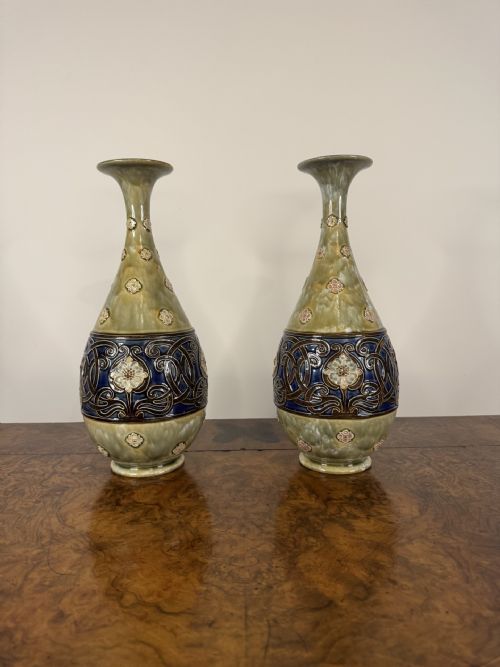


Blue Glaze Stoneware Vases
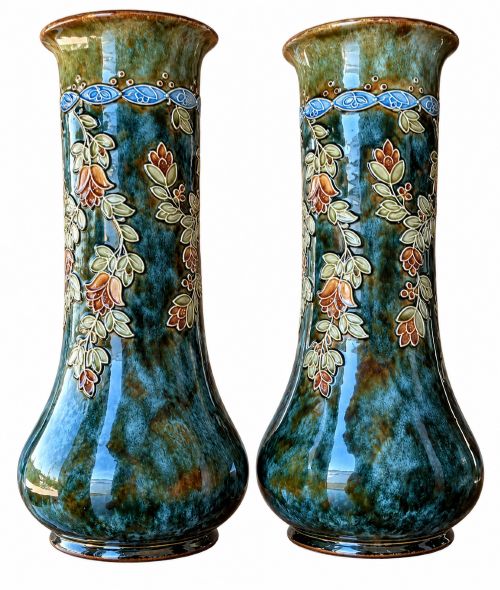
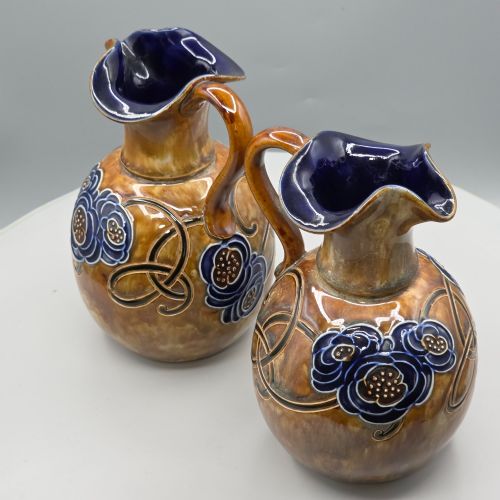
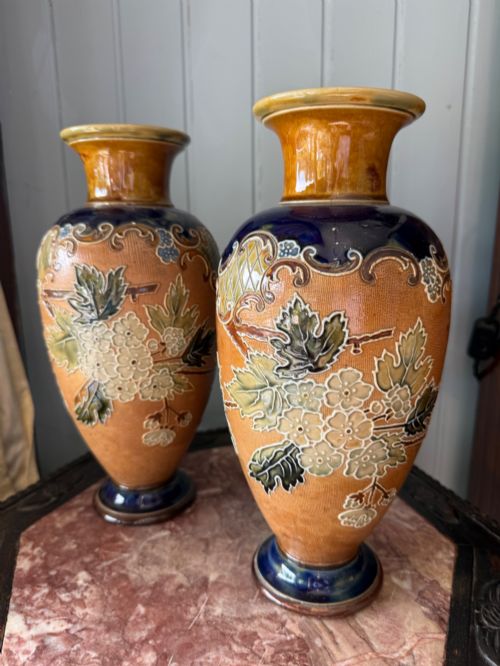
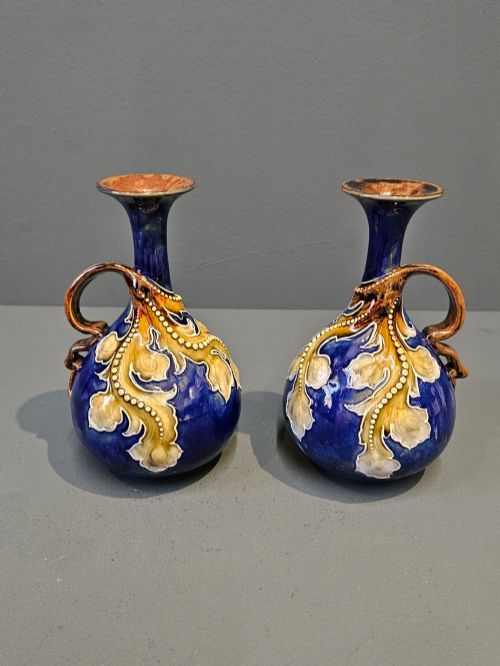
These blue glaze stoneware vases bring robust nineteenth and early twentieth-century character into a room through rich ceramic surfaces.
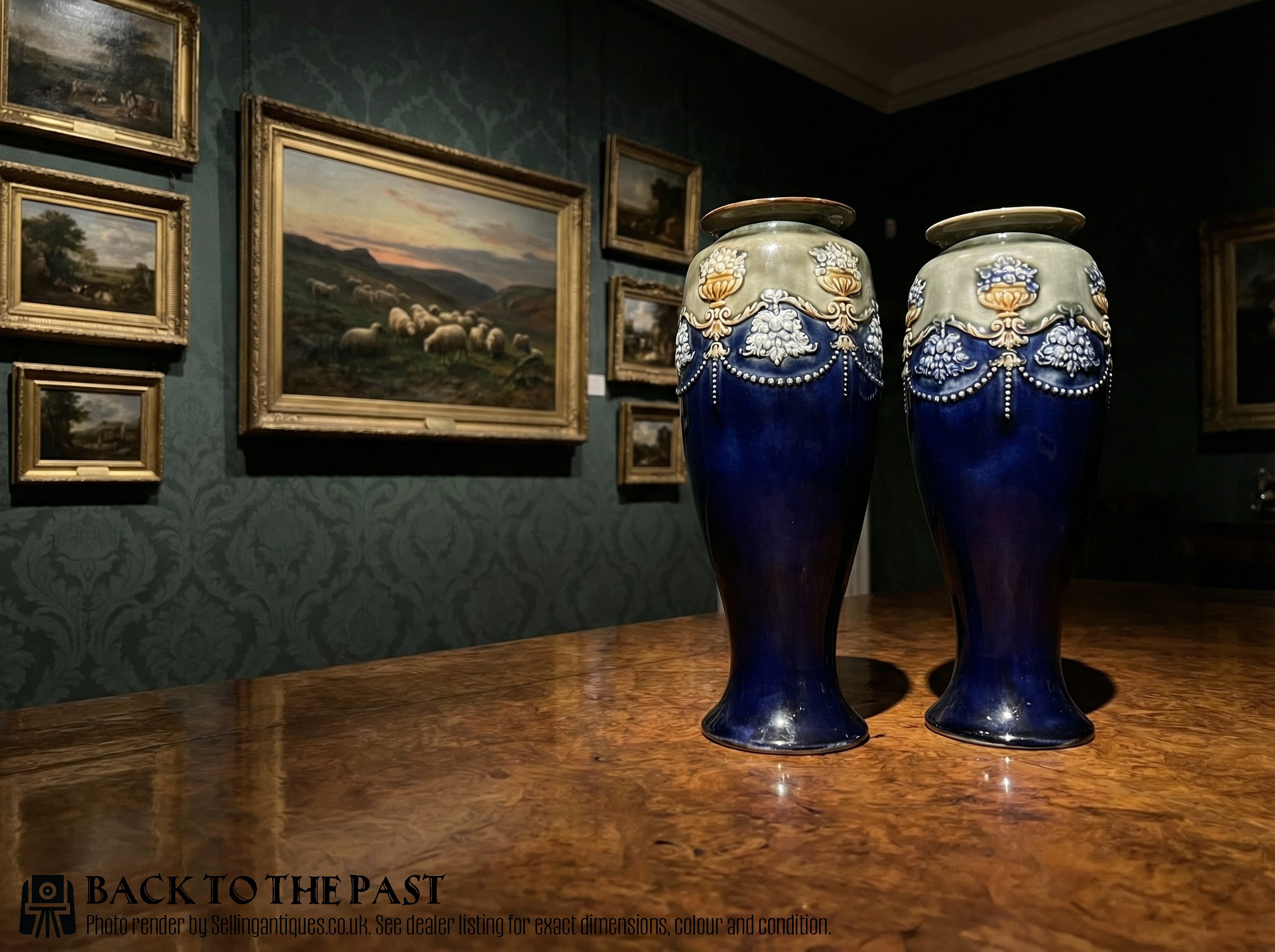
Blue Glaze Stoneware Vases
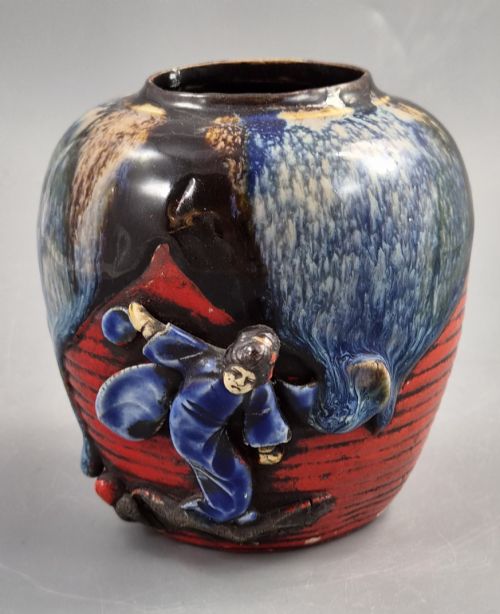
Blue glaze stoneware vases encompass utilitarian vessels transformed into decorative objects, spanning the late nineteenth and early twentieth centuries. The selection on this page leans heavily towards British studio and art pottery, alongside notable Japanese examples featuring modelled figures.
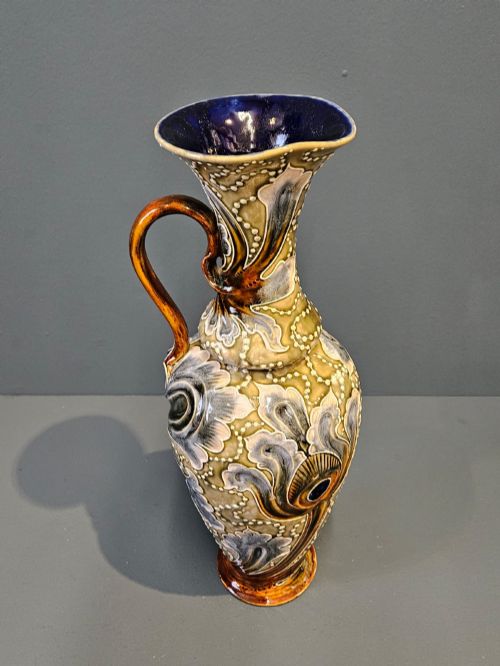
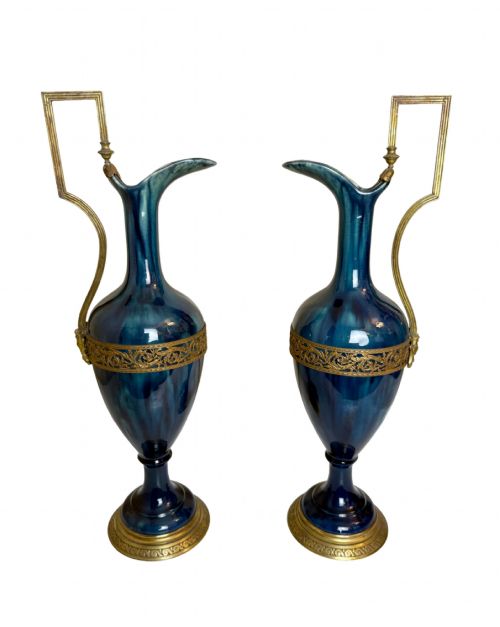
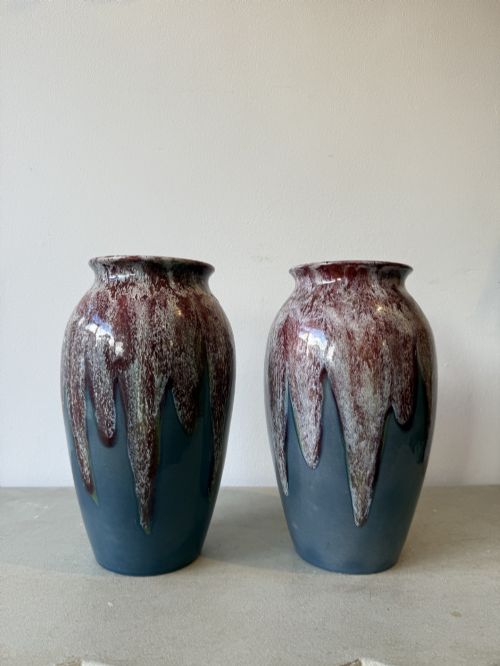
Makers working within the Victorian and Arts and Crafts movements dominate these listings, often producing pairs of baluster vases or ewers. Collectors encounter substantial thrown forms finished in mottled, flambe or deep cobalt glazes.
The objects serve as focal points on mantels or sideboards, offering weight and tactile interest through salt-glazed or smooth ceramic bodies. Their origins stretch from English Lambeth potteries to East Asian workshops.
Materials and production methods
Potters shaped dense stoneware and earthenware on the wheel, sometimes adding applied relief decoration or hand-modelled figures. The clay bodies were fired at high temperatures to ensure durability and impermeability.
Glazes applied before firing react in the kiln to create variegated blue tones, occasionally enhanced with enamel or gold leaf details. Surface enrichment also includes incised foliate patterns typical of the Arts and Crafts period.
Materials documented across these listings include stoneware, earthenware, enamel, and occasional applications of gold leaf.
Distinctions in quality
Quality rests upon the crispness of hand-tooled decoration and the depth achieved within the glaze layers. Pieces bearing the specific signatures or monogrammes of skilled studio artists command greater attention.
Proportion and symmetry in thrown forms separate standard production output from masterworks designed for exhibition. The integration of applied elements like climbing figures demonstrates high technical control.
Royal Doulton·Doulton Lambeth·Louisa Wakely·Emma Shute·Emily Edwards·Emily Stormer·Ethel Beard·Florence Barlow·Sumida Gawa
The Blue Glaze Stoneware Vases Glossary
- Stoneware
- A robust ceramic category fired at high temperatures until vitrified and non-porous. It provides a heavy, durable foundation for rich chemical glazes.
- Baluster
- A vase shape featuring a rounded lower body that tapers gracefully into a narrower neck. This classic silhouette provides excellent balance for display.
- Flambé
- A glaze effect characterised by streaked, mottled colour variations produced by reduction firing. It creates depth through unpredictable pools of blue and red tones.
- Ewer
- A large jug with a wide spout and looped handle, originally designed for pouring. In art pottery, these function primarily as decorative display pieces.
Blue Glaze Stoneware Vases: Frequently Asked Questions
Where were these blue stoneware pieces made?
The majority originate from English workshops operating in London during the Victorian and Edwardian eras. Other examples stem from Japanese kilns producing narrative vessels.
Production centres like Lambeth fostered individual artists who signed their work directly onto the clay.
How do I care for antique stoneware?
Dust the surfaces gently with a dry, soft cloth to protect the glaze and any applied relief details. Avoid using liquid cleaners or abrasive materials that might harm the ceramic body.
Keep the vases away from direct sunlight to preserve the richness of the blue enamel and glaze tones.
Are these vases waterproof?
While stoneware is naturally vitrified and non-porous, antique art pottery can possess delicate internal faults or historic hairline cracks. It is safest to use a discreet glass liner if you plan to display fresh flowers.
Treat them primarily as decorative sculptural objects rather than everyday utility vessels.
How do I distinguish Arts and Crafts examples?
Look for hand-incised foliate patterns, matte surfaces, and visible maker monograms scratched into the base clay. These indicate individual craftsmanship rather than mass factory production.
The style emphasises natural materials and honest construction methods typical of the late nineteenth century.