
Pair Oriental Urns
Pair oriental urns bring balanced decoration to a room, appearing mostly as bronze or ceramic vessels shaped as vases, jars, and converted table lamps.
Pair Oriental Urns
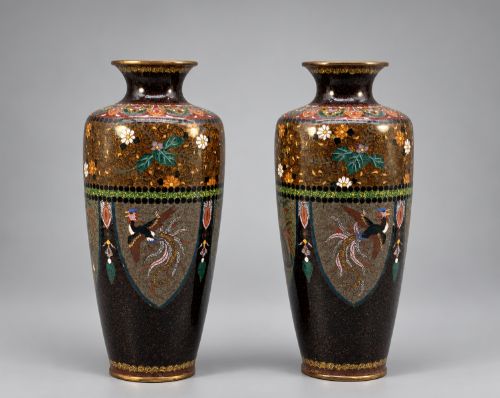
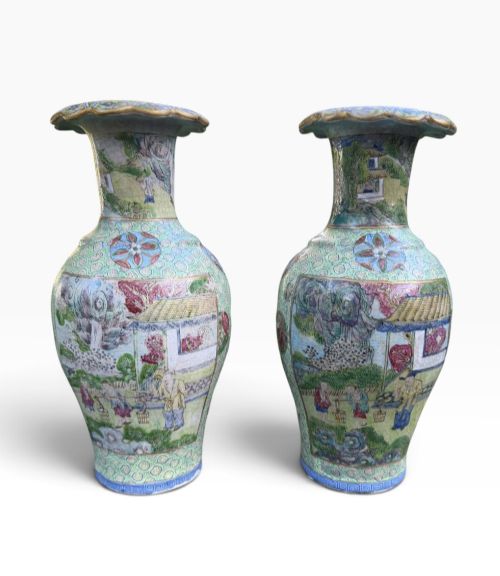
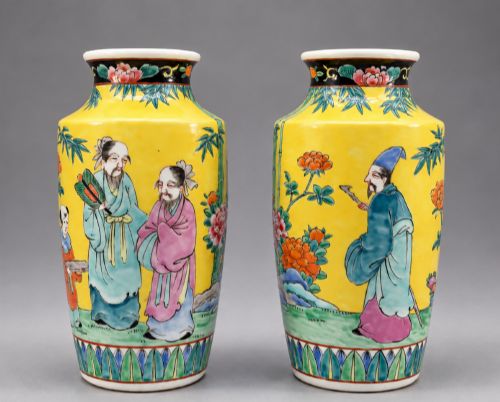
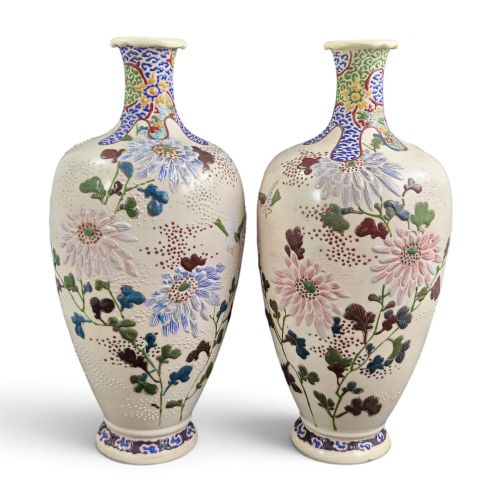
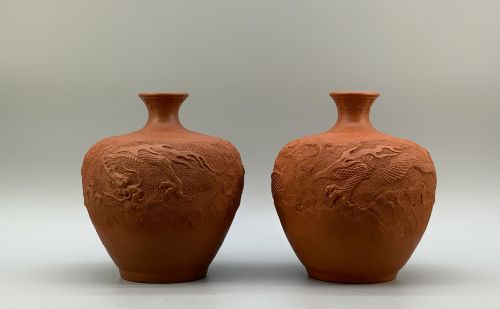
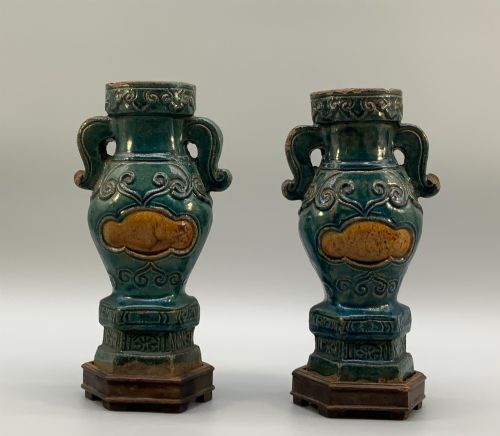
When you search for pair oriental urns, you encounter symmetrical groups of decorative vessels originating from Japan and China. The selection on this page consists heavily of nineteenth-century and early twentieth-century pieces, spanning the Meiji period and the Qing dynasty alongside later styles.
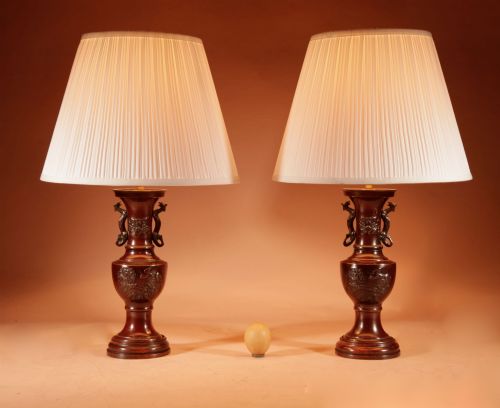
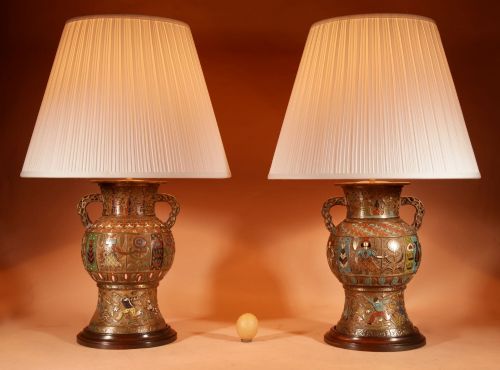
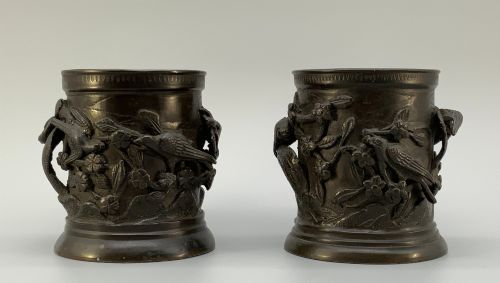
You meet these forms most frequently as ceramic vases, lidded jars, and bronze vessels that have often been adapted into table lamps. Alongside traditional vases, the listings include related decorative objects such as plant stands, occasional tables, and incense burners created in matching pairs.
How they were made
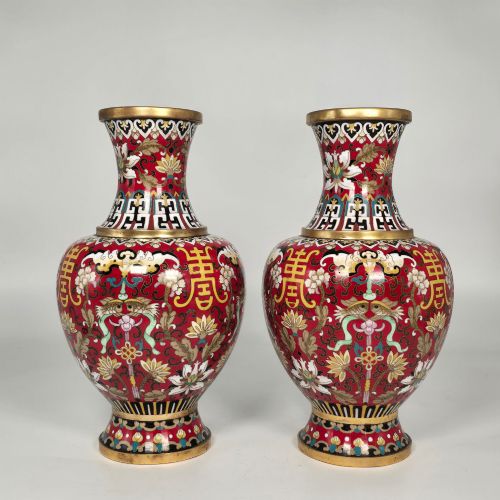
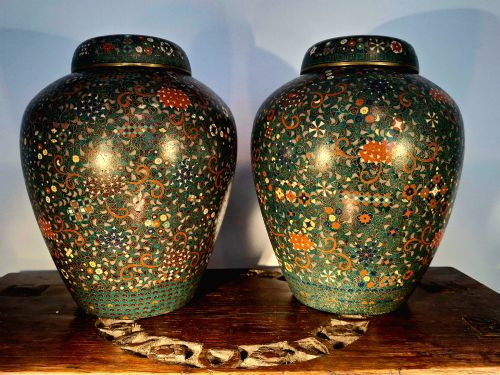
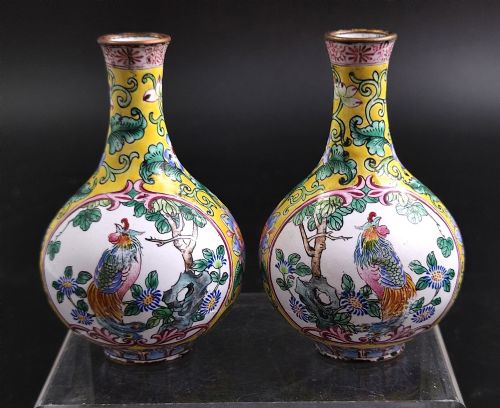
Maker workshops utilised durable materials including bronze, earthenware, and porcelain, shaping them through casting, wheel-throwing, and meticulous hand-forming. Surface decoration often involved detailed enamel work, champlevé, cloisonné, and gold leaf applications.
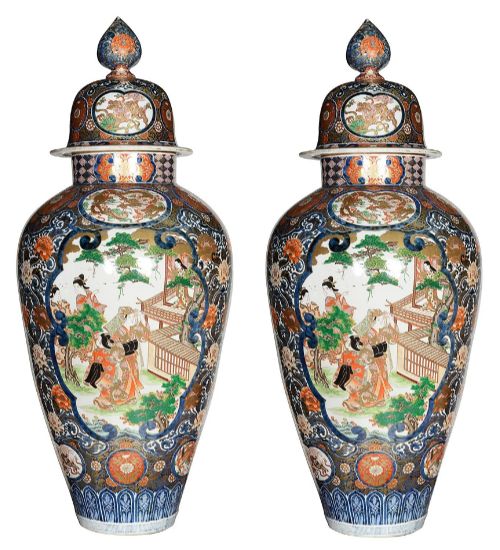
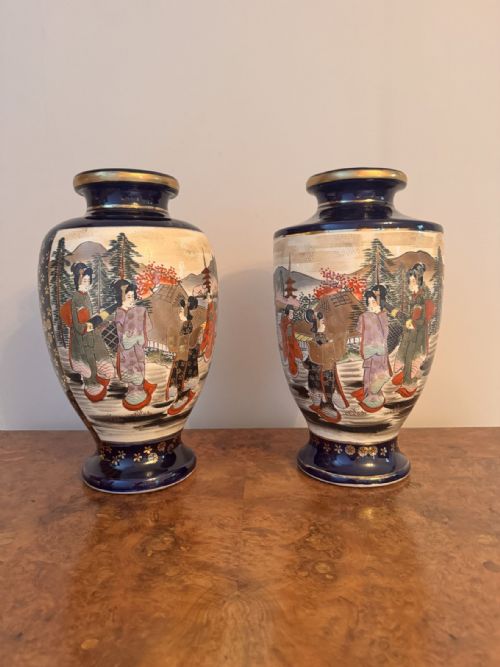
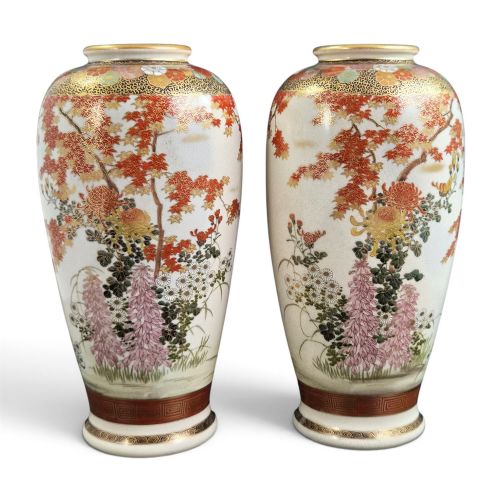
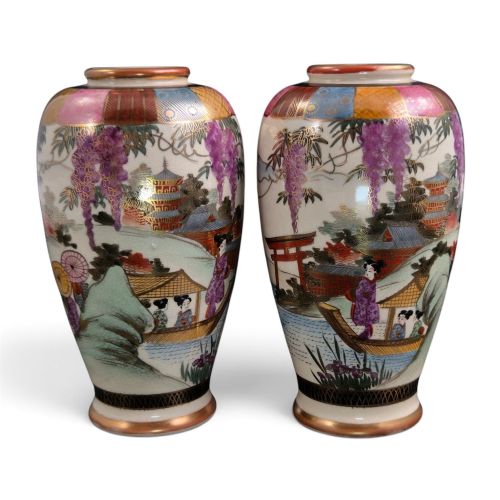
Pottery items such as Satsuma and Imari wares received intricate hand-painted motifs depicting figures, landscapes, and florals. Bronze pieces frequently incorporated inlaid elements, relief carving, and patination techniques developed across the nineteenth century.
Listings feature materials such as porcelain, bronze, earthenware, and enamel, spanning the Victorian period through the 1930s.
What varies in quality
The distinction between standard commercial output and superior craftsmanship rests upon the crispness of the casting in bronze or the fineness of the brushwork on ceramics. Pieces bearing identifiable workshop signatures or attributed to recognised makers generally exhibit greater control in detail and finishing.
Conservation history also influences the character of a pair, as conversions into lamps or subsequent alterations alter the original state of the object. Harmony between the two items determines the overall cohesion of the matched set.
Shozan·Manpei·Chikusai·Maruni Kobe
The Pair Oriental Urns Glossary
- Satsuma
- A type of Japanese earthenware featuring a crackle glaze and elaborate polychrome and gilt enamel decoration. It became widely exported during the Meiji period.
- Cloisonné
- An enamelling technique where metal wire is soldered to a metal base to create compartments filled with enamel paste and fired. This method produced intricate patterned surfaces on vases and urns.
- Champlevé
- An enamelling process in which troughs or cells are carved into a metal surface and filled with vitreous enamel before firing. It creates bold coloured designs on bronze foundations.
- Imari
- A traditional style of Japanese porcelain characterised by a palette of underglaze blue, iron red, and gold. These wares were heavily produced for both domestic use and export.
- Baluster
- A vertical architectural form with a swelling lower body that tapers toward the top. Many ceramic and bronze vases follow this classic contour.
Pair Oriental Urns: Frequently Asked Questions
How do I spot a true pair?
Examine the decorative motifs, dimensions, and material weight to confirm consistency across both objects.
True pairs share matching hand-painted details or identical casting moulds, whereas matched pairs may show slight variations in size or pigment tone.
Are converted lamps still considered urns?
Many historical vessels were adapted into lighting fixtures during the twentieth century without losing their original form.
Wiring can often be reversed if you prefer to display them as decorative vases or lidded jars.
What is the difference between Satsuma and Imari?
Satsuma wares feature a distinctive cream-coloured crackled earthenware body decorated with dense enamels and gilding.
Imari pieces utilise hard porcelain bodies painted primarily in deep blue and iron red with gold highlights.
How do I care for antique bronze urns?
Dust the surfaces regularly with a soft, dry cloth to prevent the accumulation of grit in relief carvings.
Avoid using liquid metal cleaners or polishes that might strip the historic patination from the bronze.