


Meiji Satsuma Decorative Urns
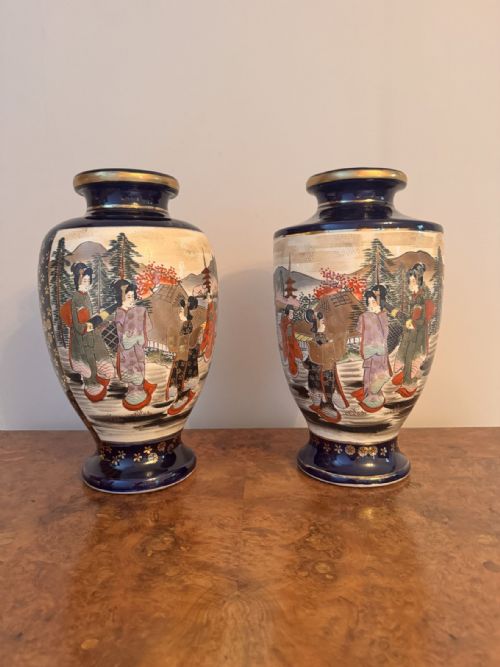
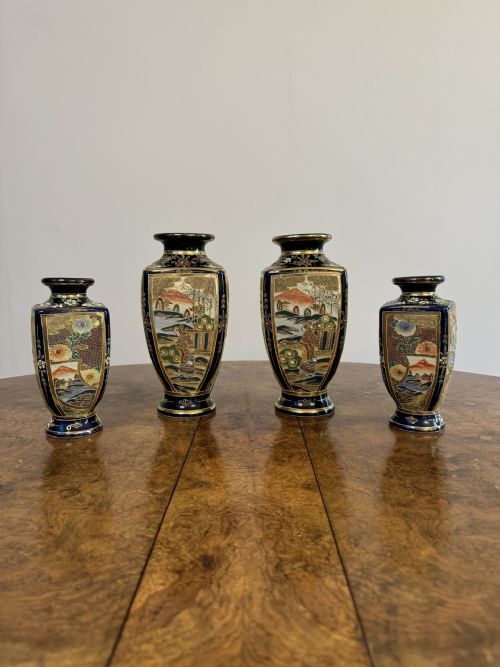
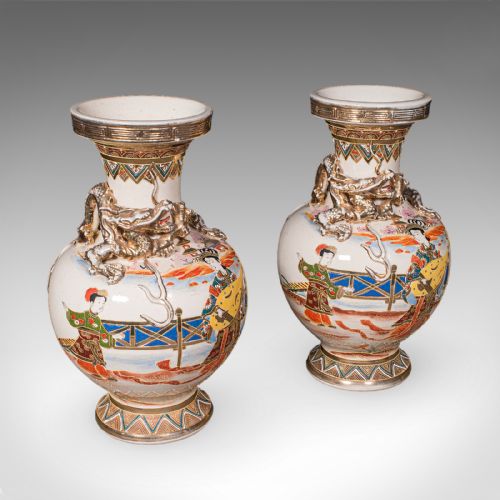
These meiji satsuma decorative urns bring intricate hand-painted narratives and rich gilt work into a room.
Meiji Satsuma Decorative Urns
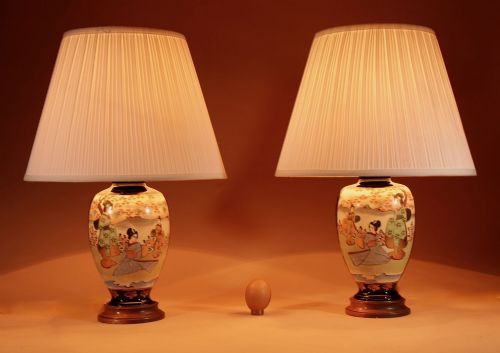
The objects appearing on this page span several decades of production, incorporating regional styles such as Kyoto Satsuma alongside traditional Satsuma ware. Many examples integrate figural scenes, family groups, landscapes, and religious panels into their surface design. Alongside traditional display vases, you will also find converted table lamps that utilise these antique ceramic bodies.
Materials and Construction
Makers formed these pieces using earthenware and ceramic bodies, applying a fine crackle-glaze across the surface. This crazed glaze provides the characteristic textured canvas required for subsequent polychrome enamelling.
Artisans built up the decoration using heavy enamel, gold leaf, and gilt work, often incorporating raised moriage techniques to add tactile depth. Details were hand-painted with precision, depicting complex motifs, floral gardens, and traditional garments.
Listings feature items produced across the Meiji period, Victorian era, and Edwardian years, utilising earthenware, enamel, gold leaf, and glaze.
Assessing Quality
The standard of painting defines the distinction between standard production and exhibition-quality pieces, particularly in the precision of facial expressions, landscape details, and narrative clarity. Finer examples display disciplined brushwork and sophisticated composition across every panel.
The application of surface enrichment sets superior pieces apart, notably the thickness and placement of gold leaf, cobalt decoration, and raised moriage work. Master workshops achieved greater harmony between the underlying crackle-glaze and the dense polychrome decoration.
Kinkozan·Chosei·Shuzan·Nanzan·Kizan·Hakusan·Hododa
The Meiji Satsuma Decorative Urns Glossary
- Satsuma Ware
- Japanese earthenware pottery distinguished by a creamy, crackle-glazed surface and polychrome enamel decoration. This style developed significantly during the Meiji period for both domestic and export markets.
- Moriage
- A decorative ceramic technique using piped clay to create raised relief patterns beneath the glaze and enamel. This method produces a textured surface often highlighted with gilt.
- Koro
- A traditional Japanese incense burner featuring a lidded body, sometimes supported on feet or fitted with handles. These vessels frequently form part of larger decorative garnitures.
- Shimazu Mon
- The heraldic crest of the Shimazu clan, featuring a circle enclosing a cross. This crest appears frequently on high-quality Satsuma pieces associated with the Satsuma domain.
- Baluster
- A vase form characterised by a bulbous lower portion tapering to a narrow neck and flared rim. This traditional silhouette provides a stable canvas for extensive narrative painting.
Meiji Satsuma Decorative Urns: Frequently Asked Questions
What is Satsuma ware?
Satsuma ware is a type of Japanese earthenware traditionally recognised by its ivory-coloured body and fine crackle-glaze. Artisans decorated these pieces extensively with enamel paints and gold leaf.
Production expanded rapidly during the Meiji period to supply international demand, resulting in diverse decorative forms ranging from small cabinet pieces to large display urns.
How do I identify Meiji period pieces?
Meiji period items date from the reign of Emperor Meiji, spanning the late nineteenth and early twentieth centuries. Listings often reference this era alongside Victorian and Edwardian periods based on export timelines.
Authentication typically relies on stylistic indicators, studio signatures, and the specific application of hand-painted enamels and gilt ornamentation.
What are moriage details?
Moriage refers to raised decorative elements formed by applying liquid clay to the ceramic surface before glazing and firing. This creates a tangible, three-dimensional texture.
Artists frequently enhanced these raised sections with gold leaf to catch the light and add opulence to floral or geometric borders.
How were these urns used?
These vessels served primarily as decorative display items within domestic interiors, both in Japan and as exported goods for Western drawing rooms. Lidded variations, or koro, functioned as incense burners.
Today, collectors place these urns and vases on mantelpieces, pedestals, or convert them into table lamps while preserving their antique ceramic bodies.