
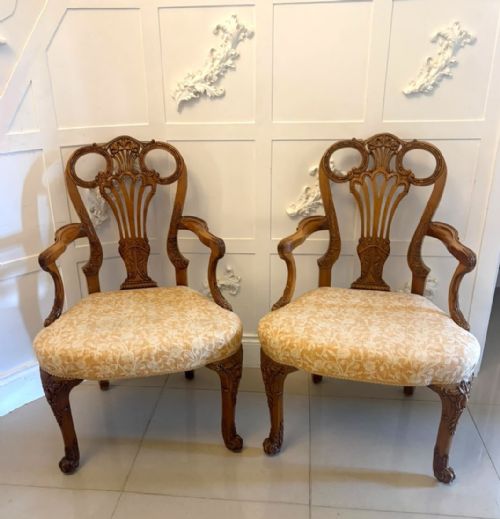
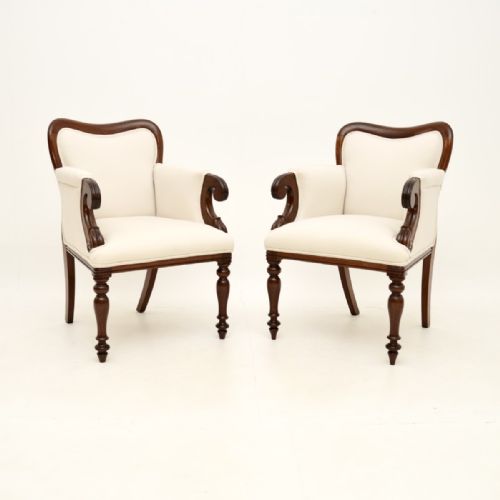
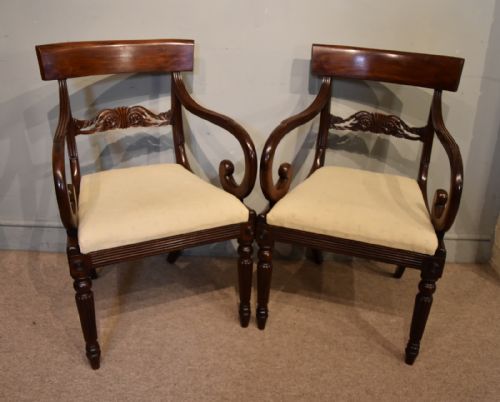
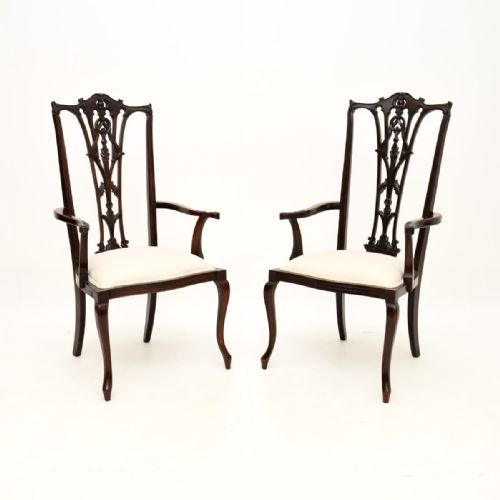
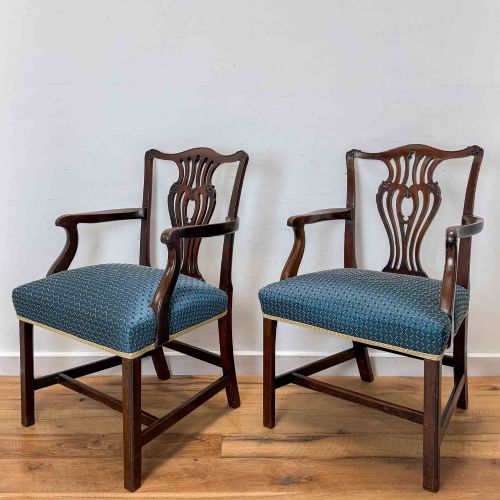

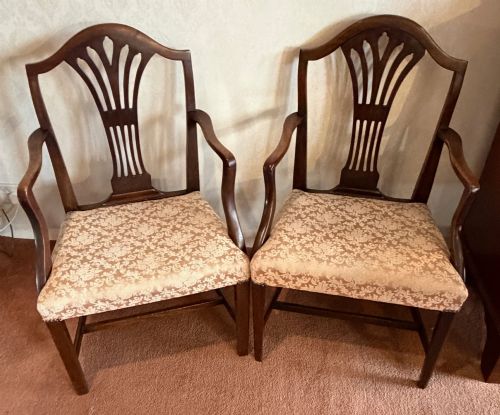
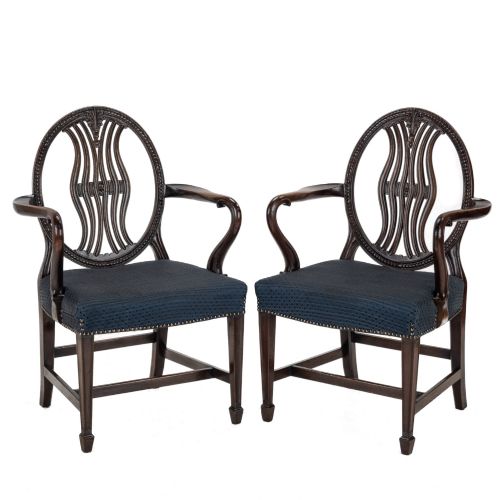
Pair Georgian Carver Chairs
Pair georgian carver chairs provide dual seating distinguished by integrated armrests, rooted in the foundational cabinet-making styles of the eighteenth and nineteenth centuries.
Pair Georgian Carver Chairs
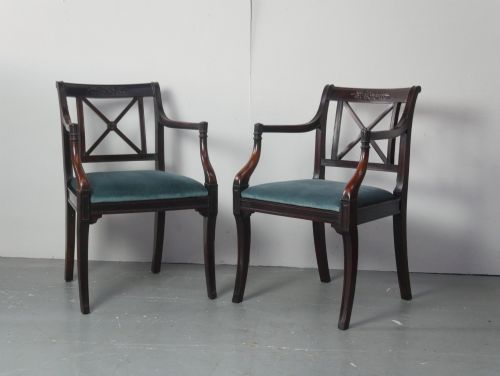
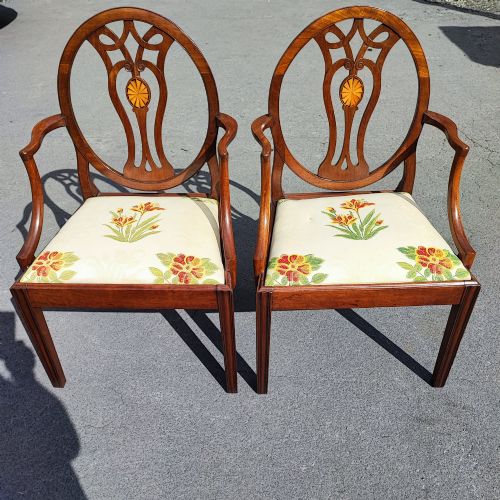
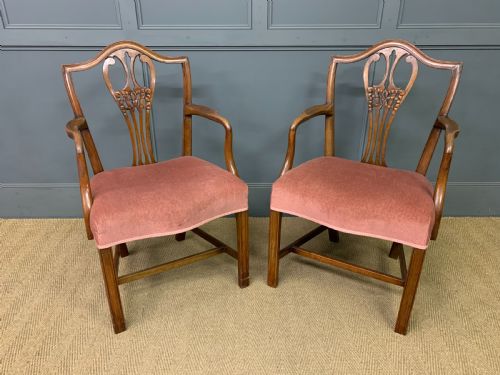
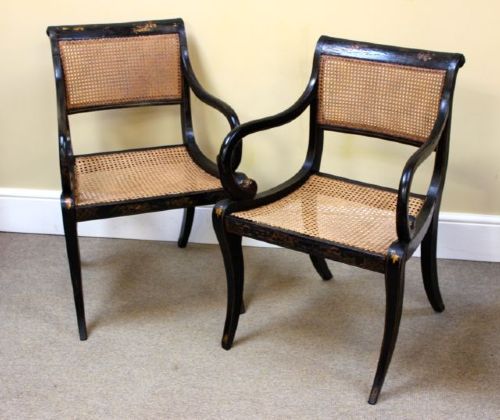
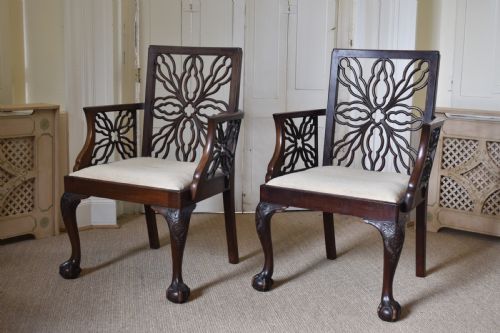
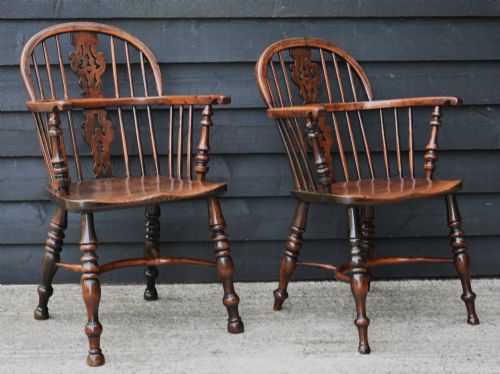
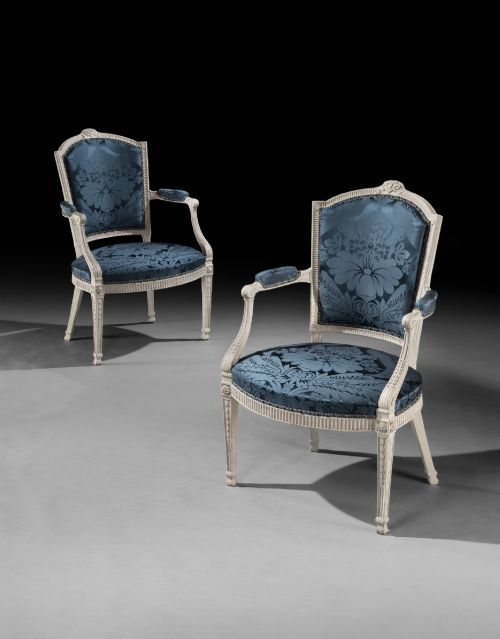
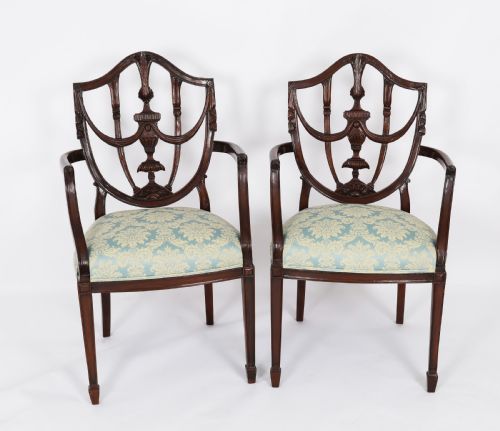
A search for pair georgian carver chairs leads to matched armchairs designed primarily for dining or desk use during the Georgian period and its later revivals. These dual seats typically feature substantial frames with supportive armrests intended to sit at the head of a table or within a library setting.
The selections span authentic eighteenth-century examples alongside nineteenth-century adaptations and later revivals from the twentieth century. Mahogany dominates the offerings, supplemented by regional timber choices like elm and yew, often styled in the manners associated with Chippendale, Hepplewhite, and Sheraton.
How they were made
Cabinet-makers relied heavily on solid mahogany, walnut, and regional hardwoods like elm and ash, shaping frames using traditional joinery methods. Surfaces received intricate carved details or inlaid satinwood veneers depending on the specific stylistic movement.
Upholstery elements incorporate materials such as leather, velvet, brass studding, and woven cane inserts. These textile and metal additions completed the seating surface and provided functional comfort alongside the carved wooden structures.
Several diminutive versions appear designed specifically as children's open arm carver chairs.
What varies in quality
The standard of craftsmanship relies on the precision of the joinery and the depth of the carved ornamentation on the arms and backsplats. Finer iterations exhibit carefully selected timber grains and balanced proportions that reflect the rigorous standards of metropolitan workshops.
Subtleties in upholstery finishing, such as hand-applied brass studding and premium leather or fabric choices, distinguish superior workshop output from simpler country-made equivalents.
The Pair Georgian Carver Chairs Glossary
- Carver chair
- A dining chair featuring integrated armrests, historically placed at the ends of a dining table for the head of the household.
- Elbow chair
- An alternative designation for an armchair, referencing the support provided for the sitter's arms.
- Chippendale style
- A decorative aesthetic characterised by elaborate carved splats, often featuring ribbon or interlaced designs inspired by Thomas Chippendale's pattern books.
- Shield back
- A chair back shaped in the form of a heraldic shield, popularised by designers like George Hepplewhite during the late eighteenth century.
- Bar-back
- A horizontal wooden slat crossing the upper backrest of a chair, frequently curved to fit the contours of the sitter.
Pair Georgian Carver Chairs: Frequently Asked Questions
What distinguishes carver chairs from standard dining chairs?
Carver chairs incorporate built-in armrests on either side of the seat, whereas standard dining chairs lack these projections. They were traditionally positioned at the head and foot of a dining table.
This structural addition provides greater support for the user and visually anchors the ends of a dining furniture arrangement.
How can I tell original Georgian chairs from later revivals?
Original pieces display authentic period construction marks, timber ageing, and wear patterns consistent with eighteenth-century or early nineteenth-century workshop practices. Revivals often date from later nineteenth or twentieth-century periods while copying earlier forms.
Examining the underside, tenons, and secondary woods helps clarify the actual age of the frame.
Where were carver chairs placed historically?
These armchairs served primarily at dining tables and within libraries or office settings as desk chairs. Their supportive armrests suited extended periods of writing or dining.
They also appeared in drawing rooms and morning rooms as occasional seating.
What woods are most common in these chairs?
Mahogany represents the most frequent primary timber across both authentic period pieces and later revivals. Walnut and satinwood also appear alongside regional hardwoods like elm and ash.
Secondary woods used internally often include oak or pine depending on the workshop's geographic origin.