
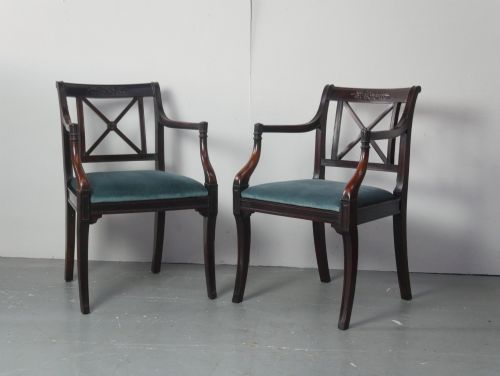
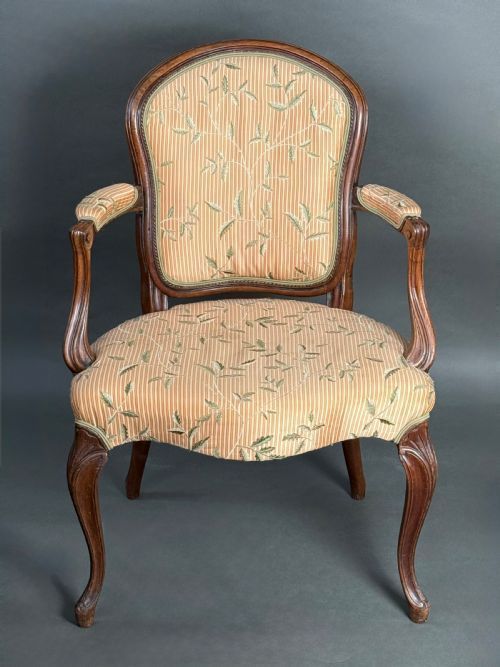
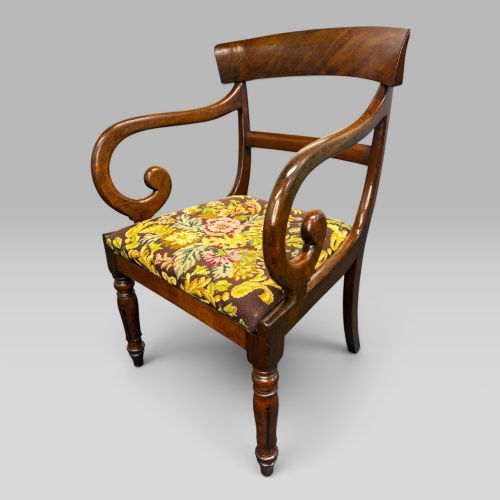
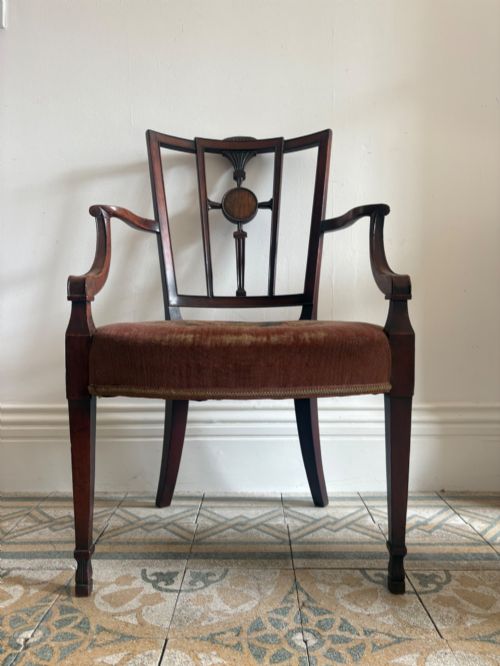
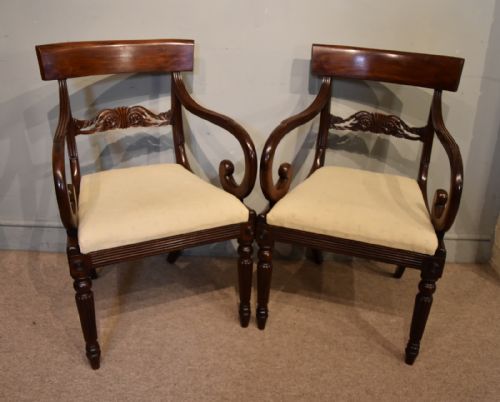
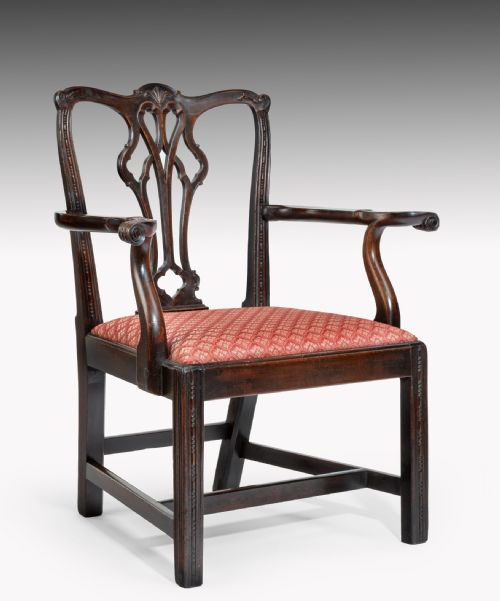
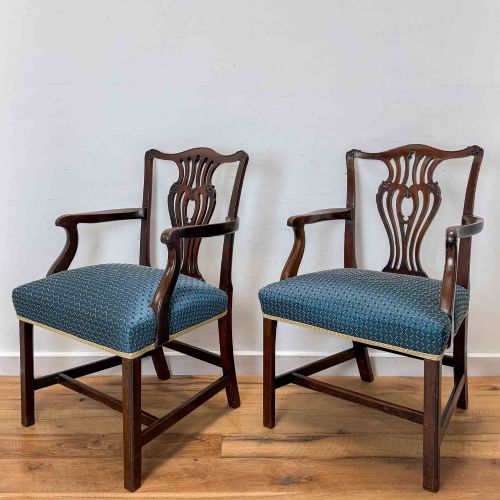
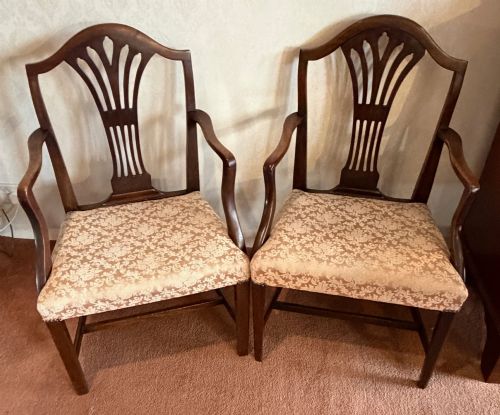


Georgian Upholstered Elbow Chair
A georgian upholstered elbow chair brings substance and period proportion to a room, offering a seat designed with architectural restraint.
Georgian Upholstered Elbow Chair
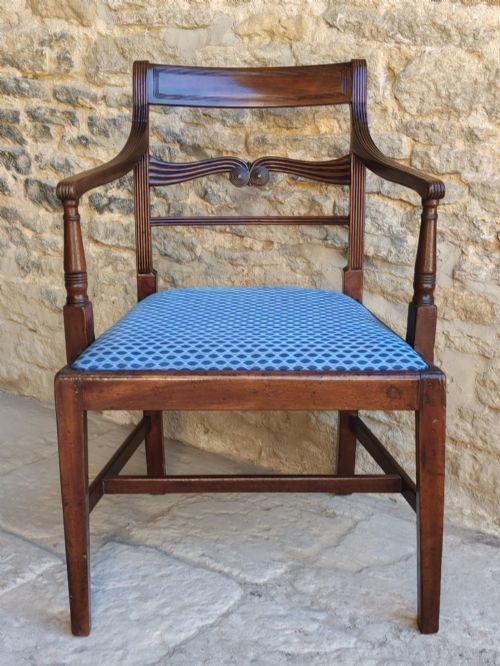
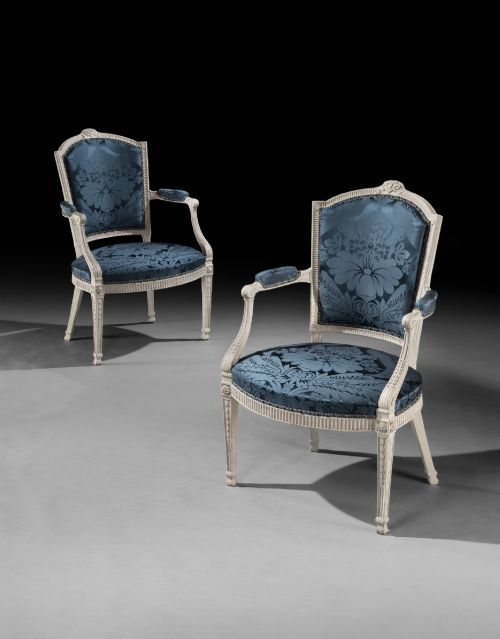
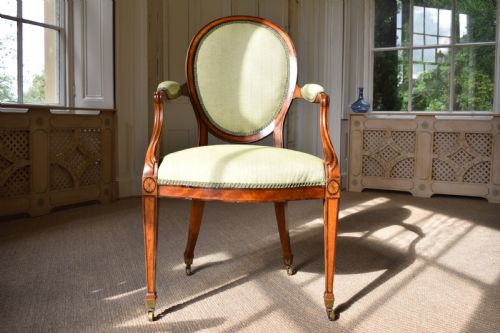
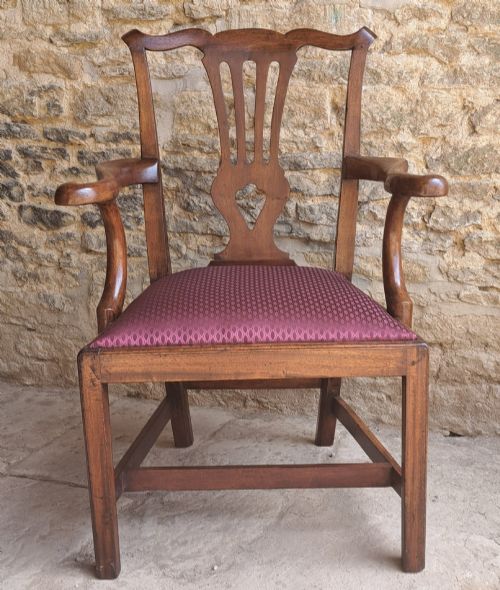
A georgian upholstered elbow chair combines structural timber framing with padded seating designed for the parlour, study or dining room. The pieces appearing here span from the mid-eighteenth century into the nineteenth century, alongside later revival interpretations.
Makers of these seats worked primarily in mahogany and walnut, shaping open armchairs, carver chairs and library wingbacks. These forms developed through distinct stylistic periods, including Chippendale, Hepplewhite, Sheraton and Regency designs.
Buyers encounter genuine period examples alongside Edwardian and late nineteenth-century revival pieces that emulate eighteenth-century proportions. Both categories provide functional seating built around traditional joinery and upholstered surfaces.
Materials and construction
Cabinetmakers constructed the frames predominantly using solid mahogany and walnut, selected for structural strength and grain quality. Selected examples incorporate satinwood or incorporate painted finishes alongside polychrome decoration.
Upholstery techniques applied webbing, stuffing and textile covers ranging from silk and velvet to linen and printed cotton. Brass elements occasionally appeared in castors or decorative studwork securing the fabric to the timber frame.
Listings feature mahogany, walnut, satinwood and painted finishes across armchairs, carver chairs and library wingbacks spanning three centuries.
Assessing craftsmanship and finish
Quality rests upon the crispness of carved details in the timber, from ribbon-back top rails to moulded arm supports and carved cabriole legs. Superior pieces display fluid lines and precise joinery where the arms join the uprights.
The choice of secondary timbers and the integrity of the original frame construction distinguish master workshops from provincial cabinetmakers. Furthermore, the fidelity of proportion and the preservation of surface patina dictate the standing of individual examples.
Gillows
The Georgian Upholstered Elbow Chair Glossary
- Carver chair
- An armchair designed typically for the head of a dining table or for use as a desk seat, featuring sturdy arms integrated into the wooden frame.
- Elbow chair
- A traditional term for an armchair, often used in historical inventories to describe seating fitted with armrests for domestic comfort.
- Cabriole leg
- A furniture leg that curves out and then in, mimicking animal limbs, commonly terminating in pad, claw-and-ball or bracket feet.
- Open armchair
- A chair featuring upholstered seat and back pads while leaving the sides unpadded and open through wooden arm supports.
- Patina
- The surface sheen and mellowing developed by wood and fabric over centuries of exposure, handling and natural wear.
Georgian Upholstered Elbow Chair: Frequently Asked Questions
How do I identify a genuine period chair?
Examine the construction methods visible beneath the seat and at the joints, where hand-cut joinery and timber ageing indicate the period. Tool marks and the consistency of the wood grain help separate eighteenth-century originals from later nineteenth-century revival pieces.
Review the overall proportions and stylistic vocabulary against documented cabinetmaker designs of the era. Subtle variations in carving depth and timber selection often point to regional workshops rather than metropolitan centres.
Where should I place an elbow chair?
These chairs function effectively as desk seats, library armchairs or standalone accent pieces in a drawing room or study. Their substantial frames provide presence in traditional interiors without overwhelming surrounding furniture.
Position the chair away from direct sunlight and heat sources to protect the wooden frame and textile upholstery from fading and drying out. Adequate clearance around the arms ensures the woodwork remains protected from accidental impacts.
How do I care for antique upholstery?
Vacuum textile surfaces gently using a low-suction attachment with a soft brush to remove dust accumulation from the weave. Avoid harsh chemical cleaners and direct moisture, which can damage historic fabrics and internal stuffing materials.
Professional textile conservators should handle repairs to fragile silks, velvets or original needlework covers. Maintaining stable indoor humidity levels prevents the wooden frame from shrinking and loosening the tension of the upholstery.
What is the difference between Chippendale and Hepplewhite styles?
Chippendale designs frequently feature solid mahogany frames with elaborate carved splats, substantial cabriole legs and robust proportions. The decorative vocabulary draws heavily on Gothic, Chinese and French rococo influences translated through English cabinetmaking traditions.
Hepplewhite furniture introduces lighter, more neoclassical lines characterised by shield-backs, tapering straight legs and delicate painted or inlaid decoration. The overall aesthetic prioritises refined elegance and symmetry over the heavier carving of the mid-eighteenth century.