

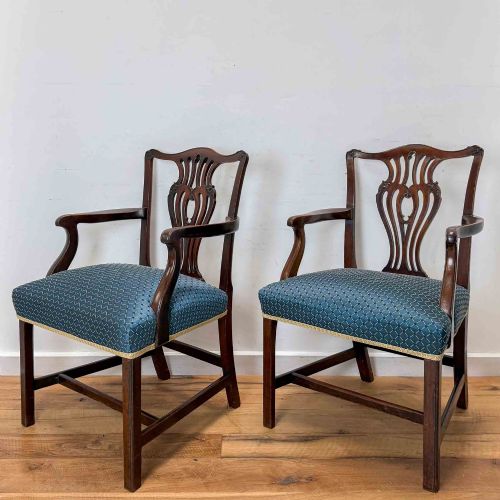
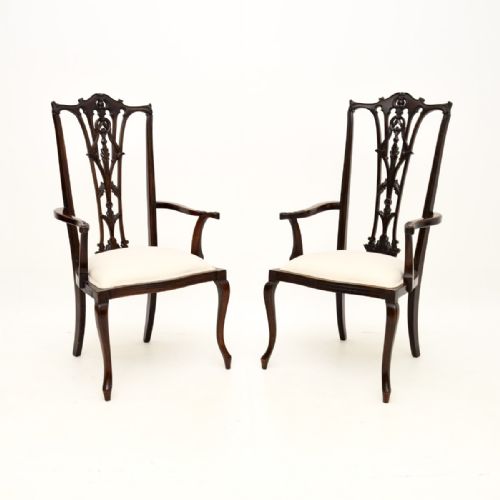
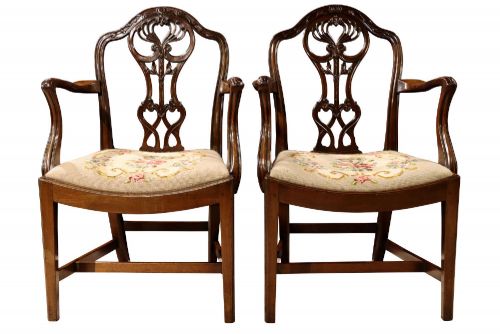
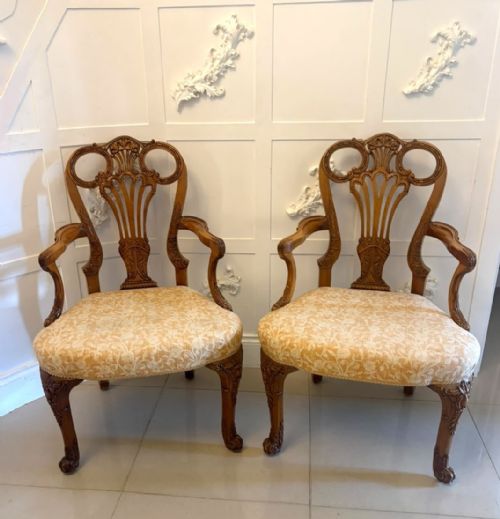
Pair Chippendale Style Armchairs
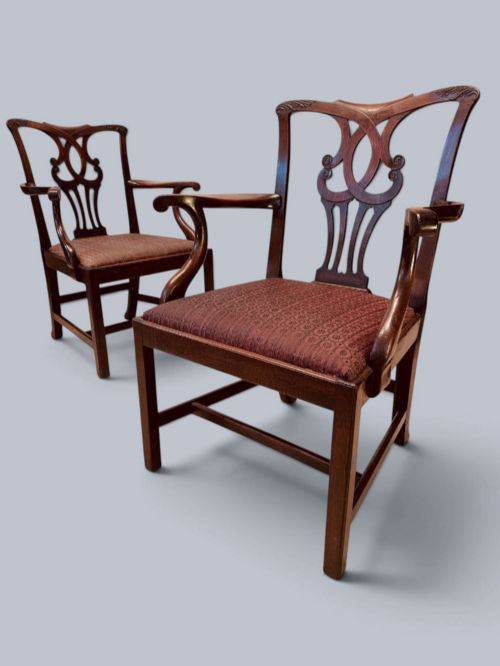
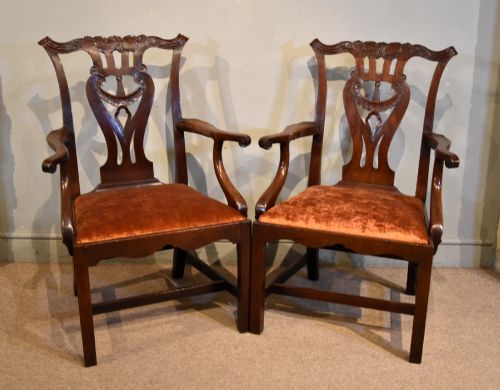
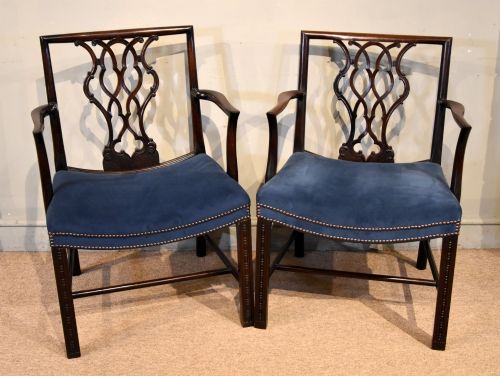
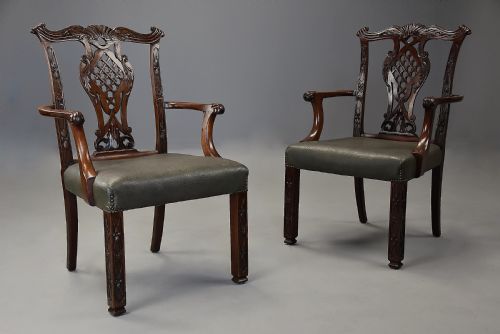
Pair chippendale style armchairs bring enduring proportion and carved timber detail to a room, ranging from genuine eighteenth-century pieces to later revival iterations.
Pair Chippendale Style Armchairs
When searching for pair chippendale style armchairs, buyers encounter seating designed for formal dining, libraries, and studies, spanning the eighteenth century to the early twentieth century. The selection ranges from authentic period items to later revival interpretations executed in similar proportions.
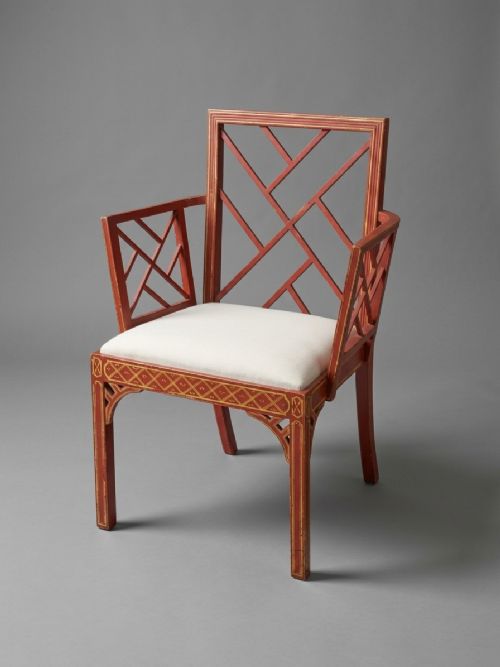
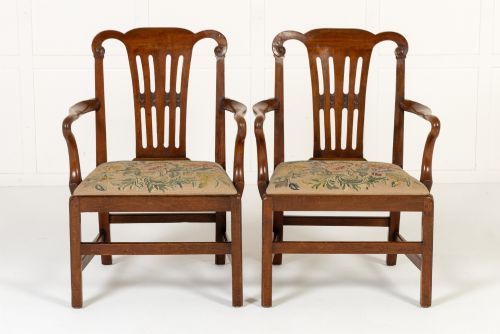
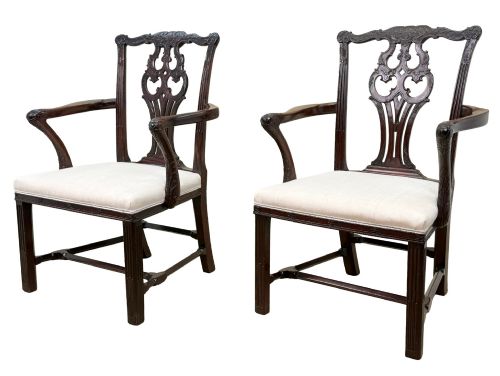
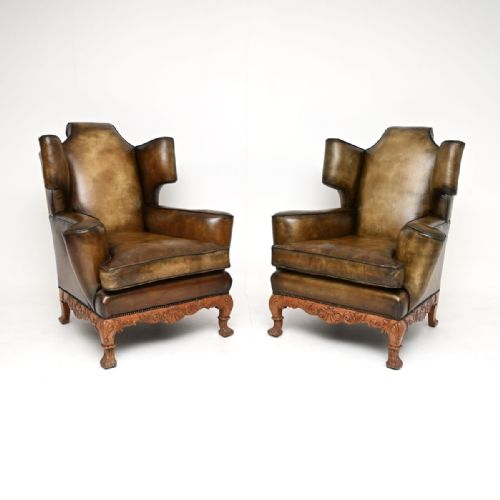
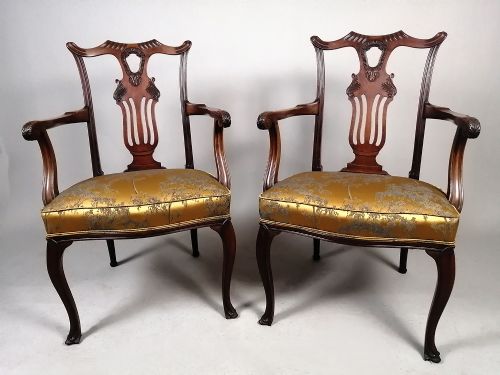
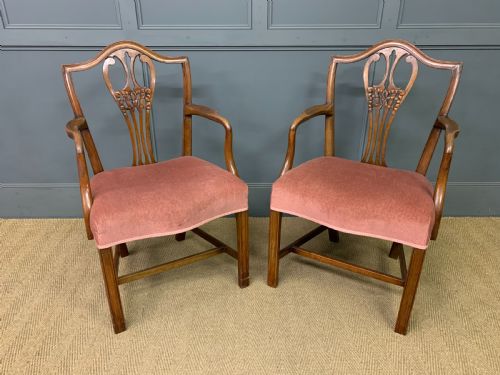
The most common examples on this page are revival pieces from the nineteenth and early twentieth centuries, including Chippendale revival, Georgian revival, and Chinese Chippendale variations. These incorporate characteristic design elements such as open arms, carved splats, and sturdy timber frames.
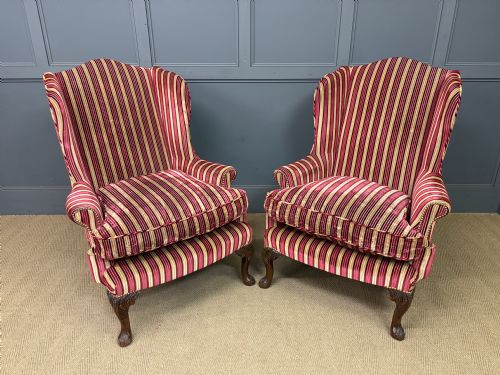
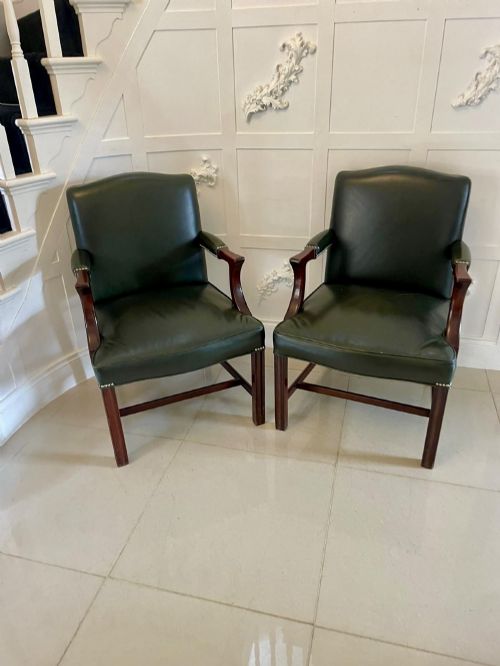
Forms include standard armchairs, carver chairs, desk chairs, and expansive Gainsborough library chairs upholstered in leather or fabric. Irish and Scottish regional variations also appear, offering distinct local interpretations of the classic vocabulary.
Materials and construction
Makers relied primarily on solid mahogany and walnut for structural stability and fine carving capabilities, occasionally incorporating painted and gilded finishes for decorative Chinese Chippendale designs. Timber sections were joined using traditional cabinetmaking techniques to ensure durability under daily use.
Upholstery materials vary from period-appropriate tapestry and textile to durable leather and velvet. Brass studs and webbing secure these coverings to the frame, providing support for library and desk seating.
Pair Chippendale Style Armchairs Retail Price Guide 2026
Typical asking prices for pair chippendale style armchairs among the pieces listed under this phrase on Sellingantiques today, from the lower quarter to the upper quarter. They describe what is for sale here now, not the wider market.
The listings span multiple centuries, incorporating Georgian originals alongside Victorian and Edwardian revivals executed in mahogany and walnut.
Evaluating craftsmanship and condition
Quality rests in the crispness of the hand-carved ornamentation upon the crest rails, arms, and ball-and-claw or Marlborough feet. Superior examples display deep, sharp relief work rather than soft, shallow moulding.
Structural integrity of the timber frame and the quality of the timber grain dictate the distinction between standard production and exceptional workshop output. Original surface patination and uncompromised joinery further elevate a piece.
The Pair Chippendale Style Armchairs Glossary
- Chippendale Style
- Furniture following the eighteenth-century designs published by Thomas Chippendale, characterised by carved ribbon-back splats, cabriole legs, and intricate fretwork. Revival versions recreate these motifs in later periods.
- Carver Chair
- An armchair designed with open sides, traditionally placed at the head of a dining table or used as a desk chair. These seats feature supportive armrests integrated into the front posts.
- Gainsborough Armchair
- A wide, upholstered armchair with open padded arms, low sides, and square legs, popular in libraries and studies during the Georgian era.
- Cockpen
- A Chinese Chippendale style featuring an open lattice-work wooden back, often associated with geometric fret designs and used in lighter seating forms.
- Splat
- The vertical wooden strip down the centre of a chair back, frequently pierced, carved, or shaped into ribbon and vase silhouettes.
Pair Chippendale Style Armchairs: Frequently Asked Questions
How do I distinguish eighteenth-century originals from later revival chairs?
Examination of the timber grain, tool marks, and construction methods reveals the age of the frame. Eighteenth-century pieces exhibit period-specific joining and natural wear patterns that differ from machine-assisted nineteenth-century revival production.
Secondary indicators include the type of secondary woods used in the interior frame and the nature of the surface patination accumulated over generations.
What is the difference between a carver chair and a library armchair?
Carver chairs typically feature open wooden arms and unupholstered seats or drop-in pads, making them suitable for dining settings. Library armchairs offer fully upholstered seats, padded armrests, and a broader footprint designed for prolonged sitting.
Both forms utilise similar stylistic vocabulary, but their primary function dictates the level of padding and overall proportion.
How should I care for antique mahogany chair frames?
Maintenance requires keeping timber away from direct heat sources and sudden humidity changes to prevent wood splitting and shrinkage. Regular dusting with a soft, dry cloth preserves the polished surface without building up chemical residues.
Applying a traditional beeswax polish occasionally helps nourish the wood and maintain the natural lustre of the patination.
Can I use these armchairs in a modern interior?
These seating forms integrate well into contemporary rooms by providing historical contrast and strong architectural silhouettes. Their classic proportions allow them to function effectively as accent chairs in living spaces or home offices.
Upholstery can be updated with modern fabrics while retaining the antique wooden frame, bridging historical design with contemporary living requirements.