
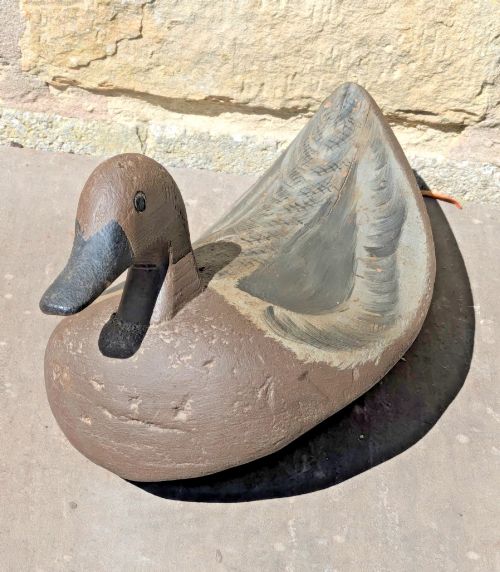
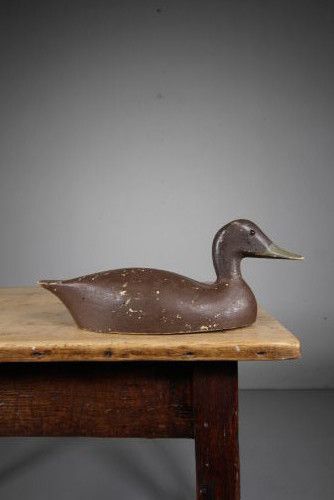
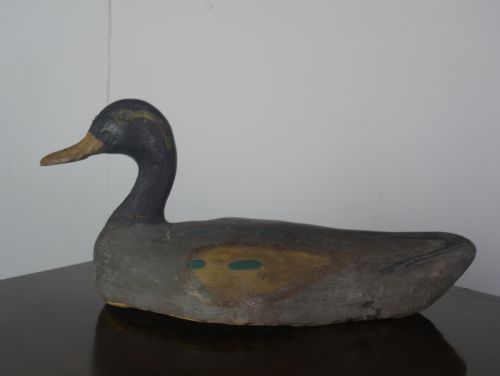


Painted Wooden Duck
A painted wooden duck is a working decoy or folk carving that brings rustic texture and character to an interior.
Painted Wooden Duck
When you search for a painted wooden duck, you encounter functional decoys and folk art sculptures originating from the nineteenth and early twentieth centuries. These pieces span English country workshops and American traditions, appearing as single birds or small groups.
The version you are most likely to meet on this page is an antique decoy duck carved from timber and finished with hand-applied paint. These objects often show the weathering and wear of their working past.
Beyond standard waterfowl, the category widens to include specific types such as loons with chicks, as well as distinct pairings and sets. Each piece reflects the utility and vernacular style of its period.
Materials and Carving
Makers shaped these figures from solid timber and pine using hand tools to achieve the buoyant forms required for working decoys. The carving prioritises simple, robust silhouettes over delicate detail.
Surface decoration relies on oil or traditional paint applied directly to the wood, sometimes supplemented by glass for eyes or metal and brass components in related decorative objects.
Listings for a painted wooden duck span the nineteenth century up to the nineteen-thirties, incorporating pine, metal, and glass elements.
Surface and Proportion
The distinction between ordinary and superior examples lies in the integrity of the original paint surface and the balance of the carving. Original untouched pigment holds greater visual weight than later overpainting.
Proportion and stance dictate the presence of the object, with well-balanced silhouettes and honest patination marking out the better pieces in any group.
The Painted Wooden Duck Glossary
- Decoy duck
- A carved wooden bird utilised by hunters to attract waterfowl on lakes and rivers. Many survive as decorative folk art objects.
- Folk art
- Utilitarian items and decorative figures created by self-taught makers within regional traditions. These pieces prioritise practical function and bold form over academic polish.
- Patina
- The surface sheen and wear accumulated on wood and paint over decades of handling and exposure. It acts as a visual record of age.
- Pine
- A softwood commonly employed in vernacular furniture and regional carvings for its ease of working. It accepts paint readily.
Painted Wooden Duck: Frequently Asked Questions
What is a painted wooden duck?
A painted wooden duck is a hand-carved decoy originally used on waterways to attract real birds during hunting. Today, they are collected as decorative folk art.
These pieces range from simple nineteenth-century English examples to early twentieth-century American decoys showing significant surface wear.
How were these ducks used?
Hunters floated these carved wooden birds on lakes and marshes to lure waterfowl within range. Their painted surfaces imitated the plumage of live ducks.
After their working lives ended, collectors began preserving them as sculptural objects for domestic display.
How do I date an antique decoy?
Dating relies on examining the tool marks left by the carver, the type of timber used, and the chemical composition of the paint. Early pieces often feature hand-adze marks and layered pigment.
Comparison with documented examples from specific decades helps narrow down the origin.
Where should I display a wooden duck?
These carvings suit placement on sideboards, bookshelves, or side tables alongside other rustic or traditional objects. Their weathered surfaces complement neutral interiors.
Keep them away from direct heat sources to protect the historic paint and timber from drying out.