
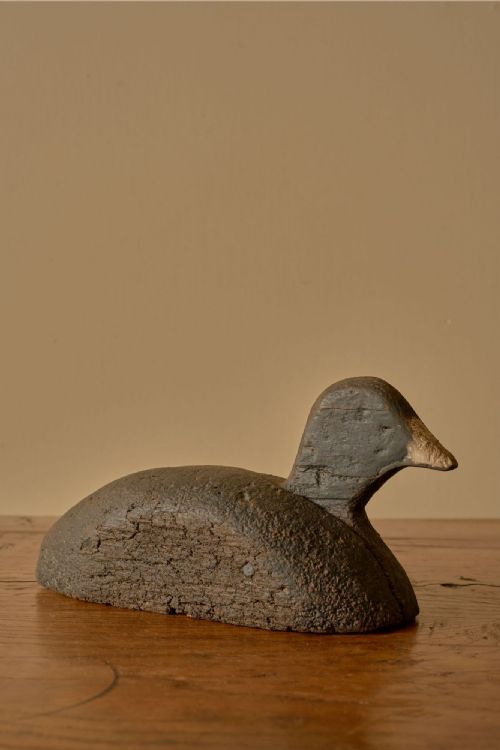
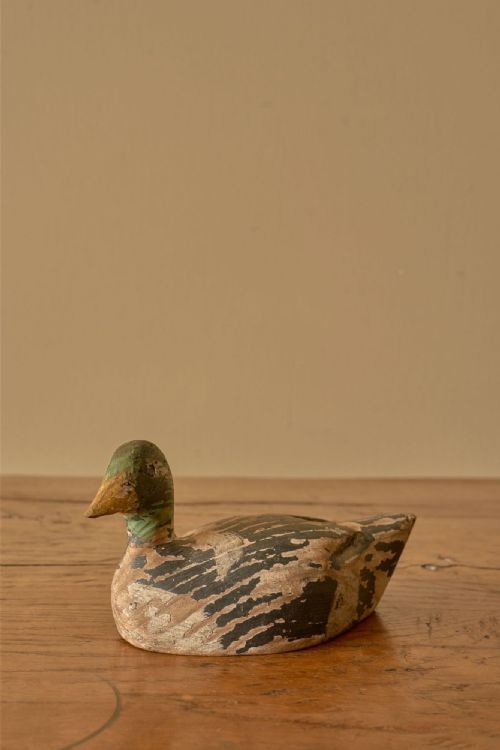
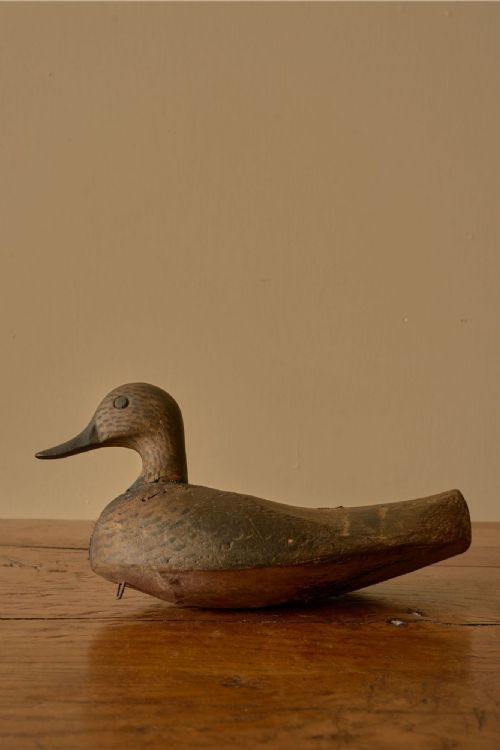
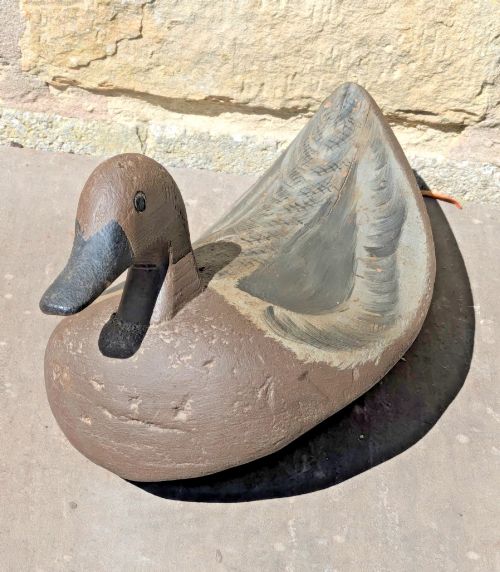


Carved Duck Figurine
These carved duck figurine examples bring waterfowl into the interior, spanning practical decoy forms and glazed porcelain.
Carved Duck Figurine
A carved duck figurine encompasses working decoys, folk art water birds, and ornamental Chinese sculptures. When you search for a carved duck figurine, you encounter working decoys from English and French makers alongside porcelain and hardwood sculptures.
The selection ranges from early twentieth century wooden working decoys with original painted surfaces to nineteenth century decorative figures. English and French pieces lean towards rustic folk art utility, while Asian examples adopt traditional palace aesthetics.
How they were made
Makers shaped these objects primarily from timber and hardwood, utilising manual carving tools to achieve realistic avian contours. Paint was then applied to the wood surfaces to replicate natural plumage and coloration.
Ceramic examples employ porcelain bodies finished with sancai glaze techniques. Iron and glass also appear in select decorative contexts across the available periods.
The inventory combines English and French rustic folk art decoys with Ming style and Qing Dynasty Chinese hardwood and porcelain sculptures.
What varies in quality
Quality separates primitive utility pieces from refined decorative sculptures through the fidelity of the carving and the preservation of original paint. Sustained surface wear on working decoys indicates genuine age rather than recent decoration.
Ceramic and hardwood examples derive their standing from precision in the glaze work and the crispness of the carved plumage details. Finer items exhibit deliberate artistic control over both form and material finish.
The Carved Duck Figurine Glossary
- Decoy duck
- A floating or land-based wooden replica utilised historically by hunters to attract wild waterfowl. These working objects form the backbone of the rustic wooden selection.
- Sancai glaze
- A traditional three-colour ceramic glaze technique commonly seen on Chinese porcelain duck sculptures. It produces vibrant amber, green, and cream tones across the fired body.
- Folk art
- Utilitarian items created by self-taught or non-professional makers for domestic or practical use. French and English pieces in this group display charming regional characteristics.
- Mandarin duck
- A species frequently depicted in pairs within Chinese art to symbolise marital fidelity and affection. Hardwood sculptures capture these birds in traditional Qing Dynasty styles.
Carved Duck Figurine: Frequently Asked Questions
What is a decoy duck?
A decoy duck is a carved wooden bird historically placed on water to attract wild ducks for shooting. Over time, many lost their practical utility and transitioned entirely into decorative objects.
Today, collectors value these items for their rustic appeal and the weathered remnants of their original hand-painted surfaces.
How old are these figurines?
The available pieces span from the nineteenth century through the Edwardian era and the early twentieth century. Dates are attributed based on material wear, construction methods, and stylistic markers.
Earlier examples from the nineteenth century often show heavier utilitarian use, while 1900s pieces frequently showcase refined folk art painting.
Are Chinese porcelain ducks different?
Chinese porcelain ducks, such as those styled in the Ming manner with sancai glazes, serve an entirely ornamental and symbolic purpose rather than a sporting one. They are sculptural works finished with rich ceramic glazes.
In contrast, English and French examples are typically carved from timber as working decoys or rustic decorative figures.
How do I display them?
These figures suit placement on mantelpieces, bookshelves, or side tables where their carved wooden textures and painted details stand out. Pairs look particularly striking when arranged together on flat surfaces.
Keep them away from direct heat sources to protect the aged wood, iron, paint, and porcelain materials.