
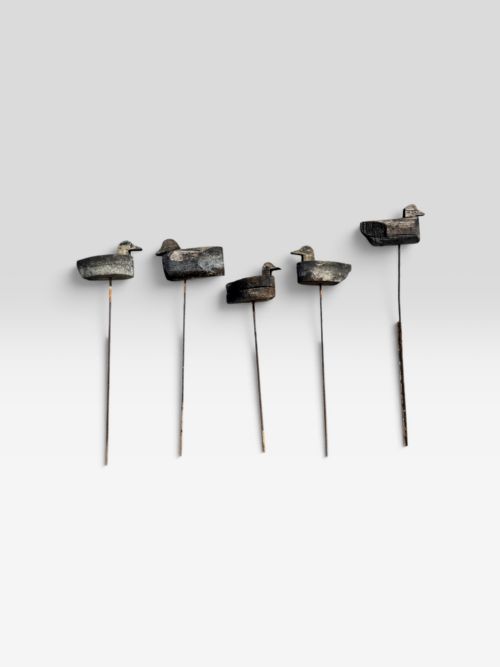
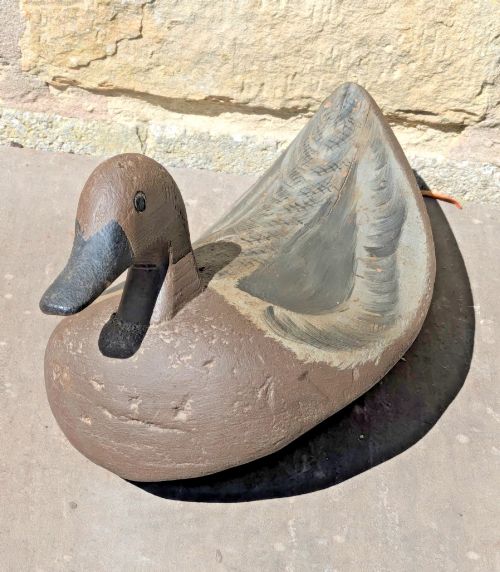
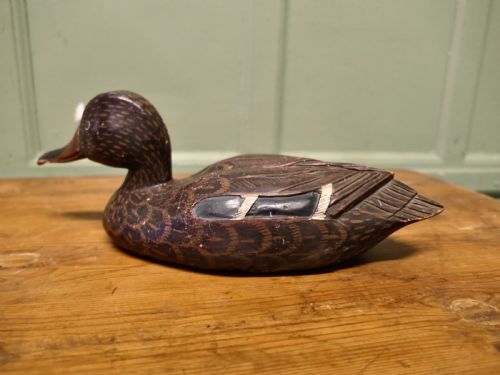
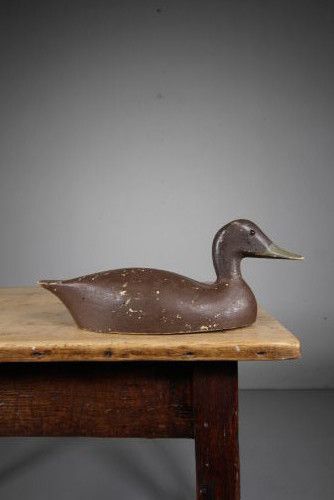
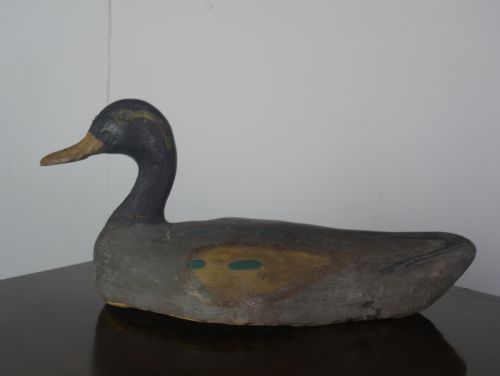


Antique Duck Decoy
An antique duck decoy brings the character of the shoot and the water directly into a room, carved from timber and painted by hand.
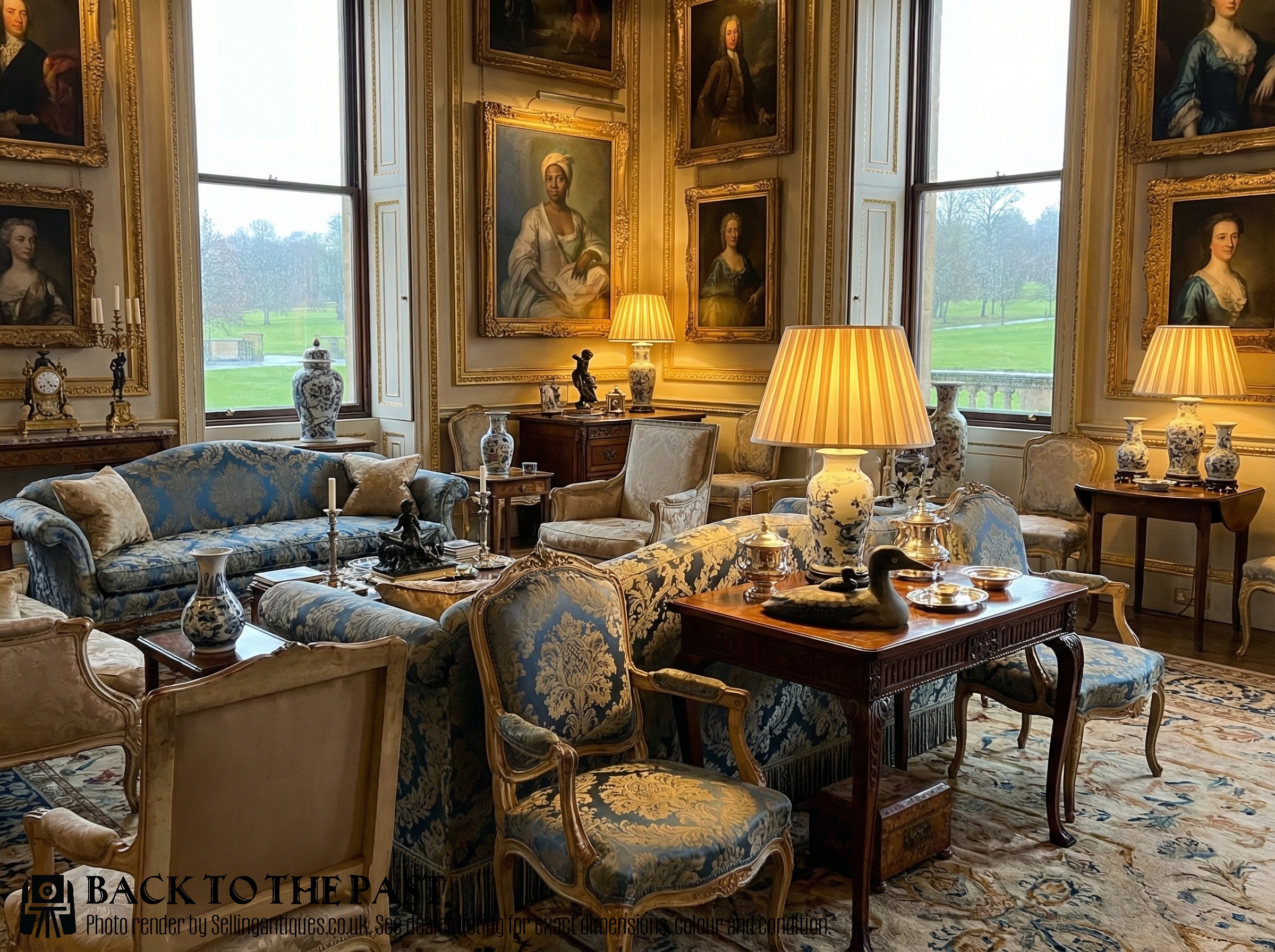
Antique Duck Decoy
When you search for an antique duck decoy, you are looking at working water bird sculptures shaped from timber and painted to lure game. The examples met most often on this page date from the nineteenth century through the nineteen thirties, spanning Edwardian pieces and early twentieth century folk art.
Forms range from solitary mallard figures to studies of an American loon with her chick or a duckling fashioned in papier mâché and straw. English origins dominate the selection, alongside items originating from France.
These objects function purely as decorative sculptures today, valued for their rustic presence rather than any sporting use. They sit easily upon a shelf, mantelpiece or table as quintessential decorative objects.
Materials and construction methods
Makers fashioned the bodies primarily from carved wood, timber and papier mâché stuffed with straw. Artisans shaped these materials using hand tools to create the characteristic silhouette of a swimming water bird.
Surfaces received layers of paint, sometimes incorporating glass eyes to heighten the realism of the decoy. Certain pieces retain original paint, while others display the weathered patina accrued over decades of exposure.
One exceptional folk art study pairs an American loon with her accompanying chick.
Judging the character of a decoy
Quality rests upon the vigour of the carving and the preservation of the original painted surface. Pieces that retain their early, unmolested paint layers hold significantly more visual authority than those subjected to later decoration.
The integration of specific details, such as inset glass eyes or sculptural forms like an American loon with a chick, elevates a standard decoy into an engaging piece of folk art.
The Antique Duck Decoy Glossary
- Folk art
- An expression of utilitarian craftsmanship created outside the formal academic tradition. These decoy ducks and water bird studies embody that tradition.
- Papier mâché
- A composite material consisting of paper pieces or pulp bound with glue or paste. In this collection, it appears combined with straw to form lightweight studies.
- Decoy
- A carved bird or animal figure used to attract wildfowl within range of a hunter. They now survive as decorative sculptures.
- Edwardian
- Dating from the reign of King Edward VII, spanning the early years of the twentieth century. Pieces from this era frequently exhibit distinct English folk art characteristics.
Antique Duck Decoy: Frequently Asked Questions
What is an antique duck decoy?
An antique duck decoy is a carved wooden bird once utilised by hunters on the water to attract wildfowl. Today they are collected and displayed as decorative sculptures.
They represent a direct link to rural traditions, combining primitive carving with expressive hand painting.
How do I date an antique decoy?
Dating relies upon the materials, tool marks and paint style visible on the piece. Evidence from our listings spans the nineteenth century through the nineteen thirties.
Edwardian examples and pieces from the nineteen twenties or thirties often show distinct shifts in timber selection and finishing techniques.
Where were these decoys made?
The pieces originate predominantly from England and France, reflecting domestic shooting traditions across those regions. English country folk art is particularly well represented.
Local workshops and individual makers produced these objects for practical use on local rivers and marshes.
How should I display a decoy?
Decoys sit comfortably on bookshelves, sideboards or mantels as sculptural decorative objects. Their rustic forms complement both traditional and modern interiors.
Keep them away from direct heat sources to protect the wooden bodies and original painted surfaces.