
Antique Folk Art Carving
When you handle antique folk art carving, you encounter utilitarian objects and figures shaped by hands far from urban workshops.

Antique Folk Art Carving
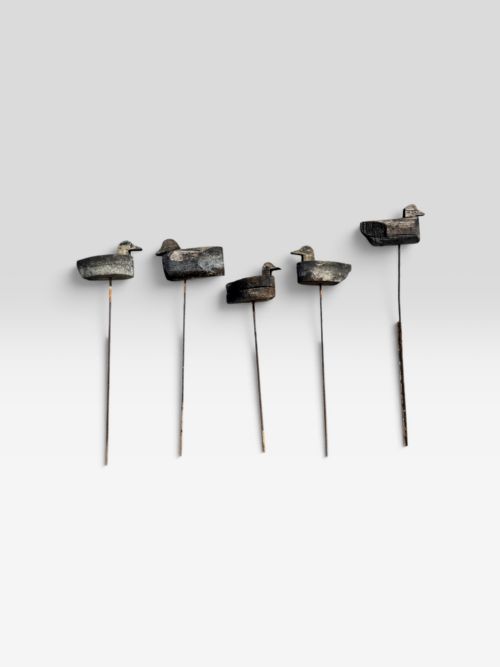
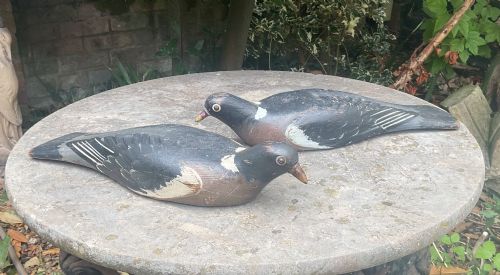
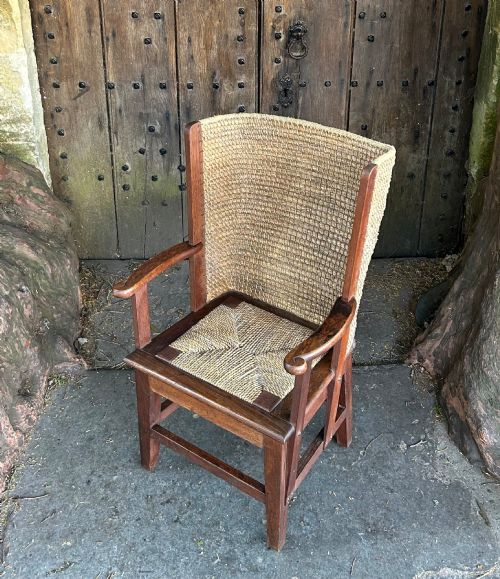
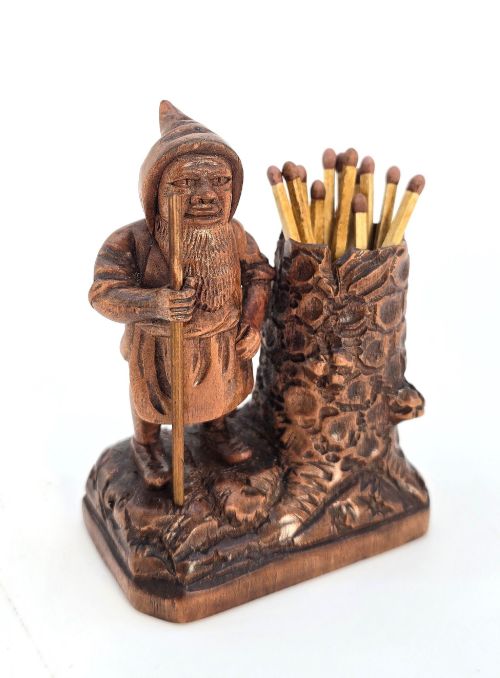
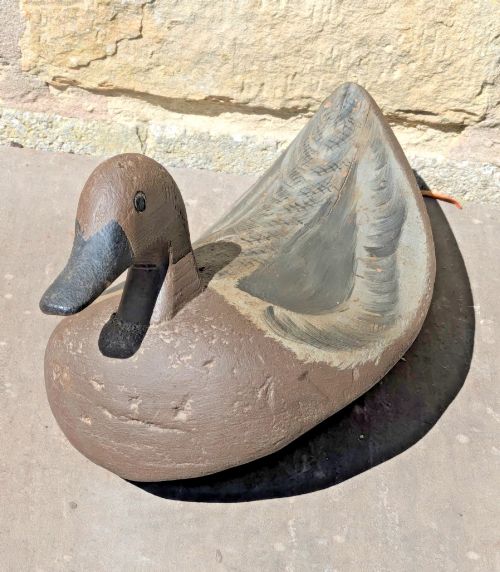
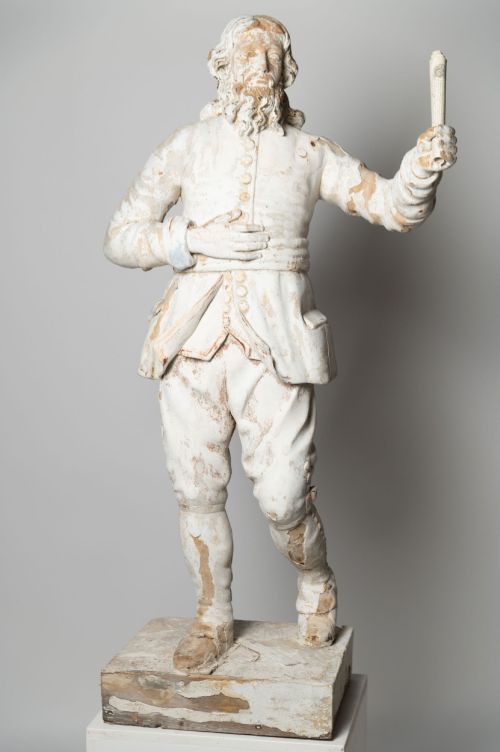
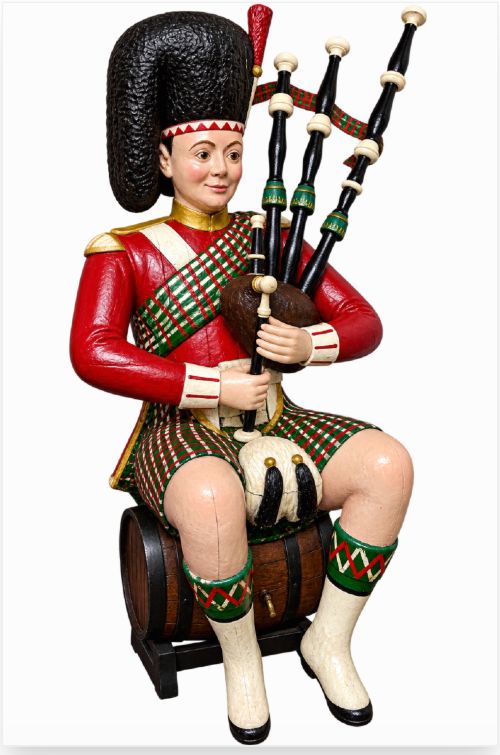
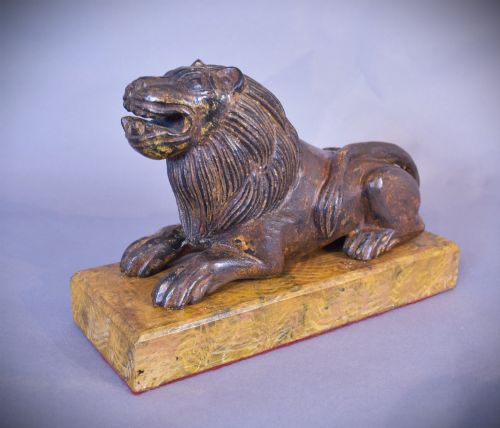
An antique folk art carving encompasses a diverse group of objects created by makers who often worked outside formal artistic traditions. The items range from practical household pieces like chip carved foot stoves and mangle boards to decorative sculptures, bird decoys, and treen knitting sheaths.
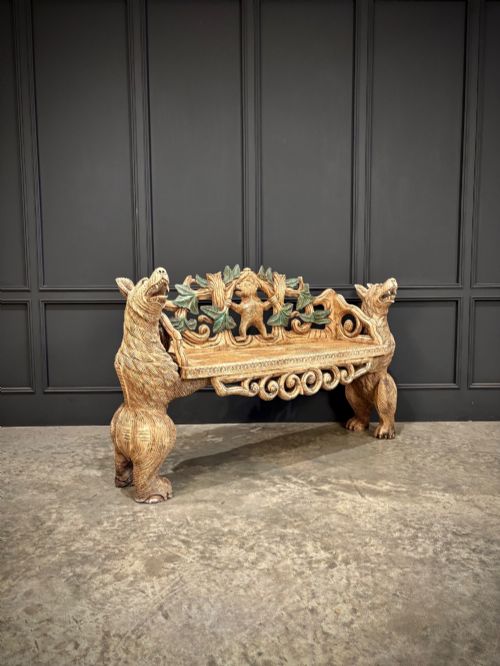
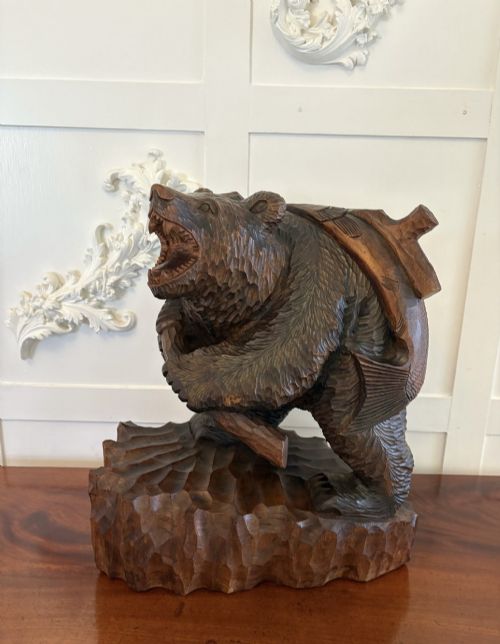
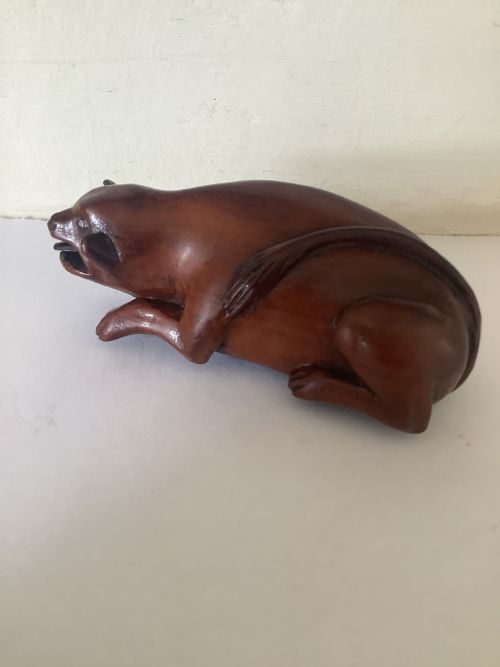
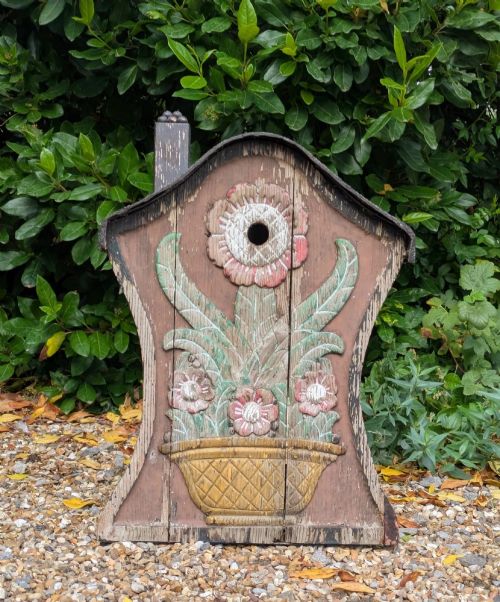
The selection on this page draws primarily from the nineteenth century and the early decades of the twentieth century, alongside earlier examples originating from England, Scandinavia, France, and Japan. Common regional forms include Frisian chip carved items, Swedish bird boxes, and Swiss Black Forest animal figures.
Buyers look for these pieces to add texture and history to domestic interiors, drawn to the individuality of each object. Every surviving carving records personal utility, regional style, or private devotion.

Materials and construction
Makers utilised available local timbers such as oak, pine, fruitwood, walnut, and linden wood, working directly with the grain using simple handheld gouges, knives, and chisels. Many utilitarian items and sculptural figures retain their original paint or surface decoration, applied to enhance the carved details or protect the wood.
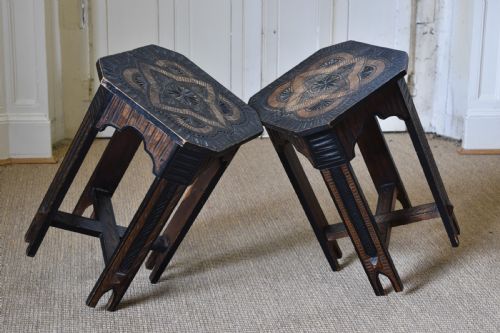
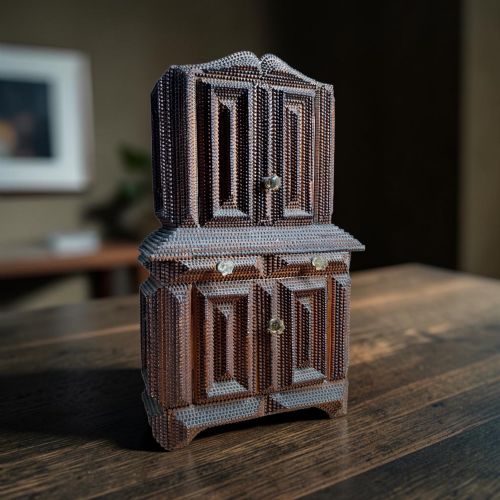
Techniques varied from deep figurative modeling found in religious saints and animal sculptures to repetitive geometric chip carving applied to foot stoves and boxes. Tramp art constructions utilised discarded packaging wood and cork, assembled through layering, notch-cutting, and basic pinning without sophisticated joinery.
Antique Folk Art Carving Retail Price Guide 2026
Typical asking prices for folk art carving among the pieces listed under this phrase on Sellingantiques today, from the lower quarter to the upper quarter. They describe what is for sale here now, not the wider market.
Someone once spent months carving an entire four-masted sailing ship diorama inside a box, just to watch the world sail by indoors.
Judgments of quality
Quality in these carvings rests upon the confidence of the maker's hand and the clarity of the form. A strong piece displays decisive toolwork and expressive proportion, whereas lesser examples appear stiff, hesitant, or overly formulaic in execution.
Surface preservation defines the desirability of a carved object. Examples that retain their untouched original painted finish, patination, and clear signs of handling command greater appreciation than those stripped or heavily restored.
The Antique Folk Art Carving Glossary
- Chip carving
- A decorative technique where small chips are removed from a wooden surface with a knife to create geometric patterns. This method is frequently seen on Frisian foot stoves and mangle boards.
- Treen
- Small handmade wooden household objects and utilitarian wares produced before the widespread adoption of plastics. Examples include knitting sheaths, snuff boxes, and small containers.
- Decoy
- A carved and painted wooden bird or animal used historically to attract wildfowl during hunting. Working decoys often display robust, simplified forms and weathered paint surfaces.
- Tramp art
- A style of woodwork where self-taught makers carved discarded materials, particularly cigar boxes and crate wood, into layered geometric patterns. Common items include frames, boxes, and small cabinets.
- Memento mori
- An artistic or symbolic reminder of the inevitability of death, often carved in bone or wood. These pieces reflect personal contemplation and historical mourning customs.
Antique Folk Art Carving: Frequently Asked Questions
What is folk art carving?
Folk art carving refers to decorative and utilitarian objects made by self-taught or traditional craftsmen rather than formally trained academic sculptors.
These pieces include decoys, toys, household tools, and figures shaped by regional customs and personal necessity.
How were antique foot stoves used?
Antique foot stoves were small wooden boxes containing a metal tray for hot embers, placed beneath heavy skirts or blankets to warm a person.
They often feature elaborate chip carving and perforations on the top to let heat escape safely.
How do I identify tramp art?
Tramp art is characterised by chip-carved geometric layers built from scrap wood, such as discarded cigar boxes, using pocket knives.
Items typically include mirrors, boxes, and small furnishings with distinctive notched relief patterns.
What are treen knitting sheaths?
Knitting sheaths were wooden holders tucked into an apron or belt to support one knitting needle while working on wool.
English and Cumbrian examples often feature intricate punchwork, incised lines, and initials carved by suitors or family members.
How should I care for wooden folk art?
Wooden carvings require stable indoor humidity away from direct heat sources and strong sunlight to prevent cracking or warping.
Dust them gently with a dry cloth and avoid applying modern polishes that can alter historic painted or patinated surfaces.