
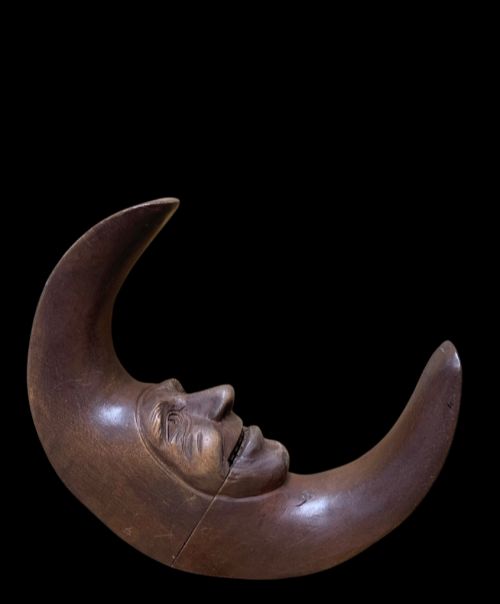


Dark Wood Nutcracker
These dark wood nutcracker examples are carved wooden tools for breaking shells, prized by collectors for their rich material and expressive folk art forms.
Dark Wood Nutcracker
When you search for a dark wood nutcracker, you find carved wooden implements from the Georgian, Victorian, and Edwardian eras. These pieces range from simple treen forms to elaborate Black Forest carvings and novelty items.
The most common version on this page is the carved wooden figural nutcracker, often taking the shape of animals, heads, or celestial motifs like the man in the moon. They bridge the gap between functional kitchenalia and expressive sculpture.
Makers shaped these objects using traditional hand-carving methods, resulting in tactile domestic items that display rich dark patination accumulated over generations of handling.
How they were made
These objects are fashioned from dense timbers such as walnut, linden wood, and general hardwood, chosen for their strength under mechanical pressure. Craftsmen selected dark wood varieties that took a fine polish and revealed deep grain patterns.
Carvers utilised hand chisels and gouges to shape figural details, sometimes incorporating brass hinges or mechanisms to operate the lever action. The surfaces were typically finished with wax to protect the timber and enhance the dark colour.
Dark Wood Nutcracker Retail Price Guide 2026
Typical asking prices for dark wood nutcracker among the pieces listed under this phrase on Sellingantiques today, from the lower quarter to the upper quarter. They describe what is for sale here now, not the wider market.
The listings span the Georgian period, the nineteenth century, 1900, 1910, and the Edwardian era.
What varies in quality
The integrity of the mechanism and the preservation of the original wooden surface dictate desirability. Pieces that retain a deep, unpolished patina command greater attention from discerning collectors.
The Dark Wood Nutcracker Glossary
- Treen
- Small handmade wooden objects for domestic use. This term covers items like turned acorn boxes and utilitarian treen nut crackers.
- Black Forest
- A style of ornate wood carving originating from the mountainous region of central Europe. Pieces often depict naturalistic animals and intricate foliage.
- Folk art
- Utilitarian items decorated or shaped by self-taught artisans. These works emphasise functional design combined with vernacular cultural motifs.
- Gadget nut cracker
- Mechanical tools featuring concealed levers or walking cane adaptations. Such pieces combine engineering ingenuity with traditional woodworking.
Dark Wood Nutcracker: Frequently Asked Questions
What is a dark wood nutcracker?
A dark wood nutcracker is a carved wooden implement designed for cracking nuts, originating primarily from the nineteenth and early twentieth centuries.
These pieces often take sculptural forms, ranging from figural human heads to animals and novelty walking canes.
How were these nutcrackers used?
Owners operated them at the dining table during dessert courses to crack various hard-shell nuts. The leveraged handles or screw mechanisms provided the mechanical advantage needed to break shells.
Beyond simple utility, many functioned as decorative conversation pieces for Victorian and Edwardian households.
How do I care for antique wood?
Keep wooden nutcrackers away from direct heat sources and sudden temperature fluctuations to prevent the timber from splitting. Occasional application of a suitable wax helps maintain the surface finish.
Avoid washing them in water, opting instead for gentle dusting with a soft cloth.
How do I identify the period?
Dating relies on stylistic clues, tool marks left by the carver, and the wear patterns on the timber. Victorian and Edwardian examples often exhibit specific regional carving traits and hardware styles.
Examining the patina and construction methods helps distinguish Georgian treen from later nineteenth-century production.