
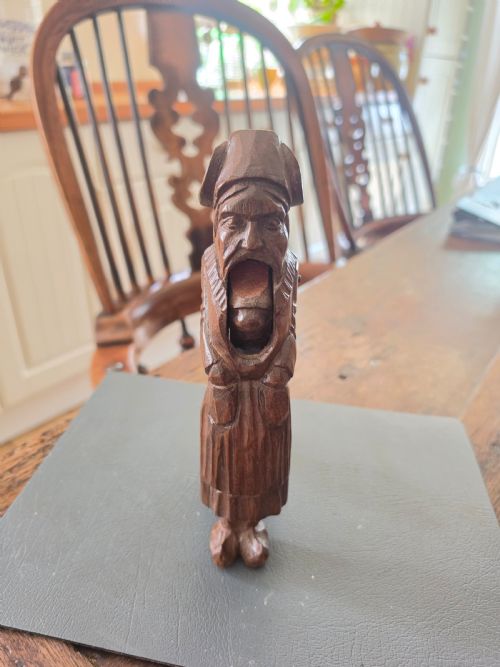


Folk Art Nutcracker
Folk art nutcrackers are carved wooden tools that collectors prize for their character and everyday utility.
Folk art nutcracker
Folk art nutcrackers span the Georgian, 19th century and Edwardian periods, appearing in forms such as signed oak examples, acorn treen designs and hand-carved wood pieces. Buyers searching this phrase encounter rustic interpretations that emphasise individual handwork over factory production.
The objects combine domestic utility with sculptural carving. Each piece reflects the aesthetic choices of anonymous makers working primarily in Britain during the eighteenth and nineteenth centuries.
Materials and construction
Makers utilised native timbers, primarily selecting oak and various hardwoods for durability under pressure. Wood selection determined the longevity of the lever or screw mechanism required to crack shells.
Makers shaped the pieces entirely by hand using gouges, chisels and saws. Simple turned elements appear alongside fully carved figural or botanical subjects like acorns.
Retail Price Guide 2026
Typical UK retail prices for folk art nutcracker, calculated from the Sellingantiques database of over a million retail prices indexed since 2003. This retail price guide relies exclusively on Sellingantiques data; no external sources or auction records are used, so the figures do not describe the wider market.
One tiny Georgian treen nutcracker takes the exact shape of an oak acorn, mirroring the fruit it was designed to crack.
Judging quality
Quality rests upon the depth and vigour of the carving. Stronger pieces display confident tool marks and well-proportioned forms rather than stiff, mechanical symmetry.
The choice of timber and the preservation of original surface patination distinguish finer examples. Heavy dark hardwoods and well-figured oak achieve a richer tactile presence through age and use.
The Folk Art Nutcracker Glossary
- Treen
- Small wooden domestic objects made by turning or carving. The term derives from the old English word for tree.
- Hardwood
- Timber from broad-leaved deciduous trees such as oak. These dense woods resist splitting during heavy use.
- Folk art
- Utilitarian or decorative objects made by self-taught or traditional craftsmen. Such pieces often bypass academic artistic conventions.
- Patina
- The surface sheen and colour developed through handling, polishing and ageing over centuries. It provides a visual record of an object's history.
Frequently Asked Questions
What is a folk art nutcracker?
A folk art nutcracker is a hand-carved wooden tool made to crack nuts, produced outside academic traditions by local craftsmen.
These pieces range from simple utilitarian levers to whimsical carved shapes created for daily household use.
How old are these nutcrackers?
Surviving examples on this page date from the Georgian period through the nineteenth century and into the Edwardian era.
Makers worked primarily with oak and various hardwoods during these periods to create durable kitchen implements.
How were wooden nutcrackers used?
Owners used them at the dining table or by the hearth to break open hard-shelled nuts like walnuts and hazelnuts.
The leverage provided by the carved wooden jaws allowed users to apply sufficient force without modern metal mechanisms.
How do I care for antique wood?
Keep wooden objects away from direct heat sources and dramatic humidity changes to prevent the timber from splitting.
Occasional light application of neutral wax helps nourish the dry historic wood and preserves the surface patina.