
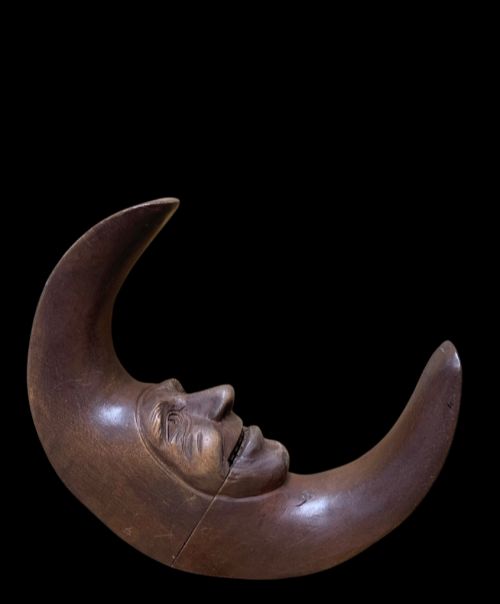


Carved Timber Nutcracker
These carved timber nutcracker examples combine function and sculpture, offering tactile folk art charm for any interior.
Understanding Carved Timber Nutcracker Forms
The versions met most frequently on this page originate from the Black Forest region or broader folk art traditions. Common forms include monkeys, clenched fists, and whimsical faces such as the man in the moon.
Materials span walnut and various hardwoods chosen for strength and grain. Pieces generally date from the late nineteenth century through to the early decades of the twentieth century.
Materials and Construction
Carved timber nutcracker items rely on dense woods like walnut and unspecified hardwoods that withstand repeated pressure. Artisans shape these timbers using hand gouges and chisels to achieve detailed figurative expressions.
Certain examples integrate glass elements, such as inlaid eyes that bring life to animal and human carvings. The mechanical leverage points are integrated directly into the wooden structure or reinforced with metal pins.
Retail Price Guide 2026
Typical UK retail prices for carved timber nutcracker, calculated from the Sellingantiques database of over a million retail prices indexed since 2003. This retail price guide relies exclusively on Sellingantiques data; no external sources or auction records are used, so the figures do not describe the wider market.
A good carved timber nutcracker lets you spend an evening cracking walnuts with a tiny wooden monkey.
Assessing Quality and Execution
Quality rests upon the depth of the carving and the expressiveness of the subject matter. A chunky, well-defined fist or a carefully detailed monkey displays greater sculptural ambition than simpler geometric shapes.
The Carved Timber Nutcracker Glossary
- Black Forest
- A style of wood carving originating from the mountain region of Central Europe, famous for realistic animal and nature motifs.
- Folk art
- Items created by self-taught or traditional craftsmen for everyday domestic use, prioritising character over academic precision.
- Hardwood
- Timber derived from broad-leaved trees, providing the density required for mechanical kitchen implements.
- Patina
- The surface sheen and darkening acquired by wood through age and human touch.
Frequently Asked Questions
What periods do these nutcrackers come from?
The pieces span the nineteenth century and the early twentieth century, specifically around nineteen hundred.
They reflect traditional hand-carved methods of those eras before mass production took over.
What materials are typically used?
Makers utilised dense woods including walnut and other native hardwoods.
Selected examples also incorporate glass for specific details like eyes.
How were they used originally?
They served as functional kitchen tools designed to crack hard nutshells using lever action.
At the same time, their decorative carving meant they were often left on display in dining rooms.
What styles are common?
Folk art and Black Forest styles dominate the selection.
Common figural themes include clenched fists, animals, and celestial faces.