
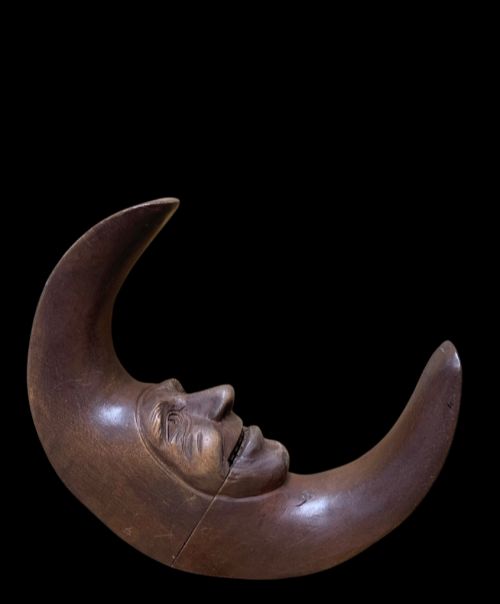


Brown Wooden Nutcracker
These brown wooden nutcracker pieces combine practical utility with whimsical carving, offering tactile folk art charm for any mantle or sideboard.
Brown Wooden Nutcracker
When you search for a brown wooden nutcracker, you encounter functional treen and figural carving rooted in domestic life. The selection here spans the Georgian period through the Victorian era and into the early twentieth century.
Figural forms dominate the pieces you meet on this page. You find squirrels, monkeys, fists, acorns, and the man in the moon rendered with notable character.
Many examples belong to the Black Forest tradition or broader folk art and rustic folk art categories. These items serve both as practical instruments for the table and as expressive small sculptures.
How they were made
Maker-carvers utilised dense timbers such as walnut, fruitwood, linden wood, and general hardwood to withstand the pressure of cracking shells. These dark hardwoods and lighter fruitwoods were shaped entirely by hand with gouges and chisels.
Inlaid glass elements occasionally appear to form the eyes of figural subjects like animals and carved faces. The grain of the wood is left visible to celebrate the natural material alongside the artisan's chisel marks.
One cheerful Victorian specimen depicts the man in the moon grinning eternally while crushing hazelnuts.
What varies in quality
The distinction between standard examples and exceptional pieces rests upon the confidence and depth of the carving. Stronger items display expressive anatomical detail in figures such as monkeys and clenched fists rather than flat or hesitant lines.
Condition and the preservation of the original surface finish influence the character of each piece. Items retaining a rich, unpolished patina demonstrate greater integrity than those altered by later sanding or heavy modern varnishes.
The Brown Wooden Nutcracker Glossary
- Treen
- Small wooden domestic objects made by turners and woodworkers. This term covers items from utilitarian spoons to decorative nutcrackers.
- Black Forest
- A style of wood carving originating from the mountainous region of central Europe during the nineteenth century. It is particularly known for realistic depictions of animals and foliage.
- Folk art
- Utilitarian and decorative objects made by self-taught or traditional artisans. These pieces prioritise expressive character over academic precision.
- Fruitwood
- Timber sourced from fruit-bearing trees such as pear, apple, or plum. Carvers favoured it for its fine, even grain that allowed for crisp detail.
Brown Wooden Nutcracker: Frequently Asked Questions
How were these nutcrackers used?
These items sat upon dining tables or sideboards after meals to crack hard-shelled nuts for guests. Users operated the levers or screws to apply steady pressure.
Despite their practical function, the lively figural carvings meant they remained decorative conversation pieces when not in active service.
How do I care for a wooden nutcracker?
Keep wooden pieces away from direct heat sources and radical humidity changes to prevent the timber from splitting. A light application of appropriate wax maintains the condition of the surface.
Avoid washing them in water or using harsh chemical cleaners, as moisture damages antique timber and historic finishes.
How do I tell Victorian pieces apart from later ones?
Victorian examples often display heavier proportions and distinct tool marks characteristic of mid-to-late nineteenth-century work. Later pieces from around nineteen hundred sometimes show finer, more stylised detailing.
Examining the wear patterns on the high-friction areas offers further clues regarding the age and frequency of use.
What is Black Forest carving?
Black Forest carving refers to nineteenth-century wooden sculptures and functional objects produced in the mountainous European region. Animals, particularly bears, dogs, and squirrels, form the primary subjects of this school.
The style is celebrated for its naturalistic textures and dramatic sense of movement captured within solid blocks of hardwood.