
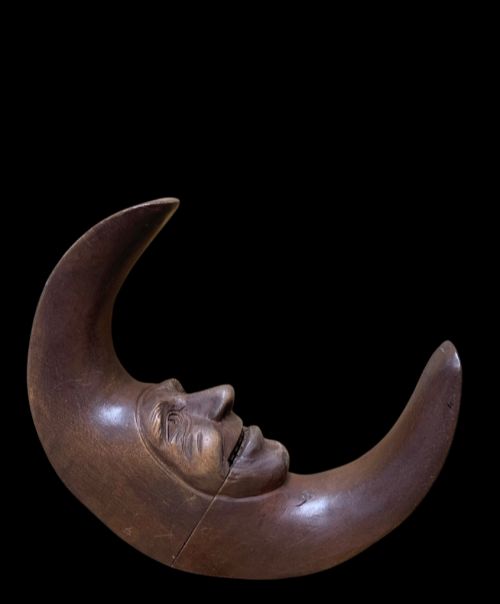


Carved Wood Nutcracker
These carved wood nutcracker pieces combine tactile utility and folk art sculpture, offering collectors a characterful piece of domestic history to handle and display.
Carved Wood Nutcracker
A carved wood nutcracker is a functional domestic tool rendered in figural or novelty forms, spanning the Georgian, Victorian, and Edwardian eras. Buyers searching for a carved wood nutcracker will encounter items ranging from simple treen acorns to complex Black Forest animal carvings.
The selections on this page draw heavily from nineteenth-century craftsmanship, including rustic folk art and Victorian novelty pieces. Walking cane variants with carved heads and lever-type mechanisms also appear among the traditional hinged pliers forms.
Animal subjects dominate the inventory, particularly bears, squirrels, and monkeys, alongside whimsical human forms like the man in the moon or a clenched fist. These objects served both as dining table utilities and as ornamental conversation pieces in period homes.
How they were made
Carvers utilised dense timbers such as walnut, fruitwood, linden wood, and ebony to withstand the pressure of cracking shells. These hardwoods allowed for deep relief work and durable hinge housings without splitting under strain.
Makers embellished the timber with applied details such as glass eyes for animal figures and brass hardware for lever mechanisms or joints. Hand carving techniques brought out the grain and texture of the dark wood and walnut surfaces.
Period styles span Georgian, Victorian, Edwardian, Black Forest, and rustic folk art forms.
What varies in quality
Depth and precision of the carving separate ordinary utility items from superior sculptural works, particularly in Black Forest and folk art examples. Master carvers defined fur, facial expressions, and hands with anatomical confidence rather than rough blocking.
Integration of the mechanical hinge with the carved body affects both utility and aesthetic coherence, where finer pieces conceal or harmonise the metalwork within the animal or human form. The choice of timber also dictates the finish, with rich walnut and figured fruitwood yielding a deeper patina than plain softwood.
The Carved Wood Nutcracker Glossary
- Black Forest
- A style of wood carving originating from the wooded mountain region in central Europe, famous for realistic animal sculptures. Pieces from this tradition often depict bears and naturalistic foliage.
- Treen
- Small handmade wooden domestic objects produced from the sixteenth century onwards. Acorns and simple handheld items fall into this traditional category of treenware.
- Folk art
- Utilitarian items decorated or shaped by self-taught or traditional makers outside academic traditions. These objects rely on regional styles and practical ingenuity rather than factory standards.
- Lever type
- A mechanical design using a metal hinge and handle leverage to crack shells with minimal manual force. This configuration allows for more elaborate figural handles than traditional plier nutcrackers.
Carved Wood Nutcracker: Frequently Asked Questions
What woods were used for antique nutcrackers?
Makers selected dense hardwoods capable of enduring the pressure of cracking shells without fracturing. Walnut, fruitwood, linden wood, and ebony appear frequently across the surviving pieces.
Dark wood and general hardwood categories also feature in older listings, providing durable surfaces that took a fine polish and deep hand carving.
Were these nutcrackers meant for daily use?
These pieces served as practical dining table implements for cracking nuts during dessert courses. The robust hardwood construction and functional levers or hinges were engineered for real domestic service.
Over time, many transitioned from working tools to decorative objects collected for their whimsical folk art forms.
Why are animals so common in these carvings?
Animals like bears, squirrels, and monkeys fit naturally into the thematic traditions of nineteenth-century folk art and Black Forest woodworking. Carvers used familiar creatures to add personality and humour to everyday utensils.
These figural designs transformed a mundane kitchen tool into a miniature sculpture that appealed to Victorian tastes for novelty.