


Antique Black Forest
Antique Black Forest carvings bring the wildlife and rustic charm of the European mountains directly into interior spaces through intricately worked timber.

Antique Black Forest
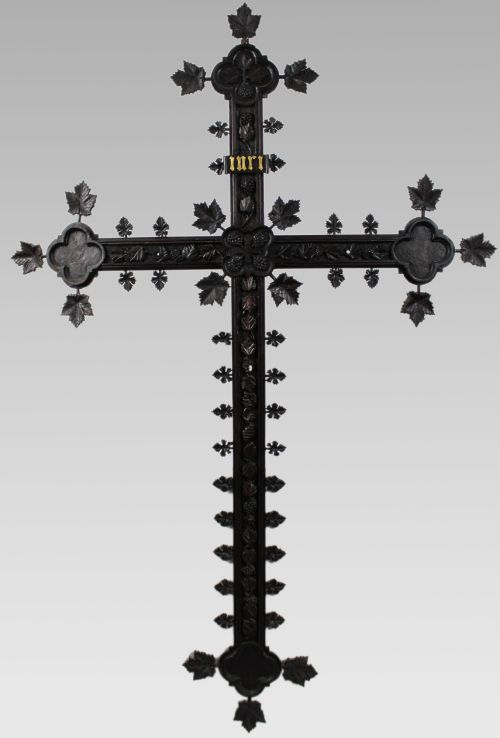
When you examine antique Black Forest pieces, you are looking at deeply carved wooden objects that emerged primarily from Swiss and German mountain workshops during the nineteenth and early twentieth centuries.
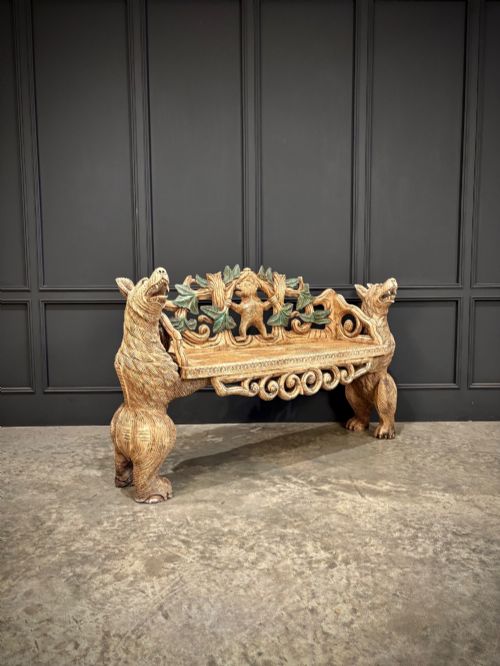
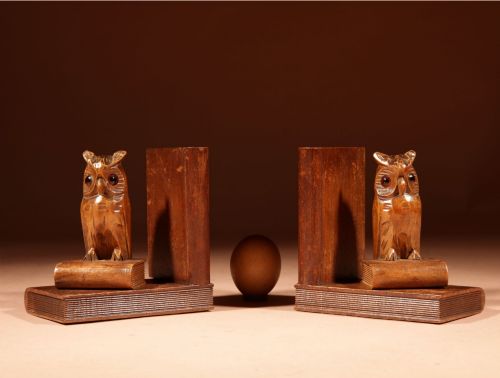
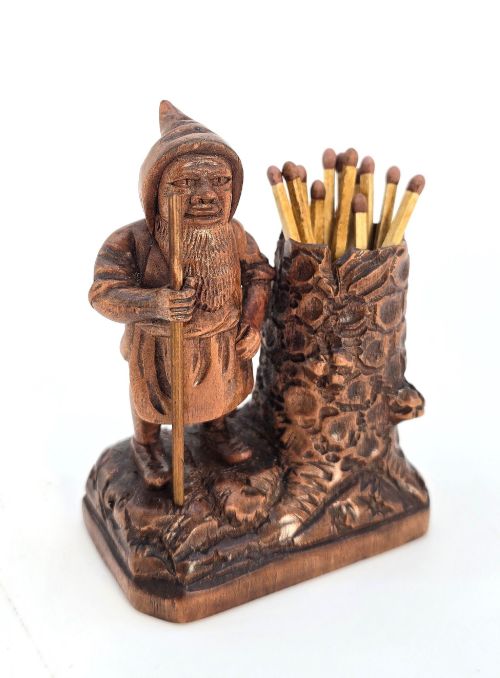
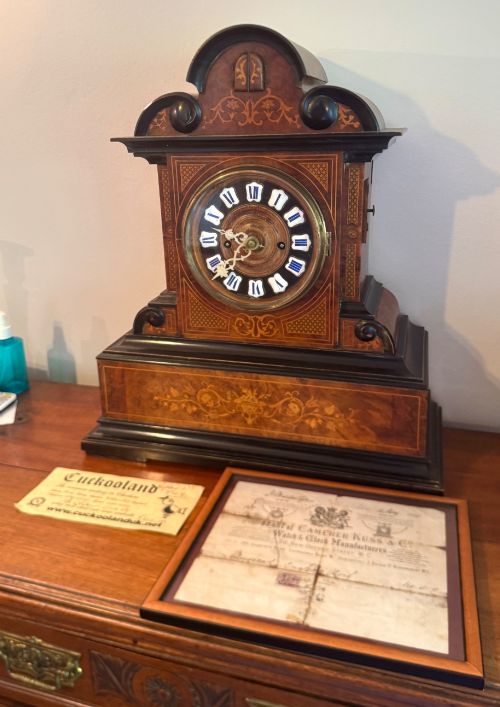
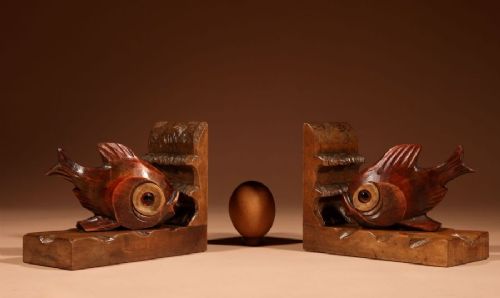
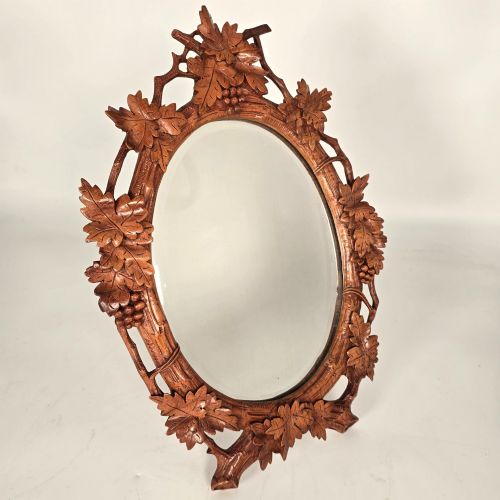
The most common forms you will encounter on this page range from domestic animal sculptures, particularly bears and dogs, to functional items such as cuckoo clocks, bookends, match holders, and wall mirrors.
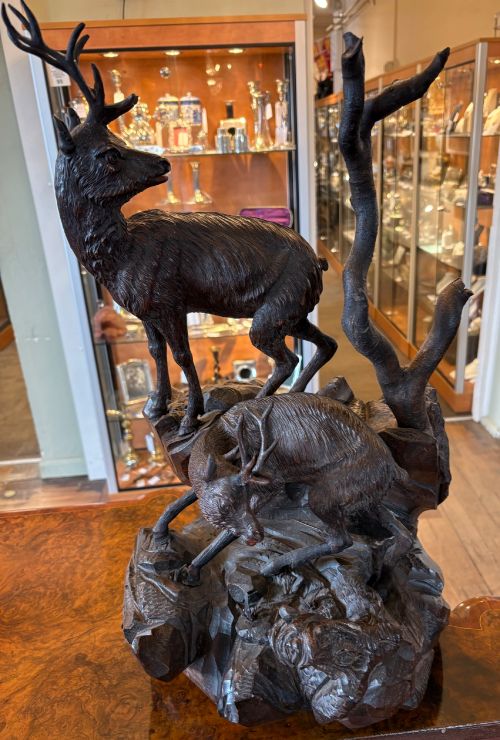
Pieces often incorporate naturalistic motifs of woodland creatures, hunting scenes, and alpine folk art that reflect the romantic Victorian fascination with wilderness aesthetics.
Materials and Carving Techniques
Carvers predominantly utilised native European timbers, selecting pale linden wood and lime wood for detailed figurative work alongside harder walnut and oak for structural stability in larger furniture.
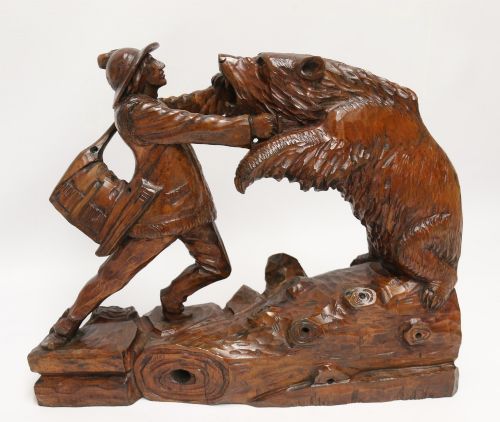
Craftsmen employed specialised gouges and chisels to achieve deep, three-dimensional relief, frequently rendering fur, feathers, and foliage with meticulous textural accuracy by hand.
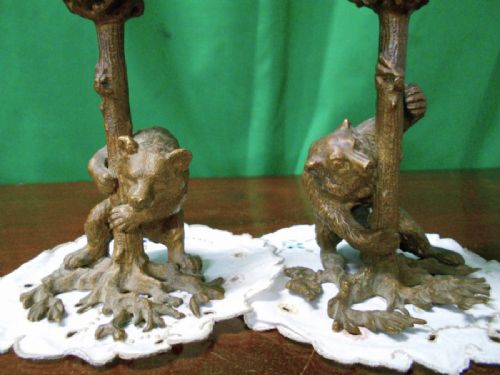
Glass eyes were often inserted into animal sculptures to heighten realism, while secondary materials like brass, copper, and horn appeared in clocks, hardware, and occasional tables.
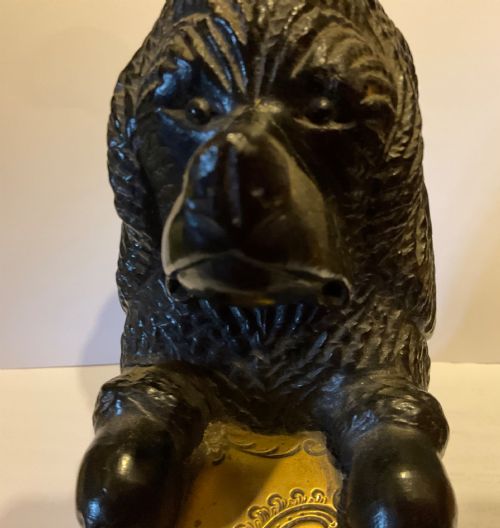
Bears in these carvings frequently hold cards, smoke pipes, or serve drinks, revealing a surprisingly playful Victorian sense of humour.
Assessing Craftsmanship and Detail
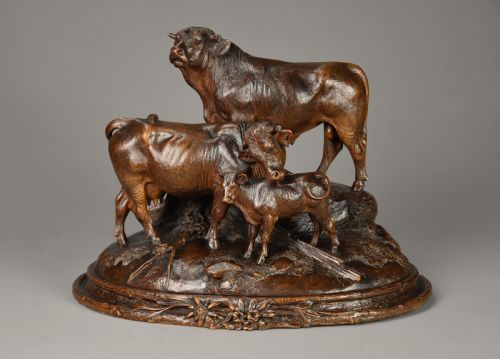
Quality rests on the depth of the carving and the anatomical accuracy of the subjects, where master carvers achieved lifelike tension in muscle and expression rather than stiff, generic forms.
The handling of fur and natural textures distinguishes superior items; finer pieces display individual hair strands and subtle layering, whereas simpler objects show flat, repetitive chisel marks.
Proportion and scale also dictate worth, as large animal groups and complex architectural clock cases demand greater technical mastery from the woodworker than small, mass-produced trinkets.
J Huggler
The Antique Black Forest Glossary
- Linden wood
- A pale, fine-grained timber favoured by mountain carvers for its cooperative texture under intricate tools. It allowed artisans to execute deep undercutting without splitting.
- Swiss Brienz
- A prominent centre of woodcarving in Switzerland known for producing highly detailed figurative groups and animal studies. Pieces from this region often exhibit exceptional naturalism.
- Match striker
- A functional domestic accessory featuring a rough ceramic or metal insert combined with carved wood. Owners scraped matches against these surfaces to ignite them safely.
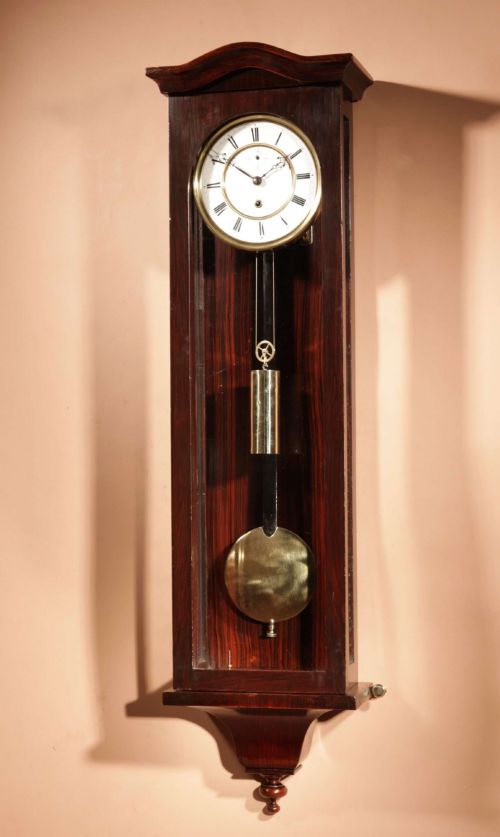
- Vienna Regulator
- A precision pendulum wall clock characterised by a long glass-fronted case and accurate movement. These timepieces were frequently housed in ornate wooden frames.
- Treen
- Small handmade wooden household objects designed for utility and display. Examples include turned bowls, boxes, and match holders intended for everyday Victorian life.
Antique Black Forest: Frequently Asked Questions
What animals appear most often in these carvings?
Bears dominate the sculptural output, appearing as inkwells, benches, and pipe stands, alongside stags, owls, dogs, and foxes.
Other mountain wildlife such as chamois and eagles also populate the genre, reflecting the hunting culture of the regions.
How do I care for antique carved wood?
Keep wooden pieces away from direct sunlight and sudden temperature shifts to prevent the timber from drying out and splitting.
Dust gently with a dry, soft brush rather than liquid polishes to preserve the original patina built up over decades.
Were these items purely decorative?
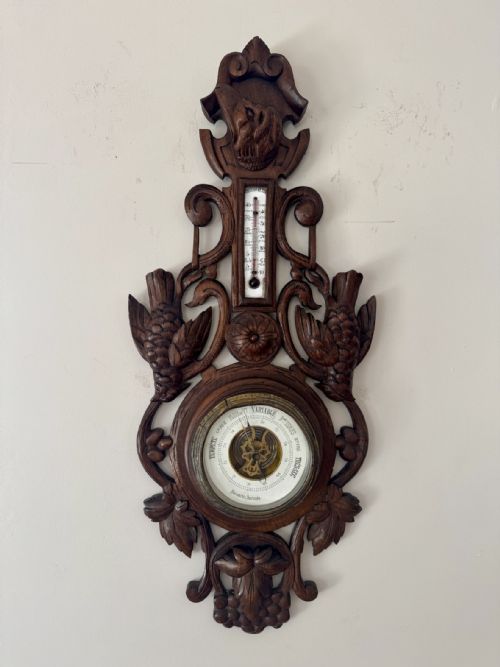
Many objects combined artistry with everyday utility, serving as humidors, jewellery boxes, umbrella stands, and wall barometers.
Victorian households valued domestic items that brought rustic narrative charm into formal parlours and studies.
How do I distinguish Swiss work from German work?
Workshop origins often reveal themselves through specific regional subjects, such as Swiss Brienz figures depicting local peasants and musicians.
German production frequently leaned towards heavy oak furniture, hunting trophies, and elaborate architectural clock cases.