
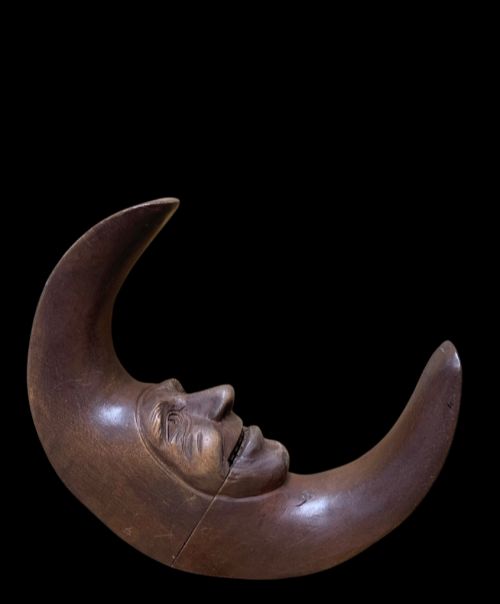


Wooden Nut Cracker
A wooden nut cracker is a carved domestic implement of the nineteenth and early twentieth centuries that brings rustic charm and tactile history to any collection.
Wooden Nut Cracker
When you search for a wooden nut cracker, you encounter hand-carved objects spanning the Georgian, Victorian, Edwardian and Black Forest traditions. The most common examples on this page date from the nineteenth century and the early nineteen-hundreds, taking the form of figural carvings and novelty treen.
These items range from simple treen acorns to expressive Black Forest pieces shaped like clenched fists or the man in the moon. You also find walking canes incorporating carved heads that double as functional nutcrackers.
How they were made
Maker-carvers selected dense timbers such as walnut, linden wood and other dark hardwoods to withstand the pressure of cracking shells. These materials were worked with hand gouges and chisels to achieve deep relief and smooth, tactile surfaces.
Many examples integrate brass pins and hinges to join the lever arms securely to the carved wooden bodies. The natural grain of the wood was typically left exposed, sometimes enhanced with dark wax polishes.
Current listings feature hardwood, walnut, linden wood and brass across Georgian, Victorian, Edwardian and nineteenth-century periods.
What varies in quality
Proportion and material choice also separate standard utilitarian items from superior examples. Finely figured walnut and crisp detail elevate a piece from a basic kitchen tool to a work of folk art.
The Wooden Nut Cracker Glossary
- Treen
- Small handmade wooden domestic objects produced from the sixteenth century onwards. These items were fashioned for everyday use and developed a rich patina through handling.
- Black Forest carving
- Woodwork originating from the mountainous regions of central Europe during the nineteenth century. This style is characterised by realistic animal and figural subjects carved with high relief.
- Folk art
- Utilitarian objects created by self-taught or local artisans outside formal academic traditions. These pieces prioritise expressive design and practical utility over orthodox manufacture.
- Gadget cane
- A nineteenth-century walking stick concealing a functional mechanism or tool within the shaft or handle. In this selection, the handle incorporates a nut-cracking device.
Wooden Nut Cracker: Frequently Asked Questions
How were antique wooden nutcrackers used?
These implements were operated by hand at the dining table or fireside to crack hard-shelled nuts like walnuts and hazelnuts. Users squeezed the levers or turned the screw mechanisms to apply pressure through the carved wooden jaws.
Despite their decorative appearance as Black Forest carvings or treen, they were robust domestic tools built for daily service after meals.
What periods do these nutcrackers come from?
The pieces listed span from the Georgian era through the Victorian period and into the Edwardian years up to nineteen-hundred and ten. Nineteenth-century examples form the majority of the selection.
Black Forest workshop production and English treen traditions dominate these specific decades, reflecting the peak of figural wood carving.
How do I care for a wooden nutcracker?
Keep wooden nutcrackers away from direct heat sources and dramatic humidity changes to prevent the timber from splitting. Occasional applications of a neutral microcrystalline wax help maintain the finish of the old wood.
Handle them gently along their moving joints to preserve the original brass pins and hand-carved hinges.