
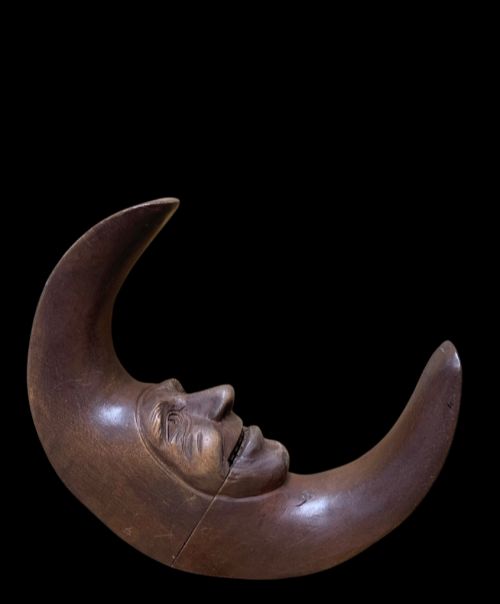


Vintage Wooden Nut Cracker
These vintage wooden nut cracker examples bring tactile 19th-century folk art directly to your table, combining robust mechanics with expressive hand-carved detail.
Vintage Wooden Nut Cracker
A vintage wooden nut cracker is a functional household implement shaped from timber, often taking whimsical or figurative forms that set it apart from standard metal hardware. The examples encountered on this page span the 19th century through to the early 20th century, encompassing distinct stylistic traditions.
Black Forest and folk art styles dominate the selection, showing hand-carved motifs like clenched fists, the man in the moon, and botanical acorns. These pieces function as both working kitchenalia and miniature wood sculpture, reflecting the decorative priorities of their period.
Materials and construction
Makers relied on dense timbers such as walnut, linden wood, and assorted dark hardwoods that could withstand the mechanical pressure of cracking shells without splitting. These materials were chosen for their close grain and suitability for intricate hand-carving.
Carvers utilised hand gouges and chisels to build high-relief figural designs, finishing the timber to highlight the natural grain and deep tones of the wood. Metal pins or hinges were integrated discreetly to join the levers while keeping the wooden exterior unified.
The listings on this page span the 19th century, Edwardian era, and 1900s, utilising walnut, linden wood, and assorted hardwoods.
Judging quality in carved nutcrackers
The integrity of the timber also dictates value, with well-preserved grain and stable construction outweighing mere age. Pieces that retain their original surface patina without excessive sanding show superior preservation.
The Vintage Wooden Nut Cracker Glossary
- Black Forest
- A style of wood carving originating from the mountainous region of central Europe, famous for realistic animal and figural motifs. Pieces in this tradition often utilise walnut and dark hardwoods.
- Treen
- Small handmade wooden household objects of utilitarian purpose. This term covers functional items like treen nut crackers shaped by traditional turners and carvers.
- Folk art
- Creative work produced by self-taught or vernacular makers within a cultural tradition. These objects prioritize expressive character over strict academic proportions.
- Hardwood
- Timber derived from broad-leaved trees, offering the density and strength required for robust mechanical implements. Walnut and linden wood are typical examples found in these pieces.
Vintage Wooden Nut Cracker: Frequently Asked Questions
How do you use an old wooden nutcracker?
These levers operate by placing the nut in the central aperture and applying gentle manual pressure to the handles. The leverage mechanism cracks the shell against the internal wooden stop.
Because the timber has aged over the decades, moderate pressure is recommended to protect the vintage structure from unnecessary stress.
How do I date an antique nutcracker?
Dating relies on examining the tool marks, style of the carving, and the choice of timber. Pieces from the Georgian and early nineteenth centuries often show simpler treen turning, whereas later Victorian and Edwardian examples lean toward elaborate figural carving.
Comparing the wear patterns and the oxidation of the wood helps place the object within the broader nineteenth-century timeline.
How do I clean a wooden nutcracker?
Dust the carvings gently with a soft, dry brush to remove particles from the recesses. Avoid submerging the wood in water or using harsh modern cleaning agents.
A light application of traditional beeswax polish can help nourish the dry timber and maintain its natural lustre.