

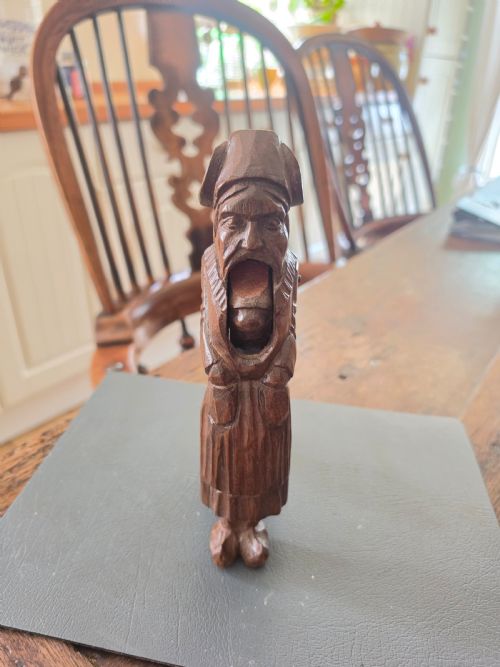


Folk Art Wooden Nutcracker
These folk art wooden nutcracker pieces are tactile domestic carvings that bring character and history to any mantelpiece.
Folk Art Wooden Nutcracker
A folk art wooden nutcracker is a carved domestic implement designed for cracking nuts, often taking playful or zoomorphic forms such as squirrels, acorns, or carved human heads. When you search this phrase, you encounter functional objects shaped by hand with distinct personality rather than factory uniformity.
The versions most commonly met on this page date from the nineteenth century, including Victorian and Edwardian examples alongside Black Forest pieces. Forms range from standard hand-held lever crackers to walking canes with carved heads and treen pocket pieces.
How they were made
Carvers shaped these pieces using traditional hand tools on regional timbers such as walnut, oak, fruitwood, linden wood, and general hardwood. The grain of the wood dictates the final appearance, often enhanced through simple oiled finishes rather than heavy varnishes.
Mechanical elements like brass hinges and levers are integrated directly into the wooden bodies to provide leverage for cracking shells. Sculptural details are achieved entirely through gouges and chisels, giving each piece its individual chisel marks and surface texture.
Folk Art Wooden Nutcracker Retail Price Guide 2026
Typical asking prices for folk art wooden nutcracker among the pieces listed under this phrase on Sellingantiques today, from the lower quarter to the upper quarter. They describe what is for sale here now, not the wider market.
Object types include standard nutcrackers alongside walking canes and treen acorns.
What varies in quality
Integration of mechanics also marks the range of quality. Finer items conceal functional metal pins within harmonious wooden designs, maintaining aesthetic balance alongside utility.
The Folk Art Wooden Nutcracker Glossary
- Black Forest
- A regional style of wood carving originating from central Europe, known for realistic depictions of animals and foliage. These items often utilise walnut and display deep relief work.
- Treen
- Small, functional wooden household objects made by turning or carving. Acorns and pocket items fall into this category.
- Fruitwood
- Timber derived from fruit-bearing trees such as apple or pear, valued by carvers for its fine, dense grain and smooth finish. It takes a pleasing patina over time.
- Gadget nut cracker
- A mechanical novelty piece utilising levers, screws, or concealed linkages to crack shells. These represent the more complex end of domestic treen.
Folk Art Wooden Nutcracker: Frequently Asked Questions
How were these nutcrackers used?
These pieces sat on dining tables or in drawing rooms to crack hard-shelled nuts after meals. Users operated them by hand, applying pressure through levers or screw mechanisms.
Their decorative nature meant they doubled as conversation pieces and mantle ornaments when not in active service.
Are these nutcrackers still functional?
Many of these pieces retain their mechanical ability to crack nuts safely. The sturdy construction of hardwood and brass hinges allows for continued use.
Collectors often choose to display them rather than subject historical wood to modern culinary stress.
How do I care for antique wood?
Keep wooden items away from direct heat sources and rapid temperature fluctuations to prevent splitting. Occasional light application of neutral wax helps nourish the timber.
Avoid submerging them in water or using harsh chemical cleaners on the carved surfaces.
How are different periods identified?
Nineteenth-century and Victorian examples often exhibit darker patination and distinct regional carving traditions like the Black Forest style. Edwardian pieces tend to show slightly softer lines and lighter hardwoods.
Material choices, such as oak or fruitwood, provide further clues to the era of manufacture.