
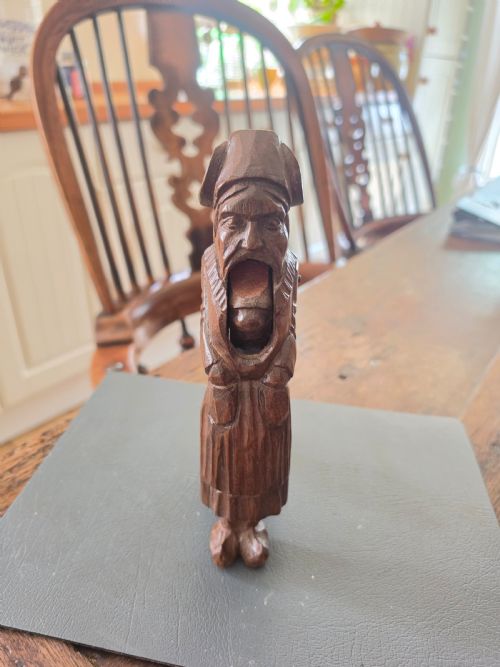
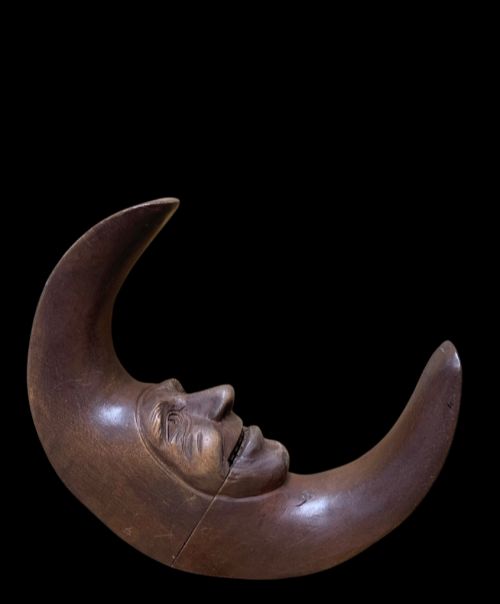


Hand Carved Wooden Nutcracker
These hand carved wooden nutcracker pieces are tactile folk art objects offering sculptural charm and utility from the nineteenth and early twentieth centuries.
Hand Carved Wooden Nutcracker
When you search for a hand carved wooden nutcracker, you enter a realm of tactile folk art and domestic utility spanning the Georgian, Victorian, and Edwardian periods.
The versions you are most likely to meet on this page take figural or rustic forms, often depicting animals, squirrels, monkeys, the man in the moon, or clenched fists.
Many examples emerge from the Black Forest tradition, rendered in walnut, fruitwood, oak, or linden wood with expressive detail.
How they were made
Carvers shaped these utensils from dense hardwoods such as walnut, oak, fruitwood, and linden wood using hand gouges and chisels.
Makers utilised the natural grain of the timber to give depth to fur, facial expressions, and organic forms like acorns.
Listings span the Georgian, Victorian, and Edwardian eras, featuring materials like oak, walnut, fruitwood, and linden wood.
What varies in quality
Pieces that retain a smooth, patinated surface through handling demonstrate greater age and careful preservation compared to later, softer examples.
The Hand Carved Wooden Nutcracker Glossary
- Black Forest
- A style of wood carving originating from the mountain region of central Europe, known for realistic animal figures and rustic scenes. These pieces often feature deep undercutting and dark patination.
- Treen
- Small handmade wooden domestic objects produced before the age of mass manufacturing. The term derives from the old word for tree.
- Fruitwood
- Timber sourced from fruit-bearing trees such as pear, apple, or plum, favoured by carvers for its fine grain and smooth finish. It takes a rich polish over time.
- Figural
- Art that represents recognizable human, animal, or mythical forms rather than abstract patterns. In nutcrackers, this includes characters like the man in the moon or a clenched fist.
Hand Carved Wooden Nutcracker: Frequently Asked Questions
How do these nutcrackers work?
Most utilise a lever or screw mechanism integrated into the wooden carving to apply pressure to the shell. The carver cleverly incorporated the functional hinge into the overall design of the animal or object.
While many remain entirely functional, modern owners often display them as sculpture rather than using them for cracking nuts daily.
What is Black Forest carving?
This style refers to wooden decorative items produced in the nineteenth century, particularly in Switzerland and Germany. Carvers specialised in lifelike animals and deep relief work.
Nutcrackers from this tradition typically feature bears, dogs, or squirrels rendered with striking realism and textured fur.
How do I date an antique wooden nutcracker?
Dating relies on the style of the carving, the choice of timber, and the type of metal hinge or pin used in the construction. Georgian and early Victorian pieces often show simpler treen forms, while late nineteenth-century examples display ornate Black Forest detailing.
Wear patterns and the depth of the patina also provide strong clues to the age of the timber.
How should I care for carved wood?
Keep wooden pieces away from direct heat sources and drastic humidity changes to prevent the timber from splitting. Occasional light dusting with a dry cloth is usually sufficient to maintain the surface.
Avoid using modern liquid polishes, which can build up and obscure the fine details of the hand carving.