
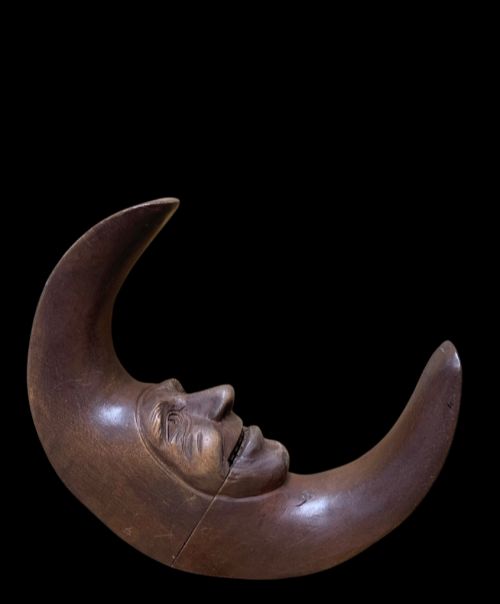


Novelty Wooden Nutcracker
A novelty wooden nutcracker combines functional domestic ironwork with expressive hand carving, offering both period charm and tactile mechanical interest.
What they are
A novelty wooden nutcracker is a functional object shaped into figurative and animal forms, taking inspiration from Victorian, Edwardian, and Black Forest traditions. These pieces transform a simple domestic task into a display of folk art craftsmanship through carved timber.
The selections available here showcase distinct sculptural forms, most notably figures, animals such as monkeys, and human hands. Each piece uses leveraged wooden jaws or internal metal screws to crack shells while presenting a distinct character.
Originating largely from the late nineteenth and early twentieth centuries, these items reflect the era's taste for whimsical utility. They survive as tactile examples of historic woodcarving applied to everyday household items.
How they were made
These pieces are fashioned from dense timbers including walnut and general hardwood, chosen for their ability to withstand the pressure of cracking shells. Carvers used hand tools to shape the timber into detailed figurative designs, emphasising texture and grain.
Many examples incorporate inset glass eyes to bring the animal and figural forms to life, contrasting with the warm tones of the carved wood. Mechanical elements, such as levers or internal screws, are integrated directly into the wooden structure to ensure functionality.
Retail Price Guide 2026
Typical UK retail prices for novelty wooden nutcracker, calculated from the Sellingantiques database of over a million retail prices indexed since 2003. This retail price guide relies exclusively on Sellingantiques data; no external sources or auction records are used, so the figures do not describe the wider market.
One notable piece shapes a solid walnut block into a determined monkey, ready to tackle your walnuts.
What varies in quality
Quality rests in the depth and ambition of the carving, moving from simple utilitarian forms to deeply sculpted Black Forest figures and expressive animal studies. A higher grade of execution shows careful attention to anatomical detail and proportion within the hardwood.
The choice of material and the preservation of the original timber surface also define the upper tier of these items. Pieces that retain their original finish and tactile warmth without heavy restoration command greater appreciation among collectors.
The Novelty Wooden Nutcracker Glossary
- Black Forest
- A style of woodcarving originating from the Swiss region, known for realistic animal and naturalistic forms. Pieces from this tradition often feature deep, rich patination on walnut or other hardwoods.
- Hardwood
- Timber derived from broad-leaved trees, providing the density and strength required for functional kitchen implements. Walnut is a frequent choice for detailed figurative work due to its stable grain.
- Figural
- Design that represents a human or animal form rather than abstract or geometric ornamentation. In this category, the entire body of the subject is integrated into the operating mechanism.
Frequently Asked Questions
How do wooden nutcrackers work?
These pieces generally use a hinged lever system where pressure applied to the handles forces the wooden jaws together against the shell. Some variants rely on a threaded wooden or metal screw turned by hand to apply steady pressure.
This direct mechanical action makes each item both a practical kitchen tool and an engaging sculpture. The design ensures the mechanism remains concealed within the carved anatomy of the figure.
Are these nutcrackers still usable?
While these items retain their original mechanical function, many collectors prefer to display them rather than use them for heavy daily tasks. Historic timber and inset glass elements can be sensitive to modern usage.
Gentle handling preserves the aged patina and the integrity of the hand-carved joints. Displaying them allows the sculptural qualities to be appreciated safely.
How do I date a wooden nutcracker?
Dating relies on identifying stylistic markers, such as the naturalistic foliage associated with Black Forest pieces or the refined proportions typical of Edwardian design. The choice of timber and the wear on the wood also offer clues to age.
Comparing the carving technique with documented examples from the late nineteenth and early twentieth centuries helps narrow the period of origin. Original glass eyes and metal components further assist in verification.
What is Black Forest carving?
Black Forest carving is a specific regional style of woodwork that gained popularity in the nineteenth century, celebrating woodland animals and rustic subjects. Artisans used local hardwoods to create highly detailed, lifelike sculptures.
In the context of kitchenalia, this style translated into whimsical nutcrackers shaped as bears, monkeys, and clenched fists. The aesthetic emphasises deep relief work and a dark, polished finish.