
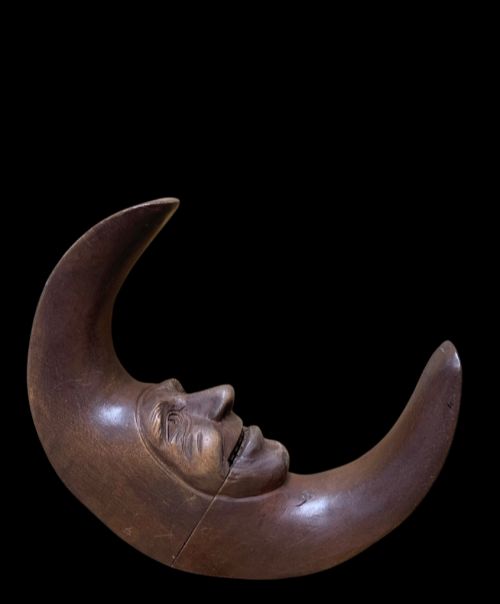


Antique Nut Cracker
An antique nut cracker brings character to a dining table through tactile wood, brass and silver plate.
Antique Nut Cracker
When searching for an antique nut cracker, buyers encounter diverse forms ranging from carved Black Forest animal figures and hands to turned treen pocket screw types.
The pieces on this page span the Georgian, Victorian and Edwardian periods, including rustic folk art and novelty mechanical designs.
Wooden treen examples shaped like acorns or featuring carved heads sit alongside cast brass and sterling silver tableware.
Materials and Techniques
Carvers utilised walnut, fruitwood, boxwood and other hardwoods to shape detailed figural nutcrackers, often employing chip carving and lever mechanisms.
Metal versions rely on cast brass, silver plate and solid sterling silver, sometimes incorporating mechanical linkages or serving sets with matching picks.
Turned treen pocket varieties demonstrate precision lathe work, utilising screw threads and folding elements for domestic utility.
The Measure of Quality
Quality rests in the crispness of the carving, where deep detailing on Black Forest hands or animal subjects displays superior handwork.
Material selection and structural integrity distinguish simpler turned items from complex mechanical levers or weighted cast brass and sterling silver pairs.
Preservation of original presentation boxes and matched serving sets elevates the standing of plated and silver tableware.
Georg Jensen·Elkington
The Antique Nut Cracker Glossary
- Treen
- Small domestic wooden objects made by turning or carving. These pieces display historic grain patination from handling.
- Lever nutcracker
- A tool utilising mechanical leverage to crush shells. These mechanisms distribute pressure evenly across the handles.
- Screw type
- A pocket device operating via a threaded wooden screw. Twisting the handle advances the screw into the shell.
- Silver plate
- A base metal coated with a thin layer of silver. This technique provided an affordable alternative to solid silver tableware.
Antique Nut Cracker: Frequently Asked Questions
What woods were used for antique nut crackers?
Makers utilised a variety of dense timbers including walnut, boxwood, fruitwood, oak, ash and yew. These hardwoods provided the necessary strength to withstand repeated pressure.
Carved examples often showcase rich natural grain, while turned treen pocket pieces rely on smooth, durable boxwood or fruitwood.
How do lever nut crackers work?
Lever designs employ a hinged mechanism where downward pressure on the handles transfers force to the nut placed inside the jaw. This mechanical advantage cracks the shell with minimal effort.
Many nineteenth-century examples incorporate this system into animal or human figures, such as dogs or clenched fists.
What is treen?
Treen encompasses small, functional wooden household objects created by turning on a lathe or through hand carving. Items range from pocket screw devices to acorn-shaped vessels.
These domestic pieces acquire a warm patina through decades of daily handling and use.
How are periods identified?
Stylistic cues, material choices and mechanical complexity help date pieces to the Georgian, Victorian or Edwardian eras. Elaborate folk art carving and cast brass often point to the nineteenth century.
Sterling silver examples frequently carry hallmarks that verify the exact year of production.