
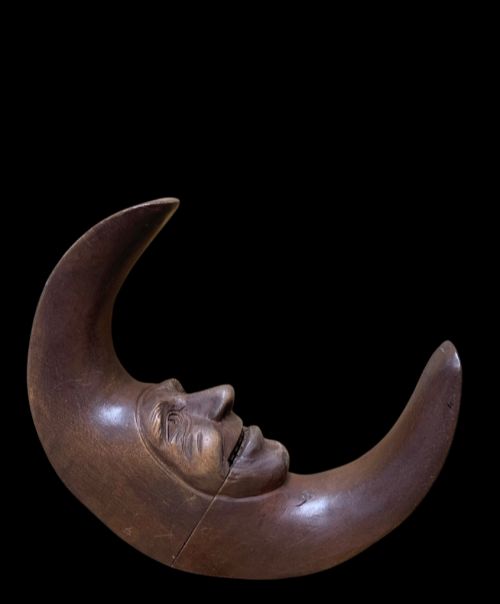


Brown Carved Nutcracker
These brown carved nutcrackers bring hand-carved animals and figures from the nineteenth century into everyday use.
Brown Carved Nutcracker
When you search for a brown carved nutcracker, you find nineteenth century treen and folk art pieces shaped as animals and hands. The form is tactile and functional, designed to crack shells with leverage.
You are most likely to meet Black Forest and Victorian folk art examples on this page. These items depict squirrels, monkeys, fists, acorns and the man in the moon.
The objects span the Georgian period, the Victorian era and the early twentieth century. Most pieces are carved from walnut, fruitwood, linden wood and dark hardwood.
How they were made
Carvers shaped these utensils from dense hardwoods such as walnut, fruitwood and linden wood. The grain of the wood provides the necessary strength for the lever action while showing fine sculptural detail.
Makers utilised hand-carving techniques to create expressive figural subjects like clenched fists and animals with inset glass eyes. The work relies on deep relief carving and smooth finishing by hand.
Object forms span botanical acorns, clenched fists, monkeys, squirrels, and the man in the moon.
What varies in quality
Quality separates a standard turned tool from a deeply expressive sculptural carving. Pieces with detailed fur texture, strong anatomical form and naturalistic glass eyes stand above plain utility items.
The depth and crispness of the carving define the upper range of these objects. Master carvers achieved distinct facial expressions and lifelike poses that lesser examples miss.
The Brown Carved Nutcracker Glossary
- Treen
- Small handmade wooden objects for the home. These domestic items range from spoons to nutcrackers.
- Black Forest
- Carved wooden items originating from the German region, known for realistic animal figures. This style gained popularity during the Victorian period.
- Fruitwood
- Dense timber from fruit-bearing trees such as apple or pear. Carvers favoured it for fine domestic utensils.
- Folk art
- Utilitarian objects made by self-taught or traditional artisans. These pieces reflect regional decorative traditions rather than strict academic styles.
Brown Carved Nutcracker: Frequently Asked Questions
What woods are used for these nutcrackers?
Carvers utilised dense timbers including walnut, fruitwood, linden wood and dark hardwoods. These materials provided the durability needed for cracking shells.
The natural grain and warm brown tones of the timber aged well with handling over decades of domestic use.
How do you date a carved nutcracker?
Dating relies on the style of carving, the choice of subject matter and the tool marks left in the timber. Victorian and Black Forest pieces often display characteristic naturalistic motifs.
Changes in wooden hardware and surface wear help place an item within the nineteenth or early twentieth century.
What subjects appear on these pieces?
Common subjects include animals like squirrels and monkeys, alongside botanical shapes such as acorns. Human forms like clenched fists and the man in the moon also appear.
Carvers turned everyday functional items into miniature sculptures depicting familiar creatures and imaginative characters.
How were these nutcrackers used?
Owners used them at the dining table to crack nuts by applying manual pressure through the hinged lever mechanism. The sturdy wooden construction withstood daily pressure.
Beyond simple function, their decorative carved designs made them suitable for display on sideboards and mantelpieces.