
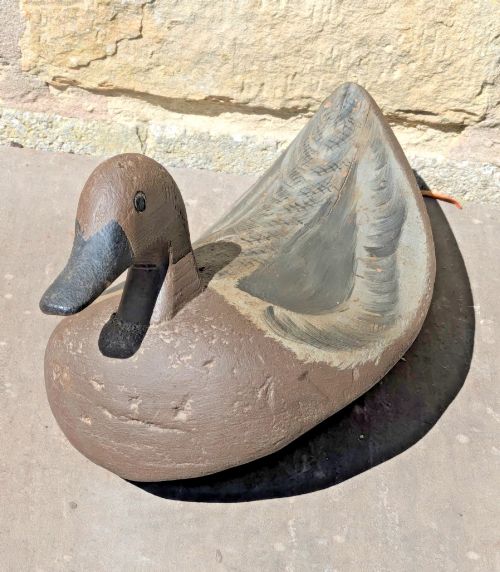
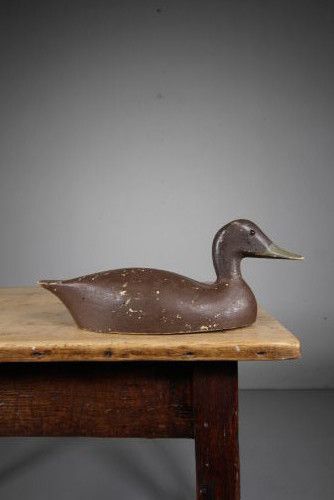
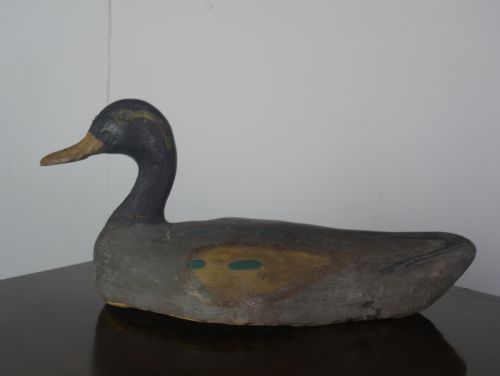


Painted Wooden Duck Decoy
A painted wooden duck decoy brings honest folk art into a room, offering simple craftsmanship and working history.
Painted Wooden Duck Decoy
A painted wooden duck decoy represents functional working objects originally built to lure waterfowl, now collected purely as decorative sculpture. When you search for a painted wooden duck decoy, you encounter pieces that range from individual English country specimens to unusual forms like a loon with her chick.
The pieces listed on this page span the nineteenth century, the Edwardian era, and the early twentieth century up to the 1930s. They appear singly, in pairs, or in sets of three, showing the practical origins of these working carvings.
Most examples sit firmly within folk art and English country folk art traditions. Their appeal lies in the weathered surfaces and the honest, unpretentious carving methods used by their makers.
How they were made
These objects are fashioned from carved wood and timber, shaped by hand to create realistic bird forms. Tool marks often remain visible beneath the surface, revealing the direct methods of the maker.
The carved wood bodies receive layers of hand-applied paint to render the plumage and colouring of different waterbirds. Certain examples incorporate glass elements to create realistic eyes that catch the light.
The materials recorded in these listings are straightforward: carved wood, timber, glass for eyes, and hand-applied paint.
What varies in quality
Quality rests in the vigour of the carving and the character of the original paint surface. Pieces with untouched, weathered surfaces and strong sculptural silhouettes stand apart from heavily restored or later repainted examples.
The anatomical accuracy and the presence of appealing secondary details, such as glass eyes or carved chicks accompanying the main subject, elevate certain decoys above standard working models.
The Painted Wooden Duck Decoy Glossary
- Decoy
- A carved and painted floating or field object designed to attract wildfowl within range of a hunter. These utilitarian carvings have transitioned into sought-after decorative sculptures.
- Folk art
- Art produced from an indigenous culture or peasant society, typically by self-taught makers using traditional methods. The style prioritises utility and direct expression over academic precision.
- Edwardian
- Pertaining to the reign of King Edward VII, spanning from 1901 to 1910. Pieces from this period often display refined craftsmanship alongside traditional country practicality.
- Loon
- A large waterbird often represented in North American and related decoy traditions. Sculptures depicting these birds alongside their chicks are particularly engaging.
Painted Wooden Duck Decoy: Frequently Asked Questions
What is a wooden decoy duck?
A wooden decoy duck is a working carving historically placed on water or marshes to attract live ducks for hunting. Makers shaped timber by hand and painted the surfaces to mimic natural plumage.
Today, these objects serve as decorative sculptures. Collectors appreciate them for their tactile qualities and connection to rural traditions.
How old are these decoys typically?
The examples on this page generally date from the nineteenth century through the Edwardian era and into the 1930s. This span covers the period when working decoys were actively carved and used.
Evaluating the age involves looking at the timber, the wear on the paint layers, and the hand tools used in the shaping process.
How should I display a decoy?
Decoys look effective placed singly on bookshelves, sideboards, or mantelpieces where their sculptural forms can be appreciated from multiple angles. Sets of three or pairs create a stronger visual grouping.
Keep them away from direct heat sources and strong sunlight to preserve the historic wooden bodies and original painted surfaces.
Are all these decoys English?
The evidence shows a strong presence of English country folk art alongside pieces that reference broader traditions, such as loons which typically connect to North American waters. Each piece reflects the regional style of its maker.
Examining the specific form and the type of wood helps indicate the likely origin of an individual carving.