


Vintage Duck Decoy
These vintage duck decoy pieces bring rustic folk art character into a room through hand-painted surfaces and carved timber forms.
Vintage Duck Decoy
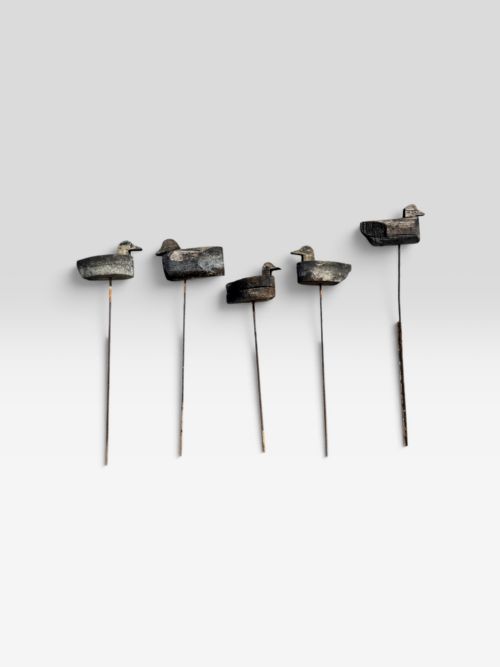
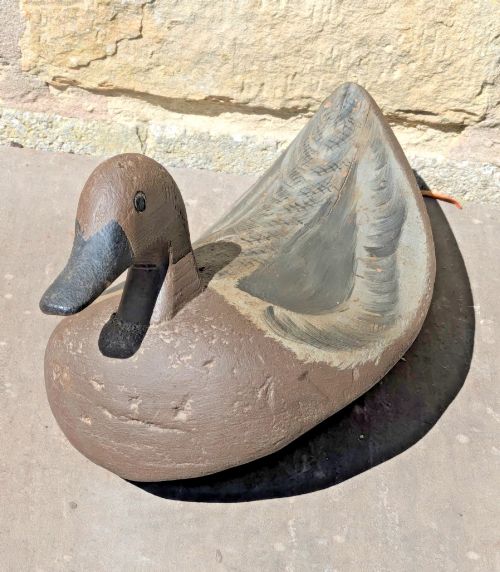
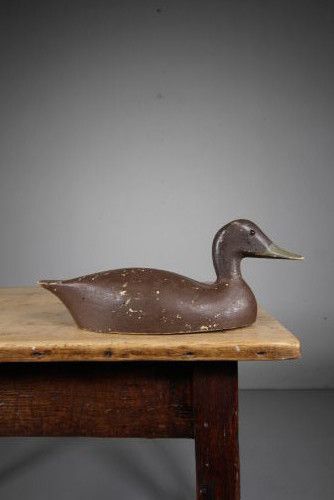
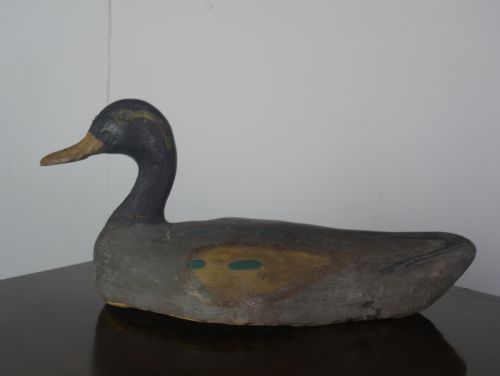
A vintage duck decoy is a carved and painted sculpture created in wood, papier mâché, or straw, appearing across decorative objects and folk art. These pieces range from single water birds to studies of loons with chicks, reflecting traditional working items turned to decorative use.
The versions most likely to be met on this page date from the nineteenth century through to the nineteen-thirties. English country examples sit alongside French rustic water bird sculptures and early twentieth century carvings.
Makers shaped timber and painted surfaces to simulate wildfowl for shooting, but today these works function purely as decorative sculptures. The forms encompass standard decoy ducks, sets of three carved birds, and individual studies.
How they were made
Makers constructed these decoys primarily from wood and timber, shaping the material by hand through carving. Selected pieces incorporate alternative mediums such as papier mâché and straw to form the body of the bird.
Vintage Duck Decoy Retail Price Guide 2026
Typical asking prices for vintage duck decoy among the pieces listed under this phrase on Sellingantiques today, from the lower quarter to the upper quarter. They describe what is for sale here now, not the wider market.
Materials across these listings span carved wood, timber, iron, papier mâché, and straw.
What varies in quality
The distinction between standard and superior pieces rests in the vitality of the carved timber and the preservation of the original paint layer. Bold tool marks and honest wear from working use separate spirited folk art from later decorative imitations.
Proportion and stance dictate the visual impact of the water bird, with more expressive carving creating a stronger silhouette. The character of the surface patination, developed through age and exposure, defines the visual depth of the object.
The Vintage Duck Decoy Glossary
- Decoy duck
- A carved and painted representation of a water bird once utilised to lure wildfowl. These objects now serve entirely as decorative sculptures.
- Folk art
- Items created by self-taught or traditional artisans using local materials and established regional techniques. This category encompasses much of the vernacular sculpture found here.
- Papier mâché
- A composite material made from paper pulp or shreds reinforced with glue or paste. It appears in specific sculptural studies alongside straw.
- Edwardian
- Pertaining to the reign of King Edward the Seventh, covering the early years of the twentieth century. Pieces from this period often display distinct English country characteristics.
Vintage Duck Decoy: Frequently Asked Questions
What is a vintage duck decoy?
A vintage duck decoy is a carved wooden or papier mâché sculpture originally made to attract wildfowl during shooting.
Today these items are collected and displayed as decorative folk art objects within homes.
How were old decoys used?
Fowlers placed these carved birds upon the water or shoreline to draw wild ducks within range.
Their form and painted plumage needed to look convincing from a distance rather than display fine artistic detail.
How do I date a wooden decoy?
Dating relies upon identifying the tool marks left by the maker, the type of timber utilised, and the composition of the paint layers.
Nineteenth-century examples show different wear patterns and construction methods compared to pieces from the nineteen-thirties.
Where do these decoys originate?
The pieces seen here include English and French examples representing local country traditions.
Regional styles emerge through the choice of timber and the specific painting techniques applied to the bird.