
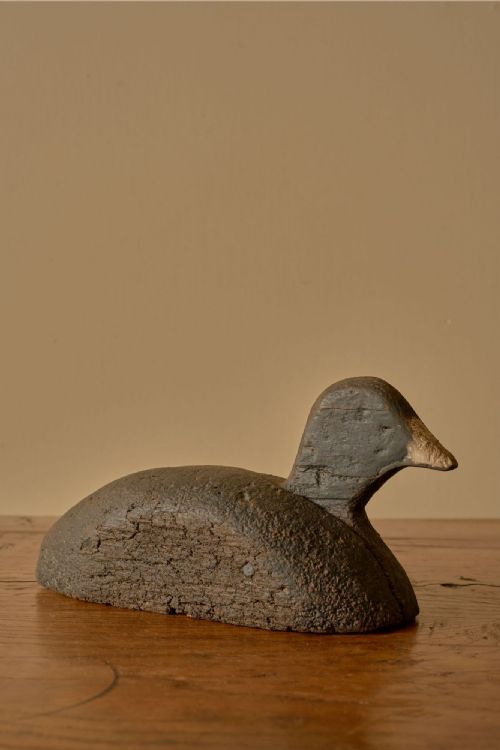
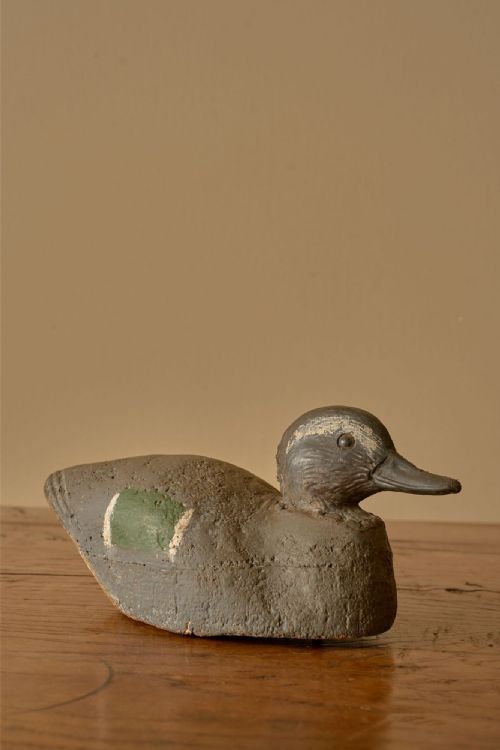
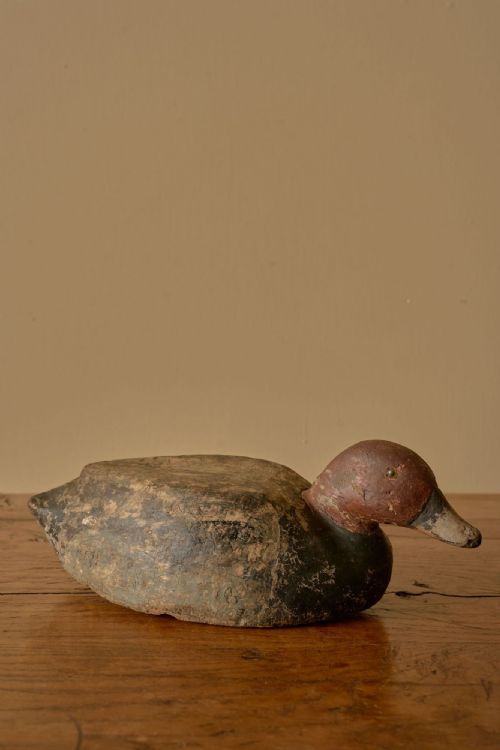
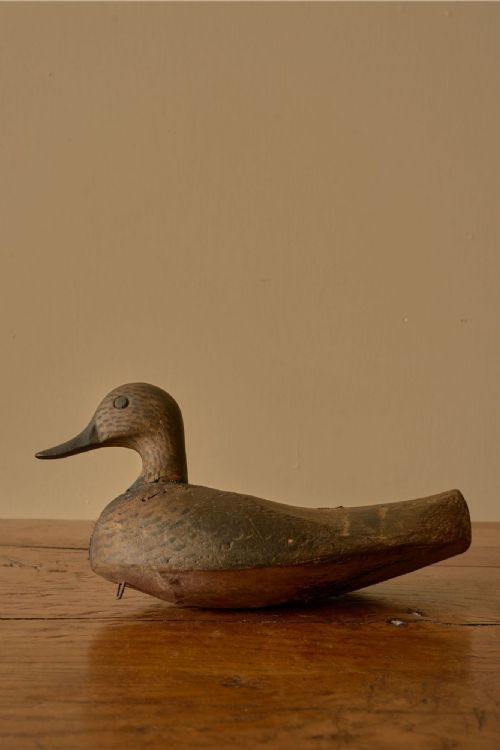
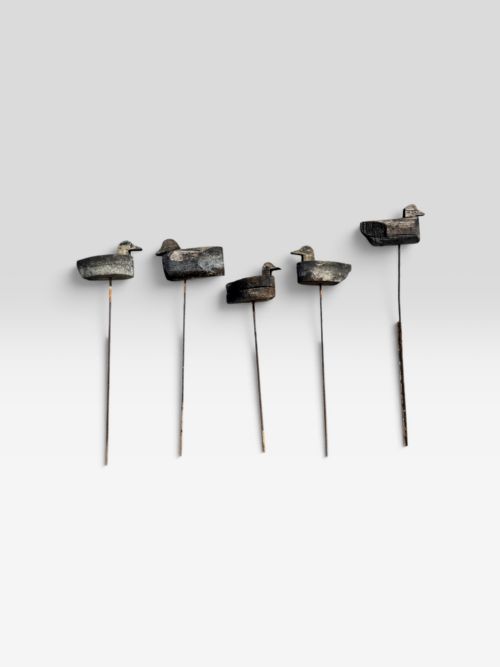
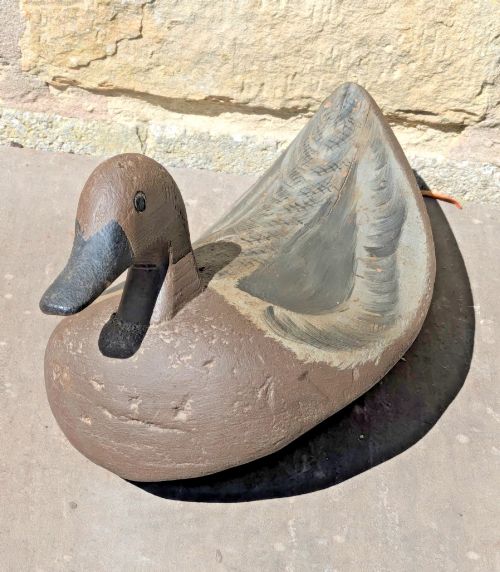
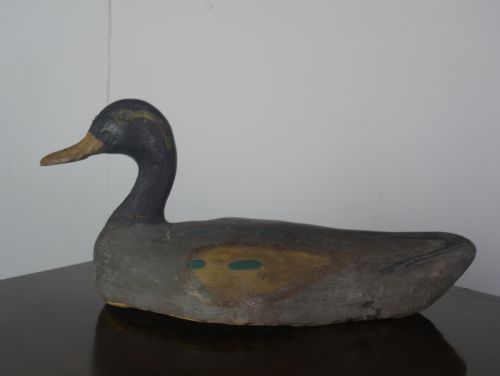


Folk Art Duck Sculpture
Folk art duck sculpture pieces bring handmade rustic charm to interiors through carved timber and painted detail.
Folk Art Duck Sculpture
Folk art duck sculpture encompasses hand-carved decoy ducks and water bird studies made for utility and decorative display. These pieces originate from the 19th Century, Edwardian era, and the early 20th century, spanning decades up to 1930.
Buyers encounter carved wood and timber decoys alongside papier mâché and straw studies of ducklings. The selection includes English and French origins, featuring single decoys and groups like the America Loon with her chick.
Most examples take the form of decoy ducks and decorative water birds shaped by hand and finished with paint. The aesthetic remains rustic and traditional, reflecting the practical roots of working decoys.
How folk art duck sculpture pieces were made
Maker construction relies on carved wood and timber shaped into anatomical bird forms. Artisans also utilised papier mâché and straw for specific sculptural studies of ducklings.
Surface decoration involves hand-painted finishes applied over carved timber. Iron and glass elements sometimes appear in the construction details of these decoy ducks.
Listings span the 19th Century, Edwardian era, and the 1920s to 1930s, constructed from carved wood, timber, papier mâché, and straw.
What varies in quality in folk art duck sculpture
Quality depends upon the expressive execution of the carving and the preservation of the original hand-painted surface. Pieces with distinct character and clear age separate themselves from simpler later adaptations.
The choice of materials, from solid carved wood to alternative mediums like papier mâché and straw, influences the tactile presence of the sculpture. Original surface patination dictates the visual depth of each decoy.
The Folk Art Duck Sculpture Glossary
- Decoy duck
- A carved and painted water bird traditionally placed on water to attract real ducks for shooting. These working objects form the core of folk art sculpture collections.
- Folk art
- Utilitarian and decorative objects created by self-taught or traditional craftsmen outside mainstream academic traditions. These pieces prioritise practical function and regional aesthetic over formal design rules.
- Edwardian
- The period spanning the reign of King Edward VII from 1901 to 1910. Items from this era often display specific regional craftsmanship and traditional finishing techniques.
- America Loon
- A large water bird native to North America, represented in specific decoy forms. Sculptures depicting these birds capture the distinct silhouette and markings of the species.
- Papier mâché
- A composite material consisting of paper pieces or pulp bound with glue or paste. Artisans mould this mixture around a core to create lightweight decorative figures.
Folk Art Duck Sculpture: Frequently Asked Questions
What is a decoy duck?
A decoy duck is a carved wooden bird once used by hunters to lure waterfowl on lakes and rivers. Today they are collected and displayed as decorative folk art sculptures.
These pieces range from working models with weathered paint to refined decorative carvings produced during the Edwardian period and early 20th century.
How do I date a wooden decoy?
Dating involves examining the tool marks left by carving, the type of timber used, and the composition of the paint layers. Earlier 19th Century and Edwardian pieces often show distinct hand-tool profiling.
Wear patterns and the chemical composition of early paint finishes provide further clues to the age and origin of the sculpture.
Where were these sculptures made?
The pieces originate from various regions including England and France, reflecting local shooting traditions and woodworking styles. Makers utilised native timbers available in their immediate surroundings.
French and English examples often display distinct carving profiles that distinguish their regional provenance.
How do I style a decoy duck at home?
Decoy ducks suit rustic, traditional, and eclectic interiors when placed on bookshelves, sideboards, or mantelpieces. Their simple wooden forms complement natural textures like stone and exposed brick.
Grouping multiple carved ducks together creates a strong visual focal point that highlights the variety of paint finishes and body shapes.