


Oriental Metalwork Plate
An oriental metalwork plate brings intricate craftsmanship and storied motifs from the nineteenth and early twentieth centuries into a modern interior.
Oriental Metalwork Plate
When searching for an oriental metalwork plate, collectors encounter a variety of forms including decorative chargers, dishes, plaques, and trays originating from Japan and China. These items range from smaller decorative plates to large chargers measuring over thirty centimetres across.
The selections most commonly met on this page date from the Victorian era and the Meiji and Taisho periods, spanning the mid-nineteenth century to the early twentieth century. Makers fashioned these pieces primarily as decorative objects intended to display skill in metalworking and enamelling.
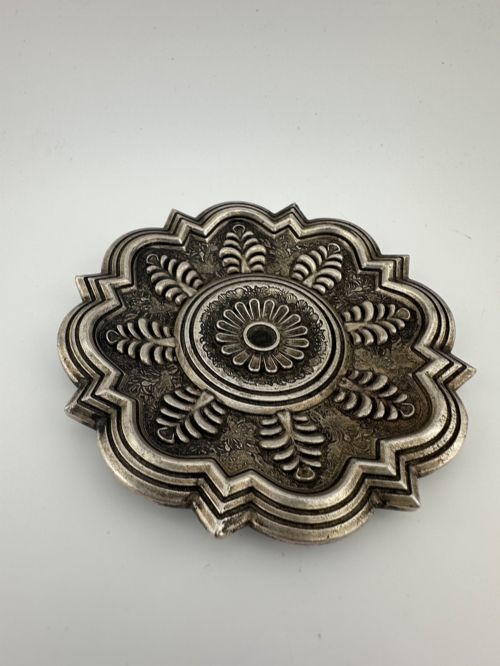
Japanese examples dominate the selection, often featuring distinct motifs such as dragons, phoenixes, birds, and Mount Fuji. Chinese export pieces also appear, represented by items like white metal lotus dishes bearing marks from later periods.
Materials and Techniques
Makers utilised a base of copper, brass, bronze, or patinated iron to form the foundation of each vessel. Artisans shaped these metals into circular plates, squares trays, and broad chargers before applying surface decoration.
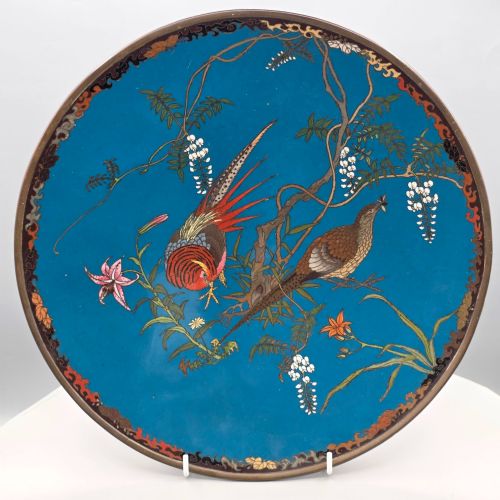
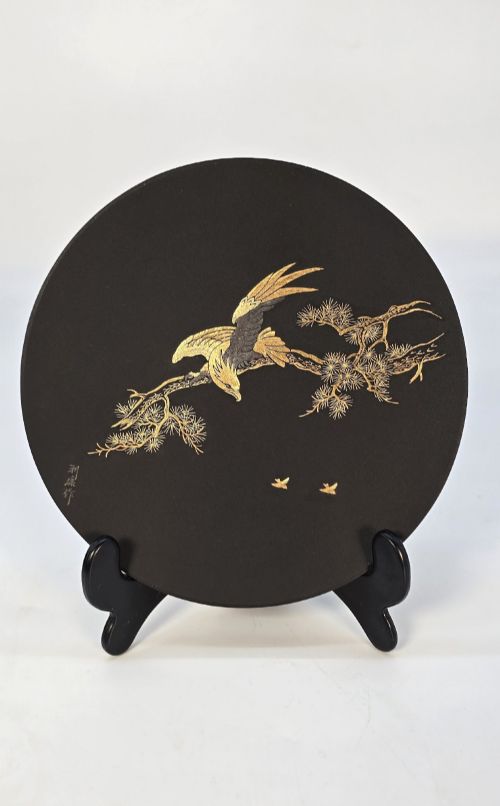
Cloisonne enamel represents the primary technique observed, where thin brass wire creates cellular compartments filled with coloured enamel pastes. Other methods include gold and silver inlay set into patinated iron surfaces, alongside white metal and nickel silver work.
Several plates feature owls gazing out toward Mount Fuji, proving that Victorian artisans knew the value of a dramatic view.
Distinctions in Quality
The precision of the wirework and the complexity of the enamel cells separate standard examples from masterworks. Finer pieces display exceptionally fine brass wire forming intricate plumage, scales, and auspicious symbols without visible flaws in the coloured enamel.
The depth of the patination, the clarity of the mixed-metal inlay, and the presence of signatures from celebrated workshops indicate superior craftsmanship. Larger chargers with ambitious pictorial compositions demand greater skill than smaller standard dishes.
Kinkozan
The Oriental Metalwork Plate Glossary
- Cloisonne Enamel
- A decorative metalwork technique where fine metal wire creates raised compartments on a base, which are then filled with vitreous enamel paste and fired. This method allows artisans to produce complex pictorial designs with distinct outlines.
- Charger
- A large ornamental plate or dish intended for display rather than for serving food. These substantial pieces often measure thirty centimetres or more in diameter.
- Patinated Iron
- Iron treated with chemical solutions or heat to produce a stable, dark surface oxidation. This treated metal serves as a dark canvas for contrasting gold and silver inlay.
- Mixed-Metal
- An alloy combination or the simultaneous use of different metals such as copper, brass, gold, and silver on a single object. Artisans utilised this approach to create varied colour tones across the surface.
- Auspicious Symbols
- Traditional motifs and emblems associated with good fortune, longevity, and prosperity in East Asian art. These elements frequently appear incorporated into the background or borders of chargers and plates.
Oriental Metalwork Plate: Frequently Asked Questions
How were these metalwork plates displayed?
These decorative plates and chargers served primarily as ornamental display pieces within domestic interiors rather than tableware. Their substantial size and detailed pictorial subjects made them suitable for mounting on walls or resting on stands.
Collectors in the nineteenth and early twentieth centuries prized them for introducing vibrant colour and intricate Far Eastern artistry into European homes.
What motifs appear on these plates?
The surface designs frequently incorporate mythological creatures such as dragons and ho-o birds, alongside natural subjects like owls, ibis, koi, and Mount Fuji. Auspicious symbols also appear regularly within the enamel work or metal inlay.
These subjects draw directly from Japanese and Chinese artistic traditions of the Meiji and export periods.
How do I identify a Meiji period piece?
Meiji period items generally date from 1868 to 1912, reflecting the reign of the Japanese emperor during an era of intense artistic output for export. They frequently employ detailed cloisonne enamel or mixed-metal inlay depicting traditional flora and fauna.
Signatures or workshop marks occasionally appear on the reverse or base of these finer chargers and trays.
What is the difference between a tray and a charger?
Chargers are large, circular decorative plates designed specifically for visual impact and wall hanging or cabinet display. Trays often feature different geometries, such as square profiles, and were sometimes formed with raised rims for functional handling.
Both categories utilise similar metalworking and enamelling techniques across the Victorian and Meiji eras.