


Brass Cloisonne Plate
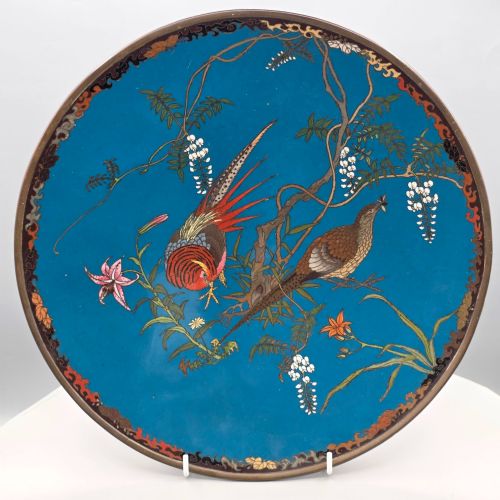
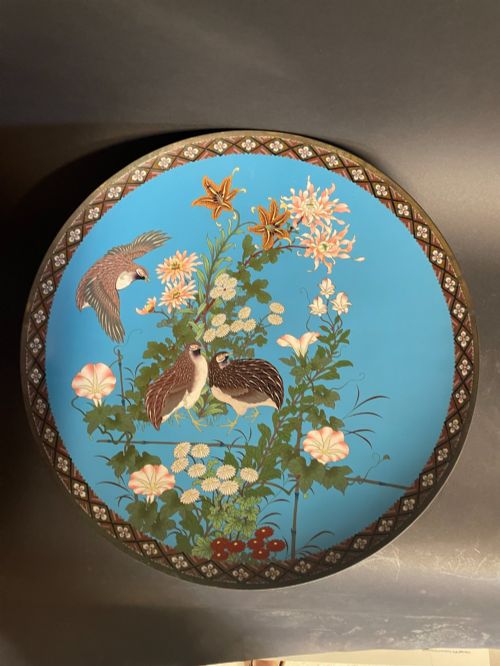
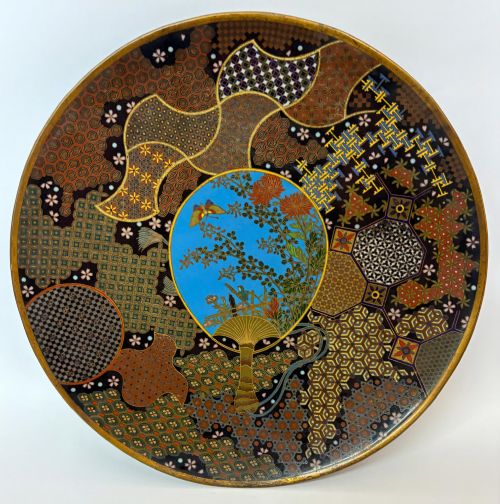
A brass cloisonne plate brings intricate metalwork and vibrant enamelling into a room, offering a striking display piece rooted in nineteenth-century craftsmanship.
Brass Cloisonne Plate
A brass cloisonne plate combines metal foundations with detailed enamel work, spanning periods from the eighteenth century through to the early twentieth century. The selection leans heavily towards Japanese production, particularly from the Meiji period, alongside Qing Dynasty examples.
Forms vary from decorative chargers and plaques to octagonal trays and medium plates. These objects serve primarily as display pieces, often featuring generous diameters designed to showcase complex pictorial subjects.
Subjects commonly encountered across the pieces include birds, landscapes, flowers such as chrysanthemums, and dynamic animal motifs like dragons, koi, and phoenixes.
Materials and technique
The construction relies on a base of brass, copper, or bronze, shaped into plates, trays, and large chargers. Artisans soldered thin metal wire, known as cloisons, onto the metal surface to form intricate cellular compartments.
These cells were then filled with coloured enamel paste and fired in a kiln before the surface was ground and polished smooth. The resulting finish integrates the metal lines firmly with the vitreous enamel design.
A persistent frog manages to find its way onto a masterwork charger alongside chrysanthemums and a butterfly.
Variations in quality
Quality rests on the precision of the wirework and the control achieved during the firing and polishing stages. Finer pieces demonstrate exceptionally fine cloisons that map complex natural scenes with sharp definition and minimal surface pitting.
The artistic ambition of the composition also separates standard production from superior examples. Skilled makers executed elaborate subjects, such as detailed landscapes or expressive wildlife, with balanced palettes and careful shading.
The Brass Cloisonne Plate Glossary
- Cloisonne enamel
- A decorative technique where metal wires form cells on a metal body to hold coloured glass paste. The piece is fired and polished to create a flat, patterned surface.
- Charger
- A large ornamental plate or platter designed for display rather than dining. These items frequently occupy a central position on walls or sideboards.
- Meiji Period
- A Japanese historical era lasting from 1868 to 1912, noted for technical refinement in metalwork and decorative arts. Many objects from this timeframe display exceptional pictorial detail.
- Mon
- A Japanese emblem or crest used to indicate family lineage or clan affiliation. These symbols often appear incorporated into the decorative borders or fields of enamel plates.
Brass Cloisonne Plate: Frequently Asked Questions
How were brass cloisonne plates used?
These items were made primarily for display in domestic interiors, serving as decorative chargers or wall plaques rather than tableware. Their size and pictorial designs suited them for placement on stands or mounting on walls.
Collectors valued them as ornamental works of art that showcased technical skill and vibrant colour within a room.
How do I care for a cloisonne plate?
Keep the surface clean by dusting gently with a soft, dry cloth to prevent accumulation in the wire recesses. Avoid using abrasive cleaners or submerging the metal and enamel in water.
Position the plate away from direct sunlight and areas of high humidity to protect the integrity of the metal base and the enamel fill.
How do I distinguish between periods?
Dating relies on stylistic clues, wire characteristics, and specific historical markers associated with eras such as the Meiji period or Qing Dynasty. Earlier pieces often exhibit distinct colour palettes and heavier metal foundations.
Examining the underside and the finish of the metal provides further context for the period of manufacture.
What subjects appear on these plates?
Common motifs include birds such as owls, ibis, and phoenixes, alongside botanical elements like chrysanthemums and tendrils. Natural scenes, landscapes, and creatures from mythology or nature also feature prominently.
Masterpieces often depict complex actions or animals, including leaping koi, dragons, and butterflies.