



Japanese Cloisonne Dish
When you examine a japanese cloisonne dish, you hold a metal vessel defined by wire cells and coloured vitreous enamel.
Japanese Cloisonne Dish
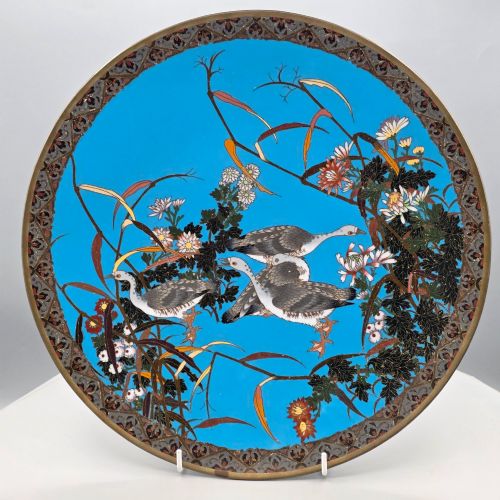
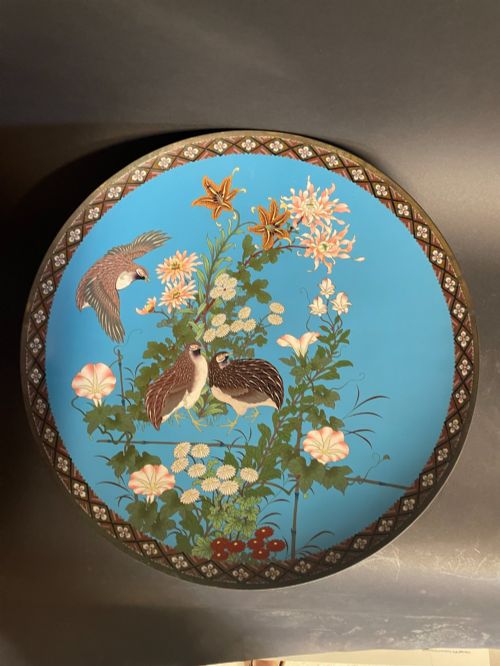
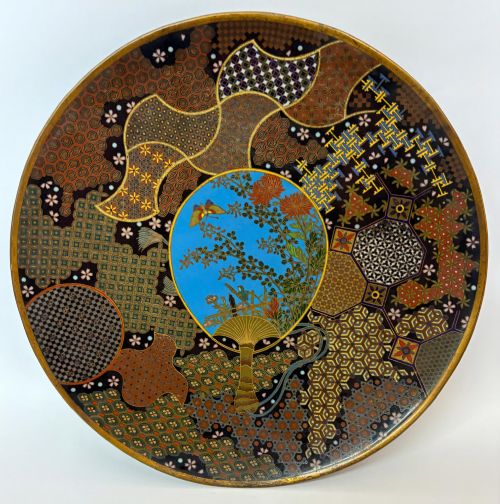
A japanese cloisonne dish encompasses flat plates, deep chargers, square trays and lidded bowls created during the nineteenth century. These objects display intricate pictorial scenes and symmetrical motifs rooted in the Meiji and Edo periods.
The pieces appearing on this page range from small cabinet plates to large fifty-centimetre chargers. Subjects commonly feature naturalistic depictions of birds, fish, dragons and botanical elements.
Examples span the transition from late Edo period craftsmanship into the highly detailed production of the Meiji era. Many surviving items demonstrate the technical ambitions of workshops working in regional centres such as Nagoya.
Materials and Construction
Artisans formed the body of each dish using hammered copper, brass, or occasionally porcelain for Totai Shippo pieces. Fine metal wires, typically brass or copper, were then bent and soldered onto the surface to outline the design.
The resulting compartments, or cloisons, were filled by hand with vitreous enamel pastes in various colours. Multiple firings in a kiln fused the glass paste to the metal foundation before the surface was ground flat and polished to a smooth finish.
The listings on this page span the 1850s to the 1920s, featuring copper, brass, porcelain and cloisonne enamel.
Evaluating Quality
The refinement of the wirework separates standard production from exceptional pieces. Masters executed microscopic cell structures and perfectly uniform lines that define complex feathers, scales and floral petals.
Depth and clarity of the enamel pigments also dictate the standing of a dish. Superior examples maintain rich, translucent colouration without cloudiness or accidental pitting across the fired surface.
Kinkozan
The Japanese Cloisonne Dish Glossary
- Cloisonne
- Enamel decoration produced by soldering thin metal wires to a metal base to form enclosed compartments for coloured pastes.
- Totai Shippo
- A specific Japanese technique where enamel and wire are applied directly over a porcelain body rather than metal.
- Charger
- A large decorative plate intended for display on a wall or stand rather than for dining use.
- Meiji Period
- The historical Japanese era spanning from 1868 to 1912, noted for a flourishing of decorative arts and international exports.
- Ho-o Bird
- The mythical Japanese phoenix, frequently depicted in traditional metalwork and textile designs alongside flora.
Japanese Cloisonne Dish: Frequently Asked Questions
How are japanese cloisonne dishes dated?
Dating relies on stylistic shifts, metal types, and the complexity of the wirework. Pieces associated with the Edo period often display bolder wires and earthier palettes, whereas Meiji examples utilise finer wires and expansive pictorial scenes.
Documentation or signatures stamped on the base can occasionally narrow the period of creation to a specific decade within the nineteenth century.
Were these dishes meant for food?
Large chargers and decorative plates served primarily as display pieces for traditional Japanese interiors and later for export to Western markets. Their weight and delicate enamel surfaces made them unsuitable for daily dining.
Smaller trays and lidded bowls functioned as decorative containers for small personal items or ornamental presentation.
Why do some dishes feature bird and dragon motifs?
Motifs such as dragons, phoenixes, and specific birds carried deep symbolic meanings representing strength, longevity, and auspicious fortune in Japanese culture. Artisans reproduced these traditional subjects to appeal to both domestic collectors and international tastes during the late nineteenth century.
The inclusion of Mount Fuji or seasonal flora further contextualised the cultural narrative of each piece.