
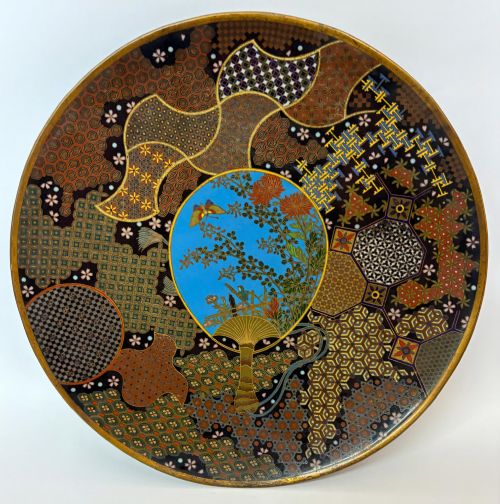


Blue Cloisonne Dish
When you handle a blue cloisonne dish, you hold centuries of meticulous metalwork and vitreous enamelling created by skilled hands.
Blue Cloisonne Dish
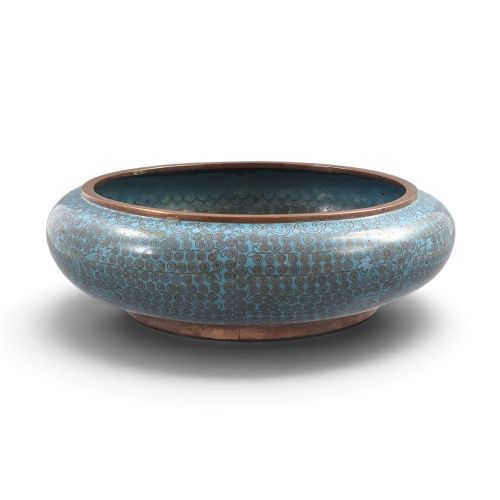
A blue cloisonne dish represents a remarkable category of decorative metalware shaped by Asian craftsmanship across the nineteenth and eighteenth centuries. These pieces appear predominantly as large chargers, decorative plates, bowls, and trays featuring vibrant blue enamel fields.
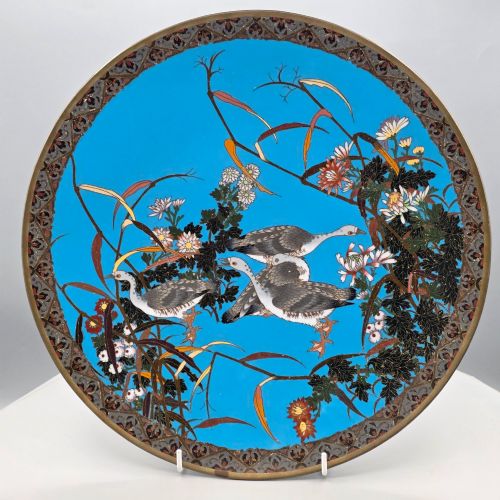
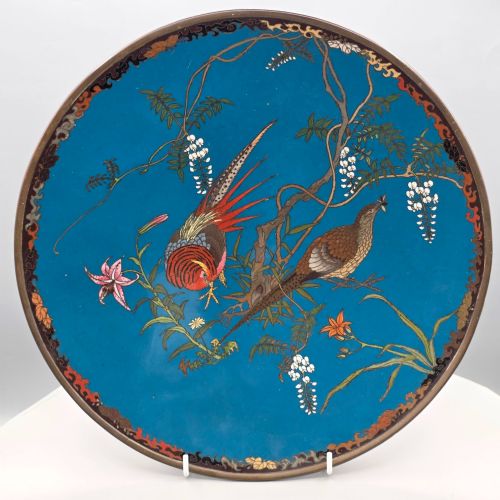
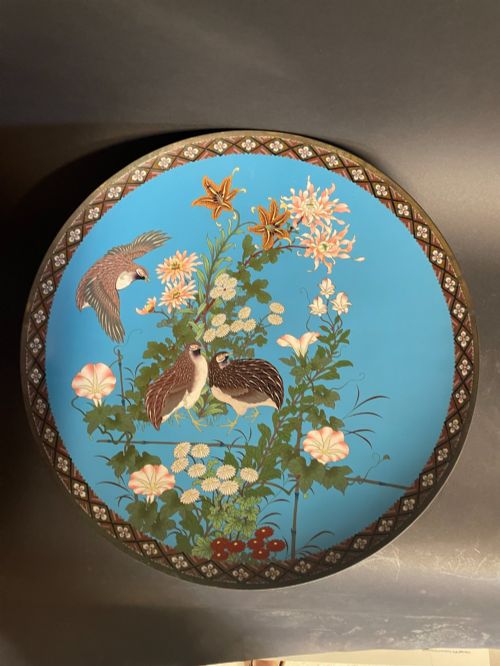
Most examples originate from the Meiji and Edo periods in Japan or the Qing Dynasty in China. Buyers encounter circular chargers and plates adorned with motifs of birds, dragons, koi, and flora set against deep cobalt grounds.
Materials and construction
Artisans constructed these vessels using a base of copper, brass, or bronze, shaping them into plates, bowls, and chargers. They formed intricate compartments on the metal surface using thin strips of brass or silver wire.
Craftsmen filled these individual compartments, known as cloisons, with vitreous enamel paste before firing and polishing the piece to a smooth finish. This technique created the distinct coloured cells that define the surface decoration.
Listings feature items from the eighteenth, nineteenth, and early twentieth centuries, spanning the Qing Dynasty and the Edo and Meiji periods.
Distinctions in craftsmanship
Quality in these pieces rests upon the precision of the wirework and the depth of the enamel. Finer examples display exceptionally delicate cloisons forming complex pictorial scenes of wildlife or mythical beasts.
The finish of the metal base and the polish of the vitreous surface separate standard decorative items from masterwork chargers. Pieces bearing signatures from renowned makers exhibit superior control during the firing process.
Kinkozan
The Blue Cloisonne Dish Glossary
- Cloisonne
- Enamelwork in which coloured areas are separated by thin metal strips applied edgewise to a metal base. This technique creates intricate patterns of bounded cells across the surface of a dish.
- Charger
- A large ornamental plate or dish utilised for display rather than service. These substantial vessels often form the centrepiece of a collection.
- Meiji Period
- A Japanese era lasting from 1868 to 1912 noted for extraordinary advancements in decorative metal arts. Pieces from this time frequently showcase highly detailed naturalistic motifs.
- Edo Period
- A historical Japanese epoch spanning from 1603 to 1868 preceding the Meiji era. Early works originating here display robust forms and traditional iconography.
- Qing Dynasty
- The final imperial dynasty of China, ruling from 1644 to 1912. Imperial and scholarly workshops during this period produced refined vessels with distinct symbolic decoration.
Blue Cloisonne Dish: Frequently Asked Questions
How were these dishes used?
These pieces served primarily as decorative objects, displayed on walls, tables, or stands within fine interiors.
Larger chargers and plaques functioned as statement pieces in reception rooms, highlighting the wealth and refined taste of the owner.
How do I care for my dish?
Keep the piece away from direct sunlight and areas prone to high humidity to protect the metal and vitreous enamel.
Dust the surface gently with a soft, dry cloth and avoid using chemical cleaning agents or water.
How do I date a piece?
Examine the style of the decoration, the weight of the metal base, and any signatures present on the reverse or front.
Pieces associated with the Meiji period typically show fine, precise wirework, whereas earlier Edo and Qing examples display heavier construction.
What motifs appear most often?
Decorations frequently include natural elements such as chrysanthemums, peonies, geese, and branch-sitting birds.
Mythical subjects like dragons, ho-o birds, and samurai figures also feature prominently across nineteenth-century Japanese and Chinese examples.