

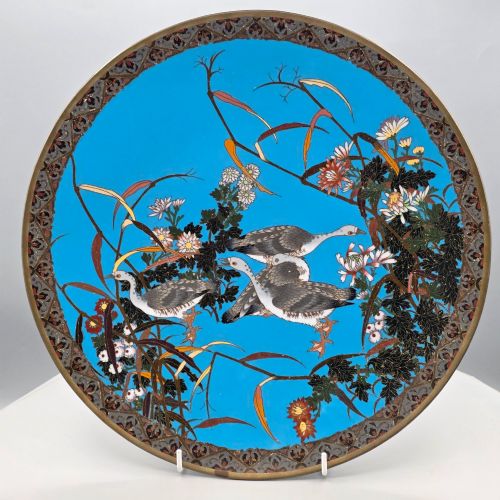



Turquoise Enamel Charger
These turquoise enamel charger pieces offer striking decorative plates and dishes that bring rich colour and detailed historic artistry to a room.
Turquoise Enamel Charger
A turquoise enamel charger stands as a large decorative plate, dish, tray, or plaque designed primarily for display rather than dining. When searching for a turquoise enamel charger, buyers encounter pieces originating from Japanese Meiji and Edo periods alongside Chinese Qing dynasty works.
The selections on this page span the nineteenth century, running from eighteen hundred through to nineteen hundred. Forms vary from medium plates and large dishes up to massive fifty-centimetre chargers depicting birds, flowers, samurai, demons, and dragons.
How they were made
These works rely on copper and brass as the metal foundation, shaped into plates, trays, and plaques. Artisans applied cloisonne enamel using thin wire to outline intricate pictorial motifs before fusing the coloured glass pastes.
Turquoise Enamel Charger Retail Price Guide 2026
Typical asking prices for turquoise enamel charger among the pieces listed under this phrase on Sellingantiques today, from the lower quarter to the upper quarter. They describe what is for sale here now, not the wider market.
What varies in quality
Quality rests in the precision of the wirework and the complexity of the pictorial subject matter. Simpler decorative plates differ markedly from large chargers featuring elaborate narrative scenes with samurai or detailed birds and foliage.
The fineness of the enamel finish and the clarity of the turquoise ground distinguish standard plates from masterworks. Signature marks from notable workshops also separate ordinary production from exceptional pieces.
Kinkozan
The Turquoise Enamel Charger Glossary
- Charger
- A large decorative plate or dish intended for display on a wall or surface rather than functional table use. These pieces often measure significantly wider than standard dining ware.
- Cloisonne enamel
- A metalwork technique where thin metal wires are soldered to a base to form compartments filled with coloured enamel paste. Firing hardens the glass paste into a smooth, glossy surface.
- Meiji Period
- A historic era in Japan spanning from eighteen sixty-eight to nineteen twelve, known for opening international trade and producing highly detailed decorative arts. Many surviving enamel chargers originate from this time.
- Qing Dynasty
- The final imperial dynasty of China, lasting from sixteen forty-four to nineteen eleven, celebrated for intricate decorative plaques and metalwork. Pieces from this era often feature traditional motifs like dragons.
Turquoise Enamel Charger: Frequently Asked Questions
How do I display a charger safely?
Large chargers require sturdy wall mountings or stable plate stands designed for heavy metal and enamel objects. Ensure the weight is properly supported to prevent accidental slips.
Keep these decorative pieces away from direct sunlight and areas of high moisture to protect the delicate enamel and metal body over time.
What periods do these chargers come from?
The available selection spans the nineteenth century, including pieces from the Edo period and the Meiji period in Japan. Chinese examples from the Qing dynasty also appear.
Dates generally range from around eighteen hundred through to nineteen hundred. Each era brings distinct stylistic traits and subject matters to the enamel work.
How should I clean a turquoise enamel charger?
Dust the surface gently with a soft, dry cloth to remove everyday particles without scratching the glass or metal wire. Avoid using harsh chemical cleaners or abrasive materials.
Water and liquid cleaning agents can seep into microscopic gaps in antique metalwork. Stick to gentle, dry maintenance to preserve the original finish.