




Oriental Flower Table
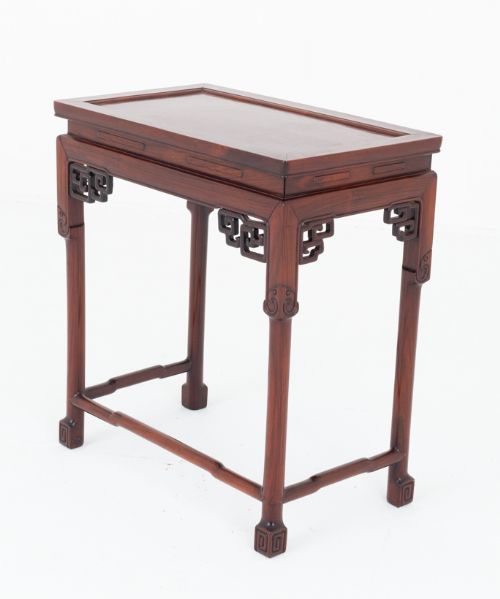
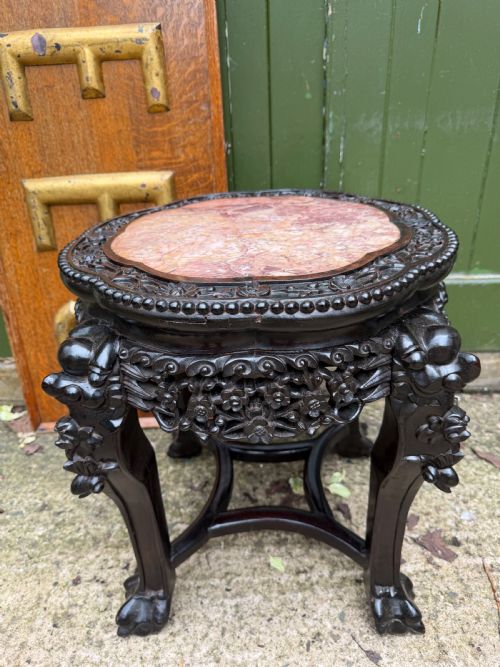
An oriental flower table brings dense timber and inset stone into a room, serving as a sturdy stage for planters and lamps.
Oriental Flower Table
An oriental flower table encompasses a variety of low tables, jardiniere stands, and pedestal supports designed to elevate plants and display objects. These pieces emerge predominantly from nineteenth and early twentieth-century Chinese and Japanese workshops, reflecting traditional craftsmanship adapted for export and domestic use.
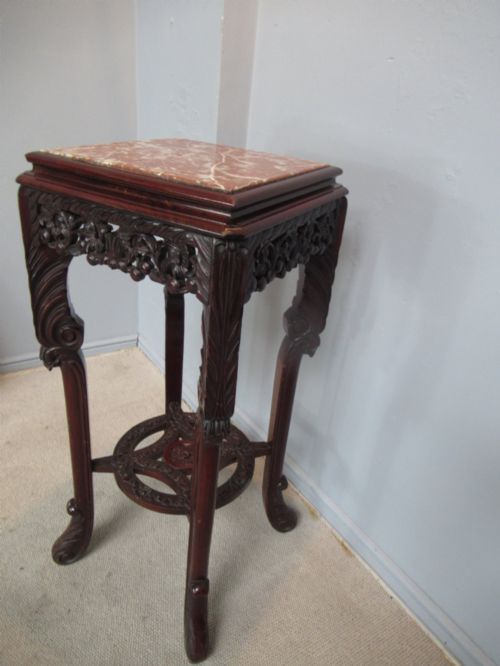
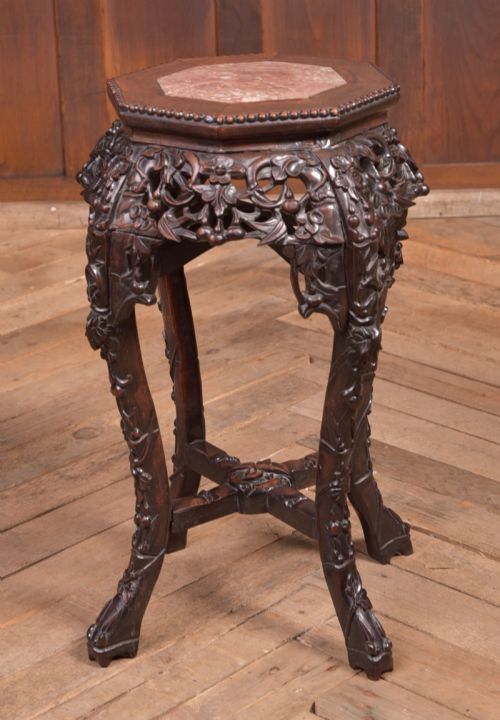
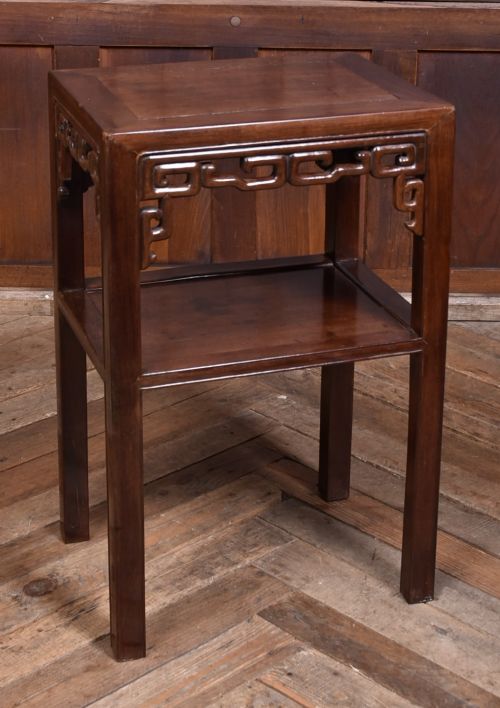
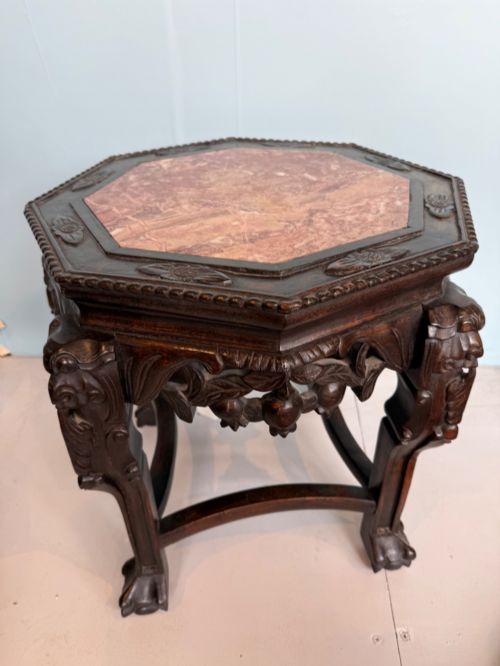
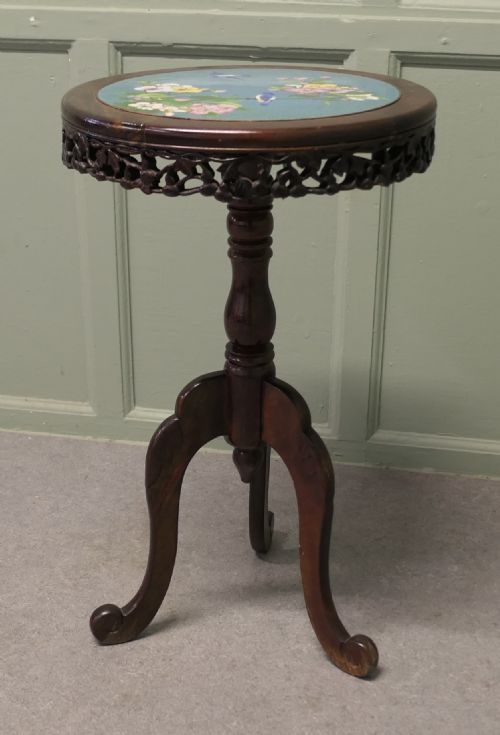
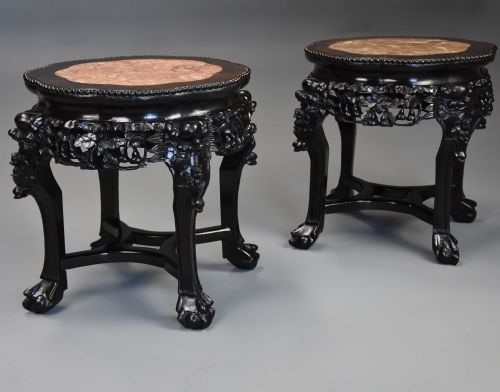
The most common form on this page is the compact plant or pot stand, often featuring a shaped or circular top raised on carved legs. Alongside these stand occasional tables, side tables, and vase tables designed to fit narrower spaces in a room.
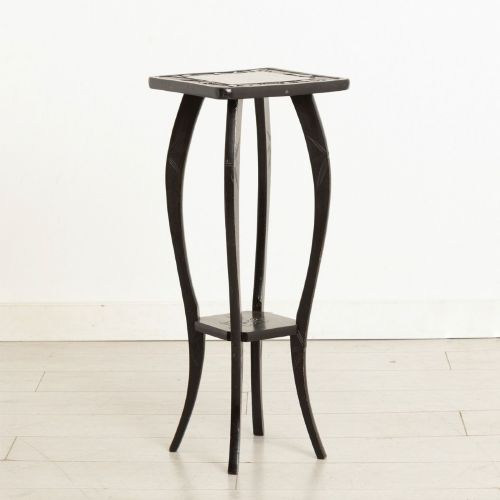
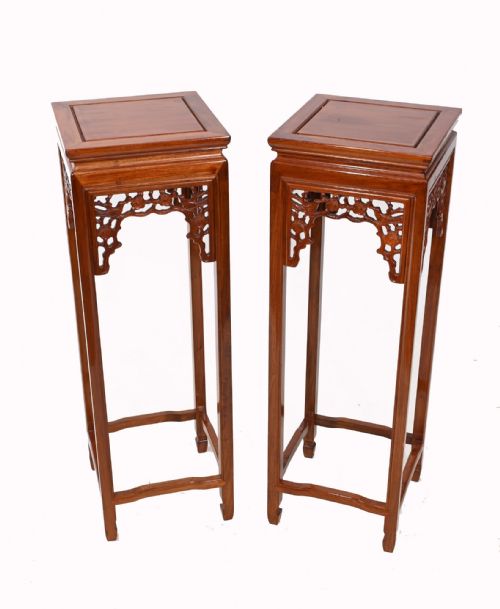
Materials and stylistic influences span Qing Dynasty traditions, Chinese export designs, and Arts and Crafts interpretations such as those retailed by Liberty. Buyers encounter low rectangular forms as well as taller pedestals suited for displaying large floral arrangements.
Materials and Construction
Carpenters constructed these tables using dense Asian hardwoods including rosewood, padouk, huali, and hongmu, often ebonising standard timbers to achieve a dark finish. These heavy woods provided the structural strength required to support inset marble slabs without warping.
Workshops integrated carved decorative motifs into the wooden frames, utilising traditional joinery alongside hand-carved floral and foliage relief. Inset surfaces typically consist of variegated marble or rouge marble fitted flush into the wooden top.
Alternative finishes include lacquered painted surfaces, mother-of-pearl inlay, and mixed metal or cloisonné details found on related decorative items. Brass and bronze components appear on specific mounts and associated vessels.
Listings feature items spanning the Victorian era through the early twentieth century, incorporating hardwoods, marble, and ebonised wood.
Assessing the Standard
The weight and selection of the timber dictate the structural integrity of an oriental flower table. Dense hardwoods like hongmu and padouk hold crisp, deep carvings far better than softer substitute woods.
The quality of the marble insert matters significantly, with well-figured, intact stone slabs indicating higher production standards. Colour variation and natural veining in the rouge or variegated marble enhance the visual depth of the top.
Joinery execution and the crispness of hand-carved floral details separate standard utilitarian pieces from finer decorative works. Clean execution in recessed panels and tight joints demonstrate superior workshop output.
Liberty of London
The Oriental Flower Table Glossary
- Jardiniere stand
- A tall or low table specifically built to support a heavy ceramic plant pot or jardiniere. These tables often feature inset marble tops to protect the wood from moisture.
- Hongmu
- A dense Chinese hardwood translating to red wood, commonly used for high-status furniture during the Qing Dynasty. It accepts intricate hand-carved detailing without splintering.
- Padouk
- A heavy, durable tropical hardwood with a reddish hue used in nineteenth-century Chinese furniture production. It provides exceptional stability for heavily carved stands.
- Cloisonné
- An enamelwork technique where metal wire forms compartments on a metal base, filled with coloured paste and fired. This technique appears on decorative wine tables and vessels.
- Chinoiserie
- European decorative style reflecting Chinese artistic influences, popular across various Victorian and Edwardian interiors. It manifests in painted finishes and specific stand forms.
Oriental Flower Table: Frequently Asked Questions
What is an oriental flower table used for?
These pieces serve primarily as plant stands, pot supports, or occasional tables for lamps and display items. Their sturdy construction accommodates heavy ceramic planters and decorative vases.
Historically, craftsmen designed them to bring natural elements indoors by elevating flora within domestic reception rooms and parlours.
How do I identify a nineteenth-century piece?
Examine the timber density, hand-carving depth, and construction methods used beneath the top. Nineteenth-century examples typically employ heavy hardwoods like rosewood or padouk with traditional joinery.
Check for natural wear patterns on the wood and the specific characteristics of the inset marble top.
Are marble top stands fragile?
The stone inserts are heavy and solid, but they can crack if subjected to sharp impacts or uneven pressure. The surrounding hardwood frame protects the edges of the marble slab during normal use.
Keep the table away from extreme temperature fluctuations to protect both the stone and the timber frame.
Where should I place this table in a room?
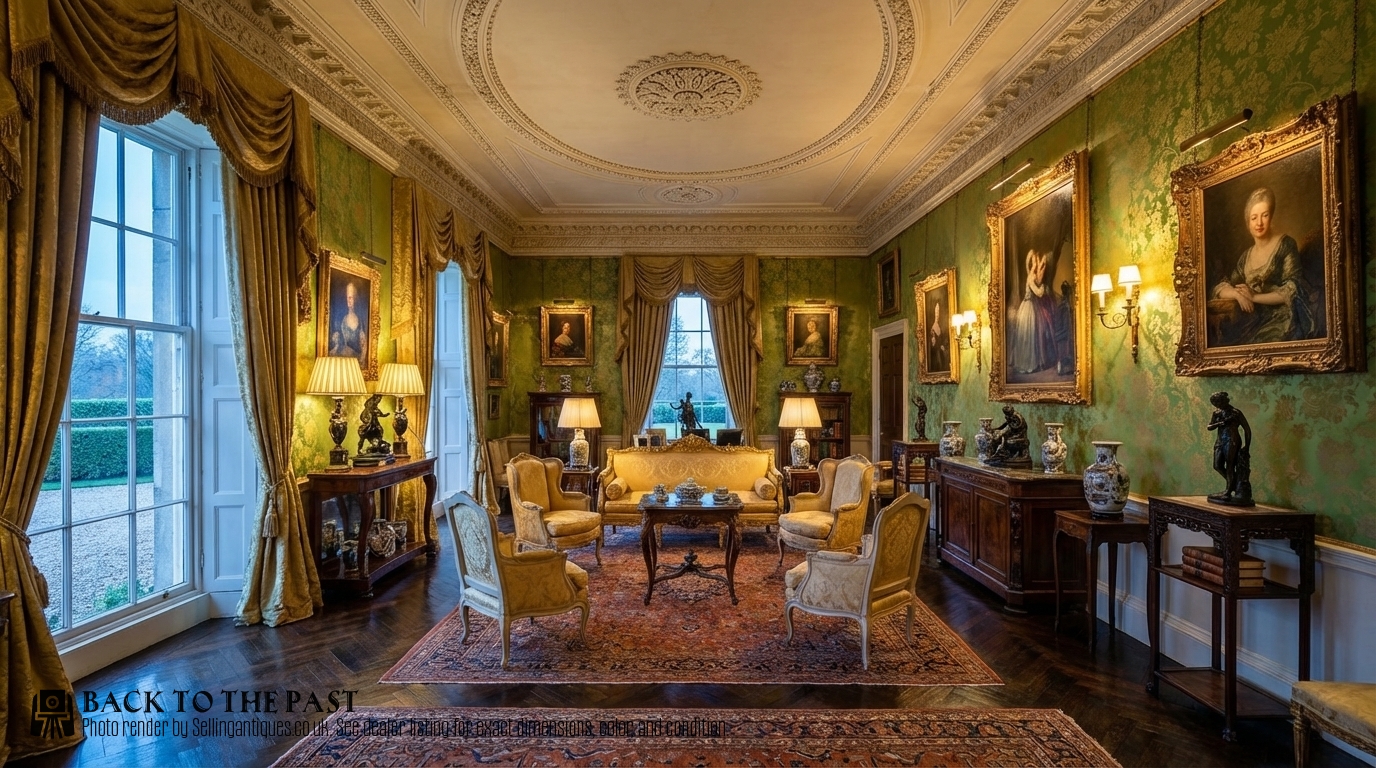
Position the stand in corners, beside seating, or beneath windows where natural light highlights the wood grain and carved details. Smaller versions function well as lamp tables or bedside surfaces.
Ensure the floor is level so the heavy hardwood and marble structure remains stable.