


Oriental Cloisonne Enamel Dish
When you handle an oriental cloisonne enamel dish, you hold centuries of meticulous metalwork and vibrant glass fused by fire.
Oriental Cloisonne Enamel Dish
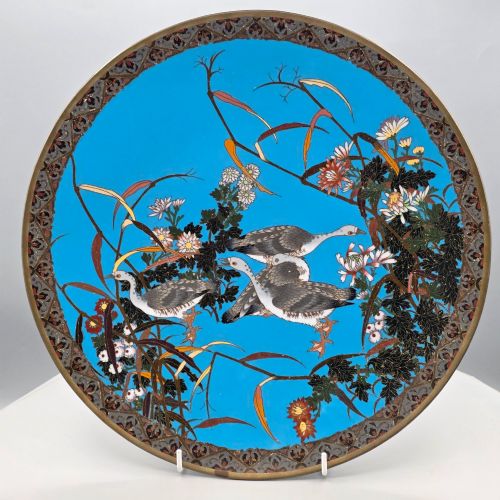
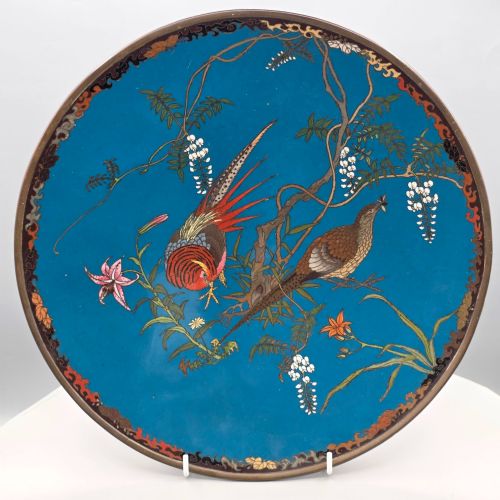
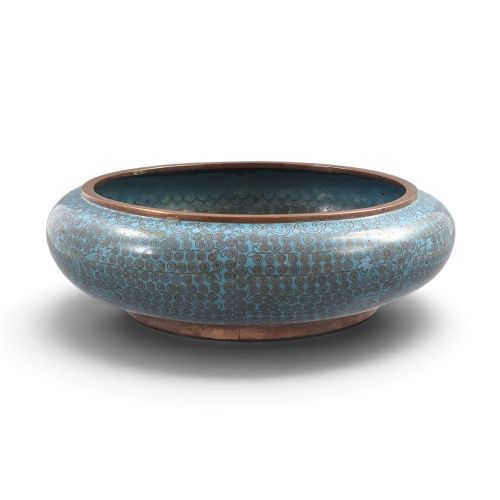
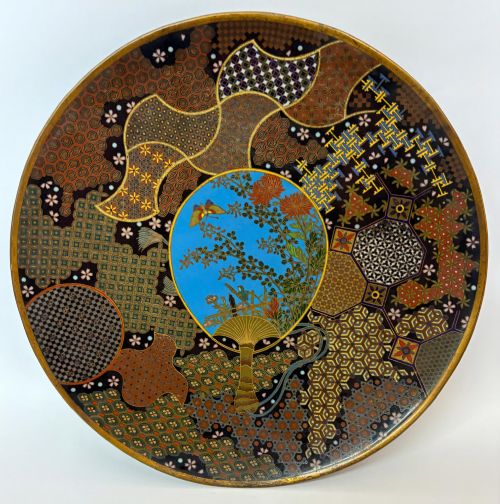
An oriental cloisonne enamel dish encompasses wide decorative chargers, heavy plates, shallow bowls and square trays originating from Japanese Meiji and Edo periods alongside Chinese Qing dynasty workshops. These vessels display detailed depictions of dragons, leaping koi, phoenixes, birds and floral arrangements across flat or gently curved surfaces.
The version most commonly met on this page is the large Japanese Meiji period charger or medium plate dating from the late nineteenth century. Such pieces frequently feature avian subjects like geese, owls and ibises set against detailed natural landscapes or Mount Fuji.
Materials and Technique
Artisans constructed the foundation of each dish utilising copper, brass, or bronze as a base metal plate or bowl. Upon this metallic surface, delicate ribbons of brass wire or copper alloy were soldered upright to map out intricate cell patterns.
Vitreous enamel paste was packed meticulously into these individual wire compartments before the entire vessel underwent high-temperature firing. Subsequent grinding and polishing revealed the crisp metal outlines separating vibrant sections of coloured glass.
Some industrious frogs and cautious shrimp found themselves immortalised in wire and glass alongside majestic dragons.
Judging Quality
Quality varies significantly in the precision and thinness of the wirework, where finer, tighter cells demand greater skill from the maker. The complexity of the pictorial subject also dictates standard, moving from simple floral motifs to intricate multi-layered dragons or lifelike fauna.
Surface finish separates ordinary output from masterworks, requiring an even, glossy polish across the enamelled cells without pitting or excessive surface distortion. The integration of signed elements or distinguished provenance indicates higher workshops.
Kinkozan
The Oriental Cloisonne Enamel Dish Glossary
- Cloisonne
- A decorative metalwork technique where thin wire partitions form cells to hold vitreous enamel paste. This method creates distinctive compartmentalised designs filled with bright colours.
- Charger
- A large ornamental plate or dish utilised primarily for display rather than dining. These substantial pieces provide a wide canvas for complex pictorial scenes.
- Meiji Period
- An era in Japanese history spanning from 1868 to 1912 noted for exceptional technical mastery in metal arts. Artisans during this time produced highly detailed enamel plaques and vessels.
- Edo Period
- The period in Japanese history lasting from 1603 to 1867 preceding the Meiji era. Early cloisonne output from this time often displays robust forms and distinct glazing properties.
- Qing Dynasty
- The final imperial dynasty of China, ruling from 1644 to 1912. Imperial and commercial workshops of this period created sophisticated enamel vessels and scholar items.
Oriental Cloisonne Enamel Dish: Frequently Asked Questions
How were these dishes used?
Most large chargers and decorative plaques were manufactured strictly for display on walls, cabinets, or wooden stands rather than practical table service. Smaller trays and bowls served as ornamental receptacles for scholars or as refined interior decor.
Their vibrant metallic surfaces caught candlelight and natural illumination, making them focal points within nineteenth-century drawing rooms and studies.
How do I date an antique dish?
Dating relies heavily on stylistic shifts, wire types, and base metal characteristics recorded across the Meiji and Edo periods. Earlier nineteenth-century pieces often exhibit heavier construction and distinct colour palettes compared to later output.
Signatures or attribution marks stamped or applied to the base offer further clues to specific workshop timelines.
How do I clean and care for them?
Dusting gently with a dry, soft cloth keeps the enamel surface free from grime without risking abrasion to the metal wires. Avoid chemical cleaners, water immersion, or harsh polishing compounds that might damage the historic glass and metal.
Keep pieces away from direct sunlight and sudden temperature shifts to protect the integrity of the fused enamel layers.
What motifs appear on these pieces?
Common decorative themes draw heavily from traditional East Asian mythology and nature, featuring dragons, ho-o birds, and leaping koi. Flora such as chrysanthemums and peonies also frequent the designs alongside landscapes featuring Mount Fuji.
These symbols often carried auspicious meanings representing longevity, prosperity, and good fortune for the household.