


Meiji Cloisonne Enamel Dish
When you handle a meiji cloisonne enamel dish, you hold a dense metal vessel carrying intricate coloured glass wires that depict traditional subjects from nineteenth-century Japanese craft.
Meiji Cloisonne Enamel Dish
A meiji cloisonne enamel dish encompasses large decorative chargers, wide plates, shallow trays, and substantial bowls originating from Japan during the nineteenth century. Most examples span the decades between eighteen-sixty and nineteen-hundred, capturing the transition of Meiji period metalwork.
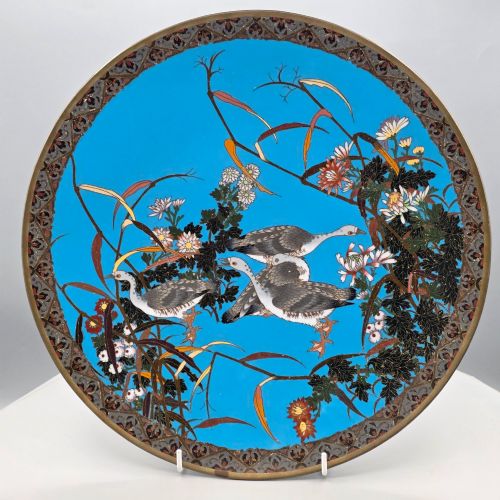
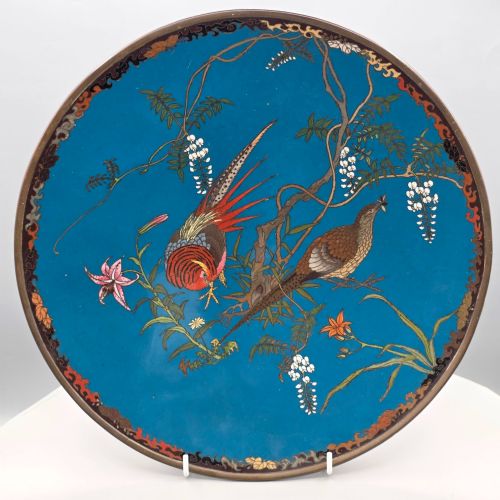
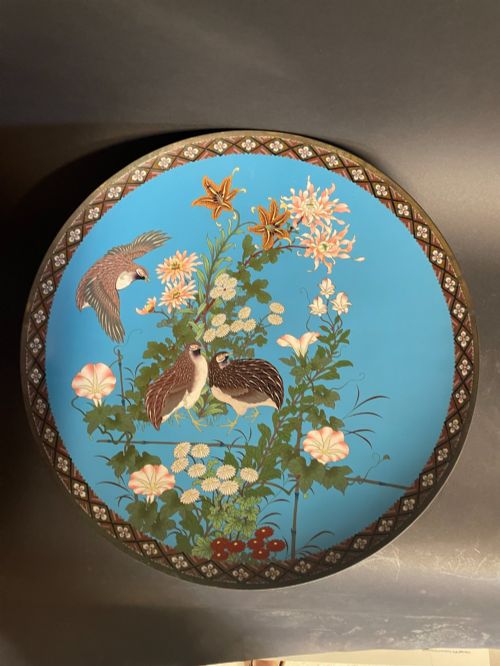
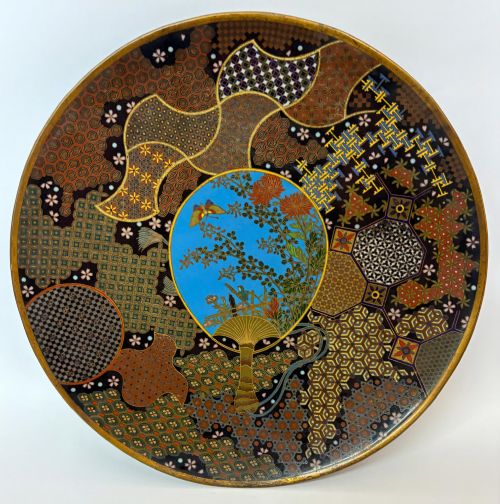
The domestic forms range from intimate square trays to massive chargers spanning over forty centimetres, often decorated with native fauna, dragons, or auspicious symbols. The broader plates and chargers dominate the selection, frequently depicting detailed natural studies of birds, flowers, and landscapes.
Materials and construction
Artisans built these pieces upon a foundation of hammered copper, bronze, or brass, and occasionally porcelain in the specialised totai shippo method. Thin wire ribbons of brass or copper were soldered onto the metal body to form the delicate outlines of the design.
The resulting cellular compartments were filled with coloured enamel paste and fired in a kiln before the surface was ground and polished to a smooth finish. This technique allowed makers to achieve tight geometric patterns and pictorial scenes across curved surfaces.
Current listings feature pieces spanning the Meiji period from eighteen-sixty to nineteen-hundred, utilising copper, brass, bronze, and porcelain.
Distinguishing quality and execution
The refinement of the wirework dictates much of the visual success, with finer compartments signalling greater technical control by the maker. Thinner lines permit more intricate depictions of feathers, scales, and floral petals without overwhelming the composition.
Surface finish and colour saturation further separate standard production from exceptional works. The most accomplished pieces display perfectly uniform polishing across the enamel and metal wires, alongside subtle colour gradients within the depictions of landscapes and birds.
Kinkozan
The Meiji Cloisonne Enamel Dish Glossary
- Cloisonne Enamel
- A metalwork technique where thin wire partitions form cells that hold coloured glass paste before firing. This method creates a patterned surface of distinct coloured fields.
- Totai Shippo
- A variation using a porcelain body instead of metal beneath the wirework and enamel. This technique often incorporates simulated tree bark textures in the design.
- Charger
- A large decorative plate intended for display rather than dining use. These substantial vessels provide an expansive surface for complex pictorial narratives.
- Ho-o Bird
- A mythical phoenix motif frequently depicted with elaborate plumage in Japanese metalwork. It represents virtue and grace in traditional design.
- Mon
- A traditional Japanese heraldic badge or crest used to identify families or clans. These circular emblems frequently appear as secondary motifs in surface decoration.
Meiji Cloisonne Enamel Dish: Frequently Asked Questions
What is a meiji cloisonne enamel dish?
These pieces are decorative metal vessels created in Japan during the late nineteenth century, featuring soldered wire cells filled with coloured glass enamel.
Craftsmen shaped them into plates, chargers, bowls, and trays to showcase elaborate pictorial designs inspired by nature and mythology.
How were these dishes used?
Most large chargers and wide plates served as decorative display objects rather than functional tableware, mounted on stands or shown on walls.
Smaller trays and bowls held ornaments or functioned as standalone cabinet pieces within traditional interiors.
How do I date a piece?
Dating relies on stylistic shifts in the wirework, subject matter, and the composition of the metal foundation across the decades of the Meiji period.
Early examples often feature bolder wire patterns and specific avian or dragon motifs, while later works introduce subtler colour blending and alternative body materials.
What motifs appear most often?
Common subjects include native birds such as cranes, ibises, and geese, alongside floral studies featuring chrysanthemums, iris, and peonies.
Mythological figures like dragons, ho-o birds, and samurai also frequent the enamel surface alongside landscapes incorporating Mount Fuji.