
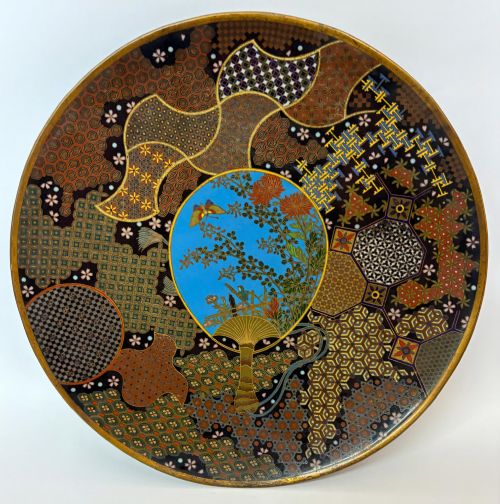


Antique Cloisonne Plate
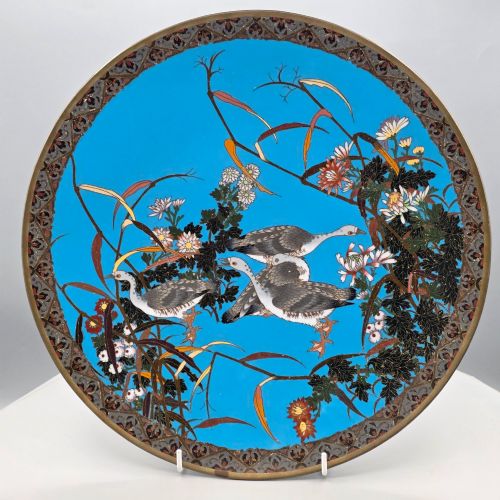
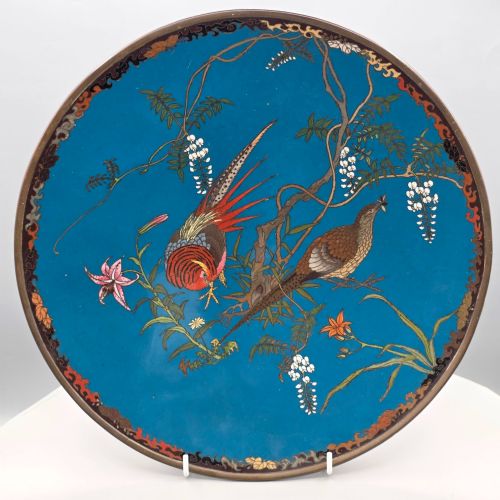
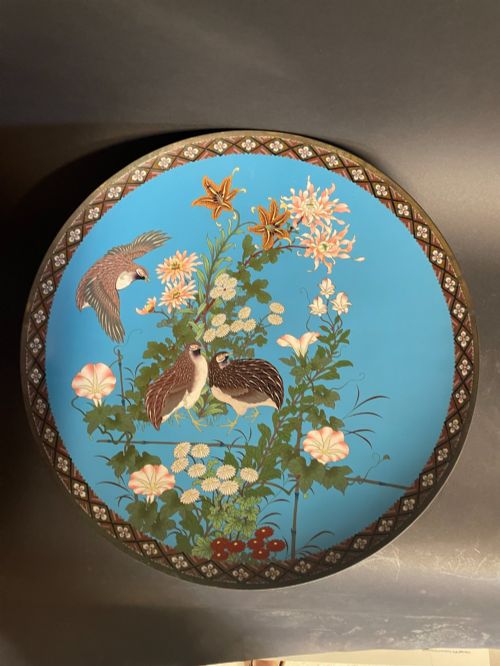
When you search for an antique cloisonne plate, you are looking at intricate metalwork and coloured enamels from the nineteenth century.
Materials and construction
The foundation of these pieces relies on metal bases fashioned from copper, brass, bronze, or porcelain, upon which thin metal wires are applied to form closed cells or compartments known as cloisons. These flattened wires, often made of brass or copper, outline the intricate designs of birds, dragons, and landscapes before the enamelling stage begins.
Coloured enamel pastes are packed into the individual wire compartments by hand and fired in a kiln to vitrify the glass powders into a hard, glossy surface. Once the firing is complete, the entire surface is ground down and polished until the metal wire rims and the hardened enamel fields sit on a single smooth plane.
Distinctions in quality
The finesse of the wirework largely distinguishes superior examples from standard production, with finer gauge wires allowing for intricate detail and complex pictorial depth in subjects like feathers and scales. Artisans who achieved precise, uniform cell work and managed microscopic wire spacing produced imagery of remarkable clarity.
The complexity and subtlety of the enamel palette also separate masterworks from simpler pieces, particularly where artists blended tones or utilised specialised totai shippo techniques involving porcelain bases with simulated tree bark textures. Furthermore, signatures from notable makers and workshops indicate higher standards of craftsmanship.
Several Meiji period chargers feature meticulously detailed shrimp and frogs alongside traditional phoenixes and dragons.
Kinkozan
The Antique Cloisonne Plate Glossary
- Cloisonne
- Enamel decoration in which the design is formed by placing thin metal wires on a metal base to create compartments for coloured pastes.
- Charger
- A large decorative plate, typically exceeding thirty centimetres in diameter, designed for display rather than table service.
- Totai shippo
- A Japanese enamelling technique applied over a porcelain body, often featuring textured surfaces resembling tree bark.
- Meiji Period
- The era in Japanese history spanning from 1868 to 1912, noted for significant developments in metalwork and decorative arts.
- Mon
- A Japanese heraldic badge or emblem used to identify families, clans, or temples, frequently incorporated into decorative designs.
Antique Cloisonne Plate: Frequently Asked Questions
What is an antique cloisonne plate?
An antique cloisonne plate is a decorative vessel made by soldering metal wires onto a copper, brass, bronze, or porcelain base to form cells, which are then filled with coloured enamel and fired.
These plates were produced primarily in Japan during the nineteenth and early twentieth centuries, serving as ornamental chargers and trays rather than functional tableware.
How do I date an antique cloisonne plate?
Dating relies on stylistic markers, materials, and manufacturing techniques, with pieces from the mid nineteenth century often showing larger wire forms and heavier construction. Meiji period examples from the later decades typically exhibit finer, more complex wirework and highly refined enamel palettes.
Reference to specific historical eras, such as the Edo period or the Qing dynasty, provides a broader chronological framework for identification.
How were these plates used historically?
These pieces were created principally for display on walls, cabinets, or specially constructed stands, acting as focal points in domestic interiors. Their intricate iconography of birds, dragons, and landscapes made them prized decorative objects.
Larger chargers and platters were sometimes mounted on tables or displayed within households to demonstrate taste and appreciation for fine craftsmanship.
How do I care for antique cloisonne?
Care involves dusting the surface gently with a soft, dry cloth to prevent accumulation of debris within the recessed areas or around the wire borders. Moisture and harsh chemical cleaners should be avoided to protect the integrity of the metallic base and the vitrified enamel.
Displaying the pieces away from direct sunlight and extreme temperature fluctuations helps preserve the stability of the enamel and metal components over time.