
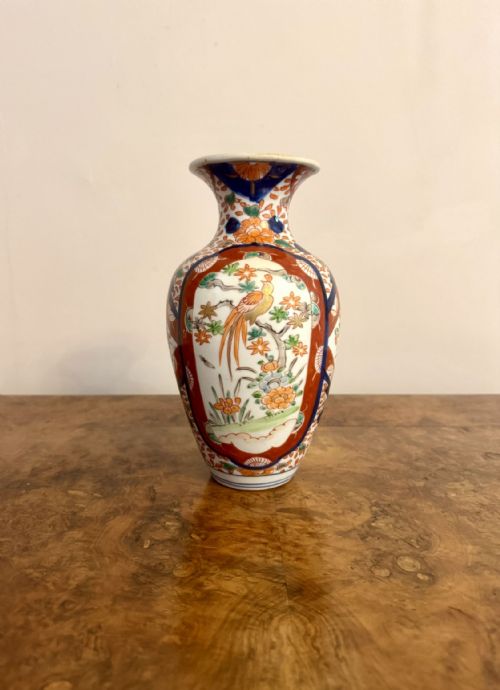


Orange Blue Japanese Vase
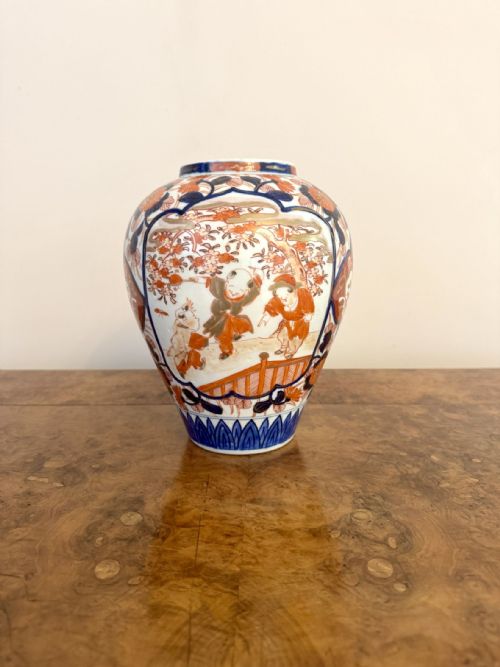
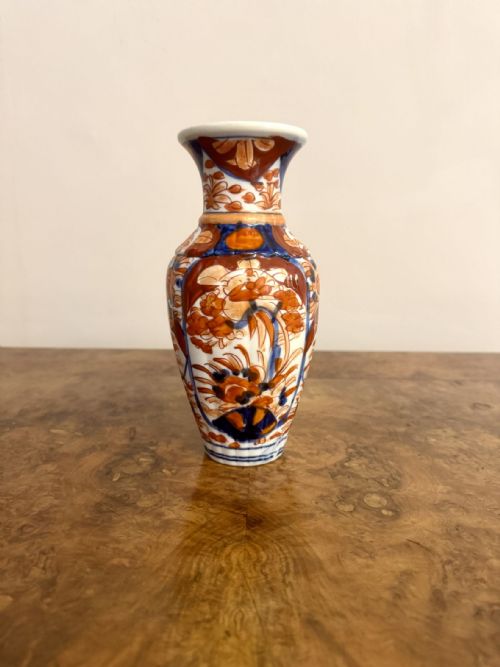
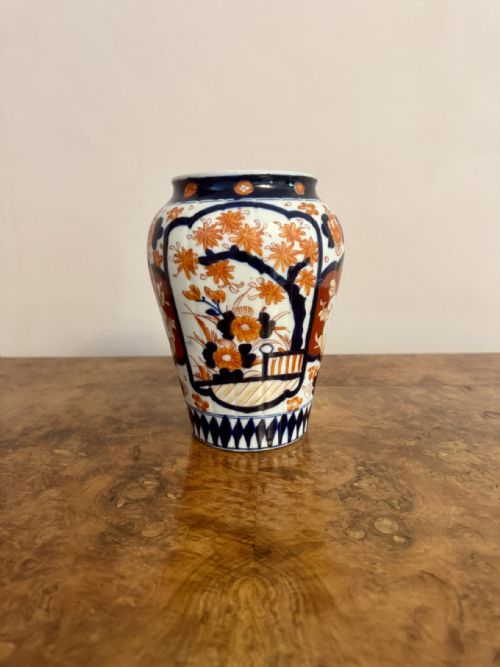
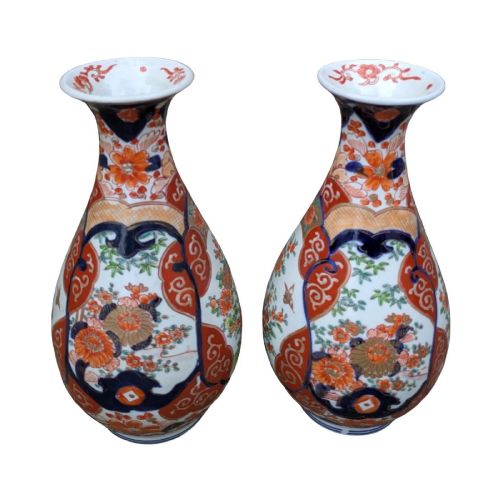
An orange blue japanese vase brings bold hand-painted iron-red and cobalt decoration into a room, drawing the eye instantly to intricate floral and geometric motifs.
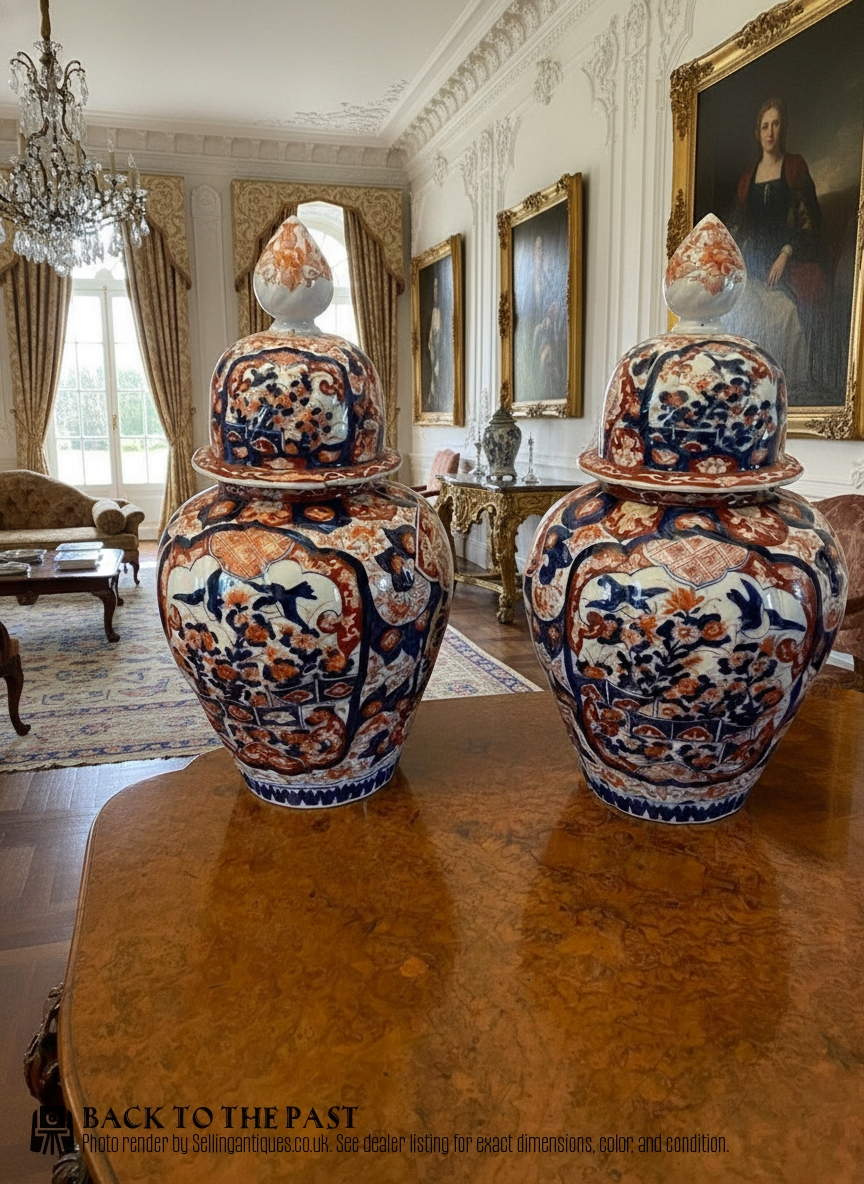
Orange Blue Japanese Vase
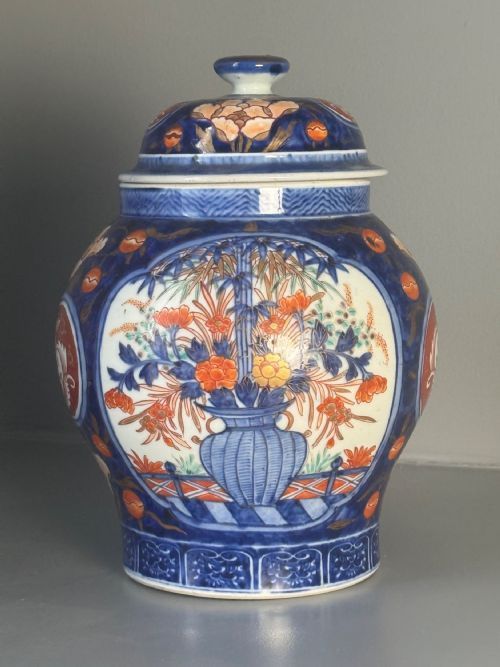
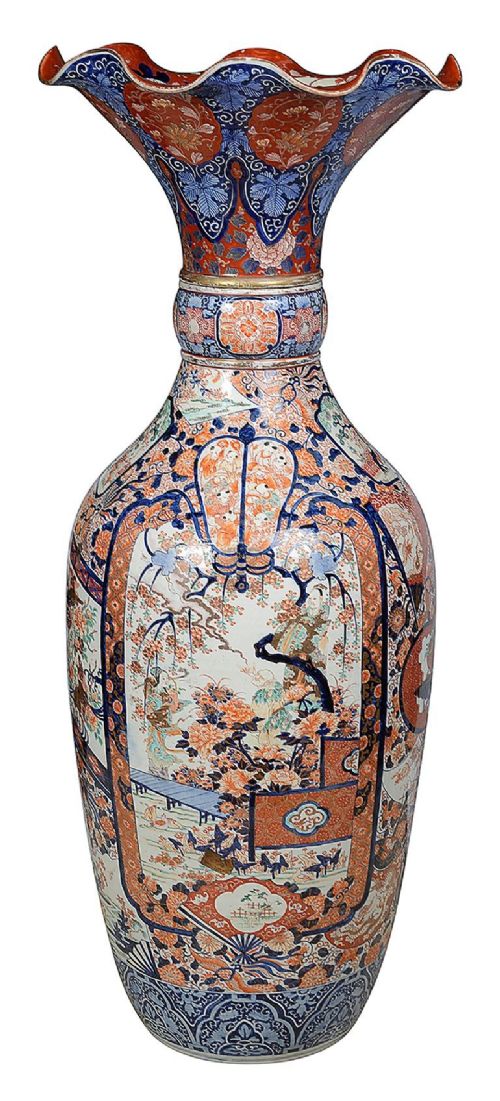
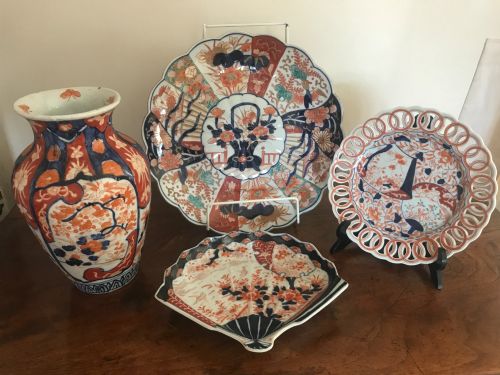
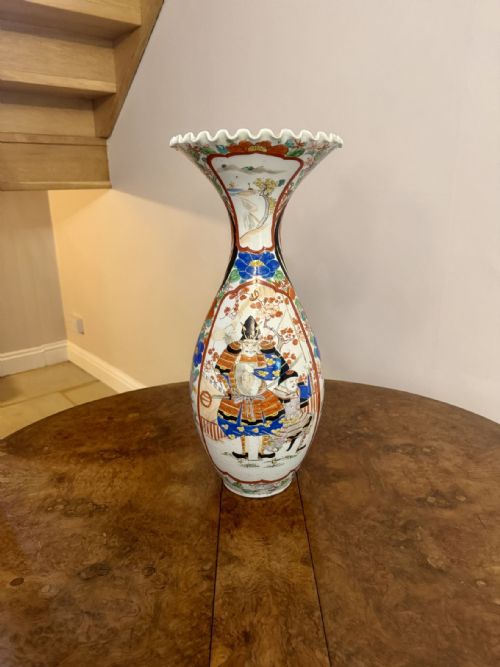
An orange blue japanese vase typically centres on the rich palette of Imari porcelain, blending vibrant underglaze blue with striking overglaze iron-red enamel and gold leaf accents. These pieces range from compact ginger jars and double gourd vessels to monumental floor-standing vases and lidded urns.
The selections span the Meiji period, the Edwardian era, and stretch back through the nineteenth century into eighteenth-century Arita production. Collectors encounter various forms including bottle-shaped vessels, octagonal baluster shapes, and vessels adapted as table lamps.
Makers and artisans utilised traditional Japanese export ceramic techniques to produce decorative ceramics designed for international appeal. Each orange blue japanese vase displays distinct panelled designs, often featuring traditional flora, fauna, and brocade patterns.
How they were made
Potters shaped high-fired porcelain and applied cobalt blue pigment beneath the glaze before initial firing. Artisans then added overglaze enamel colours, notably iron-red and gilt highlights, returning the ceramics to a kiln for a lower-temperature fix.
Details often incorporate gold leaf and gilding to accentuate the painted panels and intricate borders on the porcelain surface.
Some nineteenth-century potters thoughtfully designed their massive floor vases with enough ballast to withstand the enthusiastic tail-swishes of family hounds.
What varies in quality
The distinction between standard commercial export wares and finer pieces rests in the crispness of the hand-painted brushwork and the precision of the cobalt and enamel application. Superior examples demonstrate a balanced composition across complex panels with minimal pigment bleeding and vibrant, well-preserved gilding.
Scale and form also dictate distinction, with large floor-standing vases, pairs, and complete garnitures demanding greater technical skill from the potter and kiln operator than smaller single vessels.
The Orange Blue Japanese Vase Glossary
- Imari
- A style of Japanese porcelain decorated in underglaze blue, iron-red, and gilt. It originated in the town of Arita and was shipped from the port of Imari for export.
- Meiji Period
- The era in Japanese history lasting from 1868 to 1912. This period saw a surge in the production of decorative ceramics for Western markets.
- Garniture
- A set of three or more matching vases or vessels designed to be displayed together on a mantelpiece or sideboard.
- Arita
- The Japanese town in Hizen province famous as the historic cradle of Japanese porcelain production. Kilns here produced the vast majority of export wares.
- Double Gourd
- A vase shaped like two spheres stacked one upon the other, resembling a traditional water carrier. This auspicious form appears frequently in export ceramics.
Orange Blue Japanese Vase: Frequently Asked Questions
How do I date an orange blue japanese vase?
Dating relies on examining the porcelain body, glaze characteristics, and the style of the hand-painted enamel decoration. Nineteenth-century and Meiji period pieces often exhibit specific cobalt tones and iron-red hues distinct from later Edwardian reproductions.
Examining the base for kiln marks or lack thereof provides further clues regarding the manufacturing era and the specific Arita traditions involved.
Were these vases made for export?
The vast majority of these Imari porcelains were produced in Japan specifically for the European and American export markets during the late nineteenth and early twentieth centuries. Western demand shaped the large floor vases, garnitures, and lidded jars seen today.
Craftsmen adapted traditional Japanese motifs to suit the interior display preferences of Victorian and Edwardian homes.
How should I clean an antique vase?
Dusting gently with a soft, dry brush or microfiber cloth is the safest method for routine maintenance. Avoid using harsh cleaning agents, water, or abrasive materials that could harm delicate overglaze enamels and gilding.
Care should be taken around the rim and painted panels to preserve the historic surface finish.
What is a ginger jar?
A ginger jar is a sturdy, broad-shouldered ceramic vessel originally designed to store and transport spices, salt, and oil. Over time, these lidded jars became purely decorative interior items valued for their symmetrical proportions.
In Japanese export wares, they feature the same vibrant iron-red and cobalt blue palette found on standard vases.