







Pair Oriental Lidded Vases
Pair oriental lidded vases bring balanced symmetry and vibrant export design to a room, offering covered ceramic forms decorated in traditional palettes.
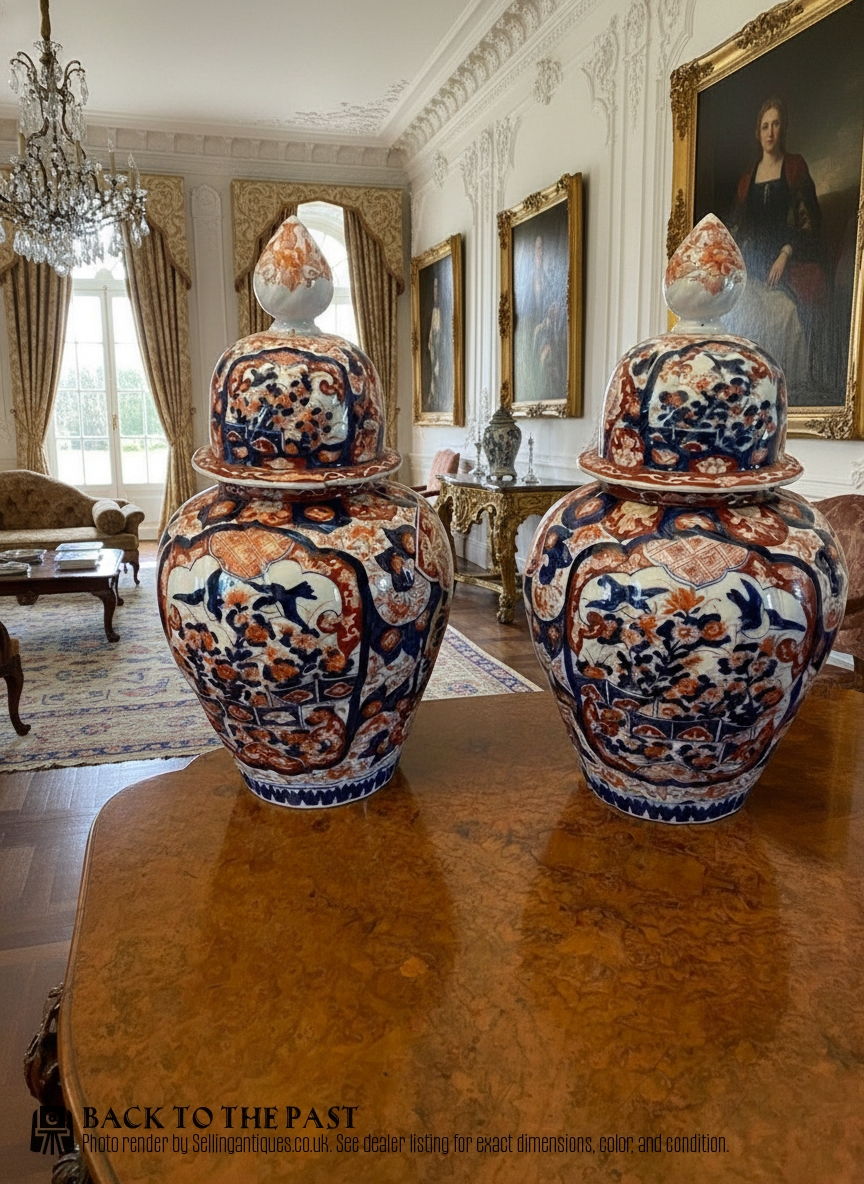
Pair Oriental Lidded Vases
When you search for pair oriental lidded vases, you encounter symmetrical groups of covered vessels originating from Asian export traditions and European interpretations. These objects encompass forms described as ginger jars, baluster vases, and lidded jars designed to stand in matched pairs.
The versions most frequently met on this page date from the nineteenth century, drawing heavily on Japanese Imari and Chinese export styles. Alongside nineteenth-century examples, the evidence includes seventeenth-century Arita blue and white porcelain, eighteenth-century productions, and Edwardian cloisonné pieces.
The forms serve primarily decorative purposes, functioning as mantel ornaments or cabinet pieces rather than functional containers. Their distinctive matching covers complete the vertical silhouette of each vessel, preserving the unified visual impact expected of a pair.
How they were made
The construction relies fundamentally on porcelain bodies, copper foundations, and metal alloys shaped into jars and vases. Porcelain pieces receive painted decoration in underglaze blue, enamel colours, and gold leaf or gilding.
Cloisonné examples employ copper bases fitted with soldered wire compartments to hold coloured enamel pastes before firing and polishing. Ormolu and brass mounts occasionally accent or support the vessels, adding structural hardware and decorative trim.
Pair Oriental Lidded Vases Retail Price Guide 2026
Typical asking prices for pair oriental lidded vases among the pieces listed under this phrase on Sellingantiques today, from the lower quarter to the upper quarter. They describe what is for sale here now, not the wider market.
Listings span multiple centuries, ranging from seventeenth-century Arita porcelain to Edwardian cloisonné.
What varies in quality
Quality separates ordinary decorative production from exceptional historical craftsmanship through the crispness of the painted detail and the precision of the enamel work. Finer vessels display controlled brushwork, vibrant glaze saturation, and well-preserved gilding that remains bright across both matched components.
The integrity of the matching covers and the clarity of the underlying porcelain or metalwork dictate the standing of a pair. Earlier periods, such as seventeenth-century Arita or eighteenth-century Imari, bring historical significance that elevates the status of the surviving objects.
The Pair Oriental Lidded Vases Glossary
- Imari
- A style of Japanese export porcelain decorated in underglaze blue, iron red, and gold. This palette creates a rich, patterned surface derived from seventeenth-century traditions.
- Cloisonné
- An enamelling technique where metal wire creates cells on a copper base to hold coloured glass pastes. The surface is subsequently fired and ground smooth.
- Ginger jar
- A wide-shouldered ceramic vessel with a domed lid, originally utilised for storing spices. In decorative contexts, these jars are collected in matched pairs.
- Ormolu
- Gilded bronze or brass applied as decorative mounts on furniture or decorative objects. It provides a bright metallic contrast to ceramic and enamel surfaces.
- Arita
- The Japanese town and surrounding region famous for producing foundational wares like blue and white porcelain. Pieces from this origin often date to the Edo period.
Pair Oriental Lidded Vases: Frequently Asked Questions
How should I display a pair?
Place them symmetrically on a mantelpiece, sideboard, or dedicated console table to maintain their visual balance. Keeping the two vessels together preserves their original purpose as a matched set.
Ensure they sit away from heavy foot traffic to protect the lids and delicate enamel or gilt surfaces from accidental knocks.
What is the difference between Imari and cloisonne?
Imari describes a ceramic tradition featuring painted porcelain decorated in blue, red, and gold. Cloisonné involves metal wirework filled with coloured enamel on a copper body.
Both styles appear frequently among antique lidded vessels but utilise entirely different materials and manufacturing techniques.
Are the lids original to the vases?
Lids on antique vessels are designed to complete the silhouette of the jar or baluster form. Checking the interior rims and glaze continuity helps confirm the relationship between base and cover.
Many nineteenth-century and earlier examples survive with their original matching components intact.
How do I care for antique lidded vases?
Dust the surfaces gently with a soft, dry brush to prevent the accumulation of dirt within recessed enamel channels or painted details. Avoid using liquid cleaners, chemical solvents, or abrasive cloths on gilded or enamelled areas.
Lift the vases and their lids separately rather than grasping the cover alone.