



Pair of Imari Urns
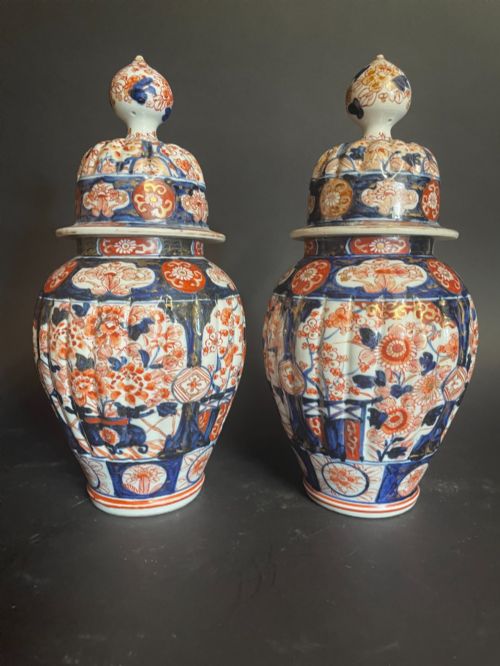
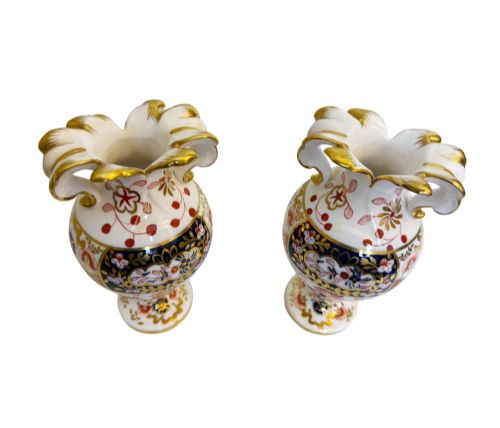
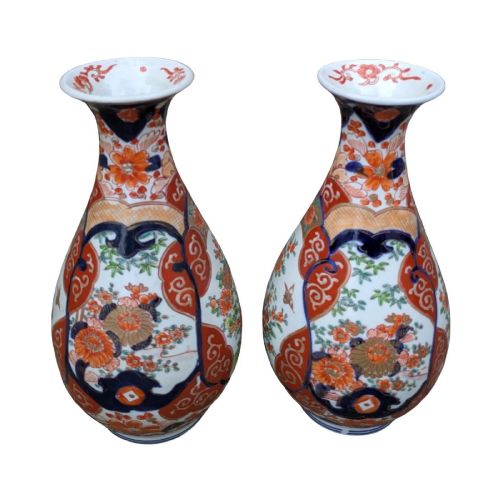
A pair of imari urns brings striking hand-painted palette depth to a mantelpiece, combining rich iron-red and cobalt blue porcelain.
Pair of Imari Urns
When searching for a pair of imari urns, buyers encounter symmetrical sets of decorative porcelain vessels designed primarily for display. These objects span periods from the seventeenth century through to the Edwardian era, incorporating both traditional Japanese export wares and European interpretations.
The most common examples on this page are nineteenth-century Japanese Meiji period vases and lidded jars, alongside Georgian English porcelain pieces produced by factories emulating the distinctive palette.
Forms vary considerably, taking shape as baluster vases, lidded ginger jars, double gourd vessels, and tall spill vases designed to sit harmoniously as matching pairs.
How They Were Made
These pieces rely on high-fired porcelain or ironstone bodies shaped on the wheel or pressed in moulds, often finished with fitted lids and applied handles. Artisans applied cobalt blue underglaze decoration before the initial firing.
Overglaze enamel pigments in iron-red, alongside gold leaf, gilt, and intricate gilding, were then added in subsequent low-temperature firings to create the signature layered visual richness.
Some nineteenth-century makers fashioned these vessels with lids so tightly fitted they trapped centuries of quiet domestic dust.
What Varies in Quality
The standard of painting determines the upper tier of these pieces, distinguishing crisp, detailed brushwork from mechanical transfer printing or hasty execution. Precision in the registration of cobalt underglaze lines beneath complex enamel overlays marks superior manufacture.
Preservation of the delicate surface gilding and enamel colours without excessive rubbing elevates certain items, while heavy restoration or mismatched lids diminishes overall integrity.
Chamberlain Worcester·Mason·Spode·Samson·Fukagawa
The Pair of Imari Urns Glossary
- Imari
- A style of Japanese porcelain originating from the port of Imari in Arita, defined by a palette of cobalt blue, iron-red, and gold. European factories frequently copied these characteristic designs during the eighteenth and nineteenth centuries.
- Baluster
- A vase form characterised by a rounded body that tapers toward the base and swells outward near the centre. This shape provides a stable and visually balanced silhouette suited to decorative mantel pairs.
- Ironstone
- A type of heavy, durable ceramic patented in the nineteenth century as a robust alternative to porcelain. It readily accepts enamel decoration and transfer printing.
- Mejl Period
- A chronological era in Japanese history spanning from 1868 to 1912, associated with a surge in decorative arts produced for international export. Pieces from this time often display ambitious scale and meticulous hand-painting.
- Gilding
- The application of gold leaf or powdered gold suspended in a medium to ceramic surfaces. It highlights specific design motifs and accents rim borders.
Pair of Imari Urns: Frequently Asked Questions
How were imari urns displayed?
These matching vessels were traditionally placed on mantelpieces, sideboards, or console tables in symmetrical pairs to anchor a room's decorative scheme. Their vibrant palettes were intended to catch candlelight in formal reception rooms.
Over time, owners often adapted them to sit atop matching pedestals or used lidded jars to store dry goods and potpourri before shifting them to purely ornamental roles.
How do I distinguish Japanese from European imari?
Japanese originals typically feature lighter, finer-grained porcelain bodies with slight kiln imperfections and subtle iron specking in the glaze. European copies from factories like Samson or English potteries often utilise denser ironstone or heavier paste.
Brushwork styles also provide clues, as European artisans occasionally applied enamels with different densities and drying marks compared to traditional Meiji or Edo period techniques.
What does Arita mean in these listings?
Arita is the Japanese town where the regional kilns fired the original export porcelains during the seventeenth century. It represents the historical epicentre of production for the earliest iterations of these wares.
Pieces bearing this origin designation carry significant historical weight for collectors focusing on early Japanese ceramic trade history.
How do I care for antique porcelain pairs?
Maintain these vessels by dusting them gently with a soft, dry brush to prevent abrasive particles from scratching the delicate overglaze enamels. Avoid using water or chemical cleaners, particularly on areas featuring exposed gold leaf or gilt.
Keep them positioned away from direct sunlight and high-traffic edges where vibration might cause a pair to tip over.