
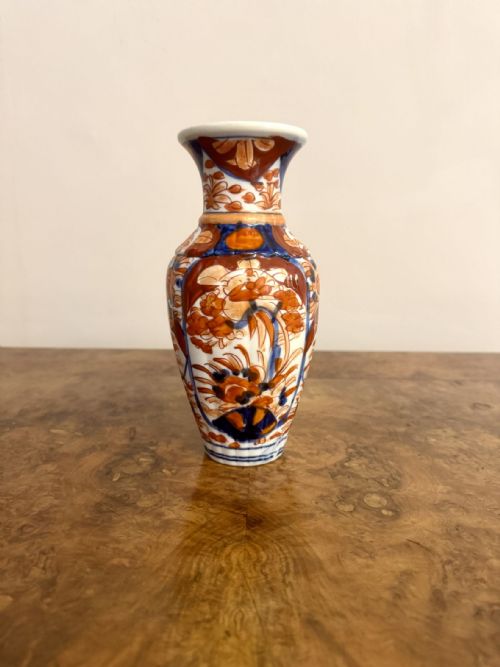
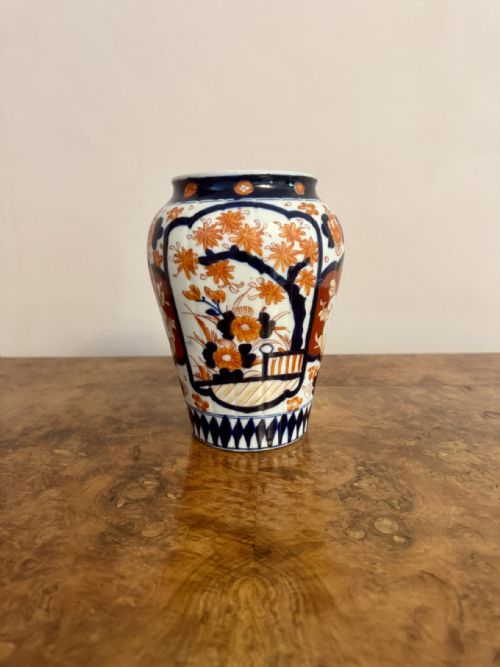
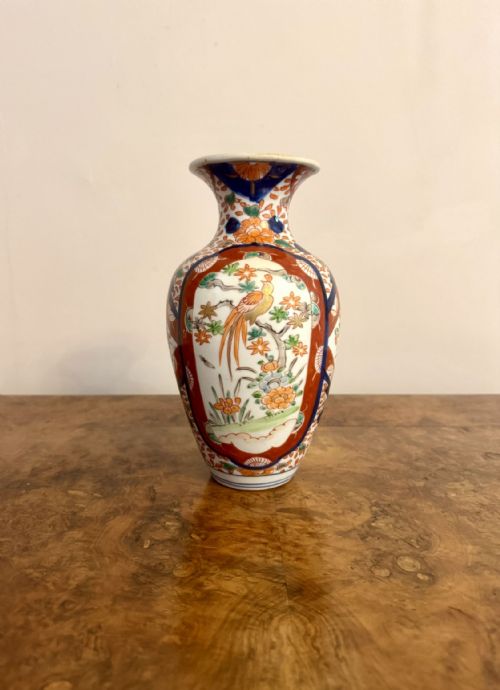


Cobalt Blue Imari Urns
Cobalt blue imari urns combine deep underglaze cobalt with iron-red and gilt enamel on porcelain, originating from Japanese export traditions and later British adaptations.
Cobalt Blue Imari Urns
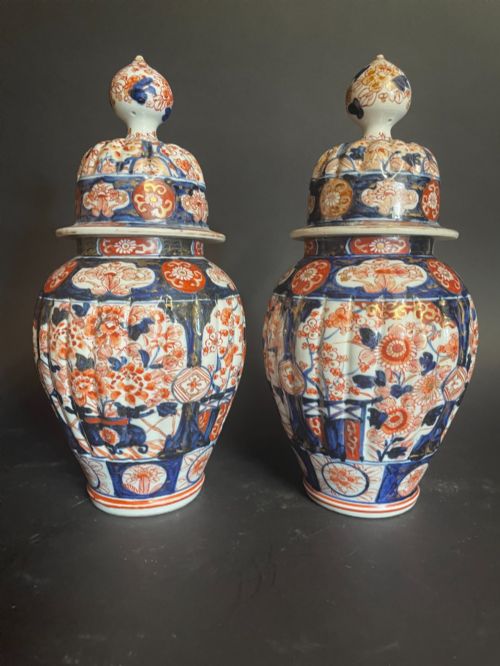
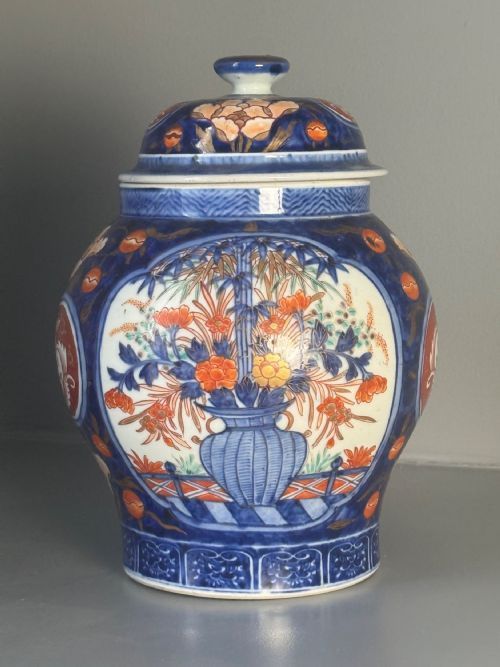
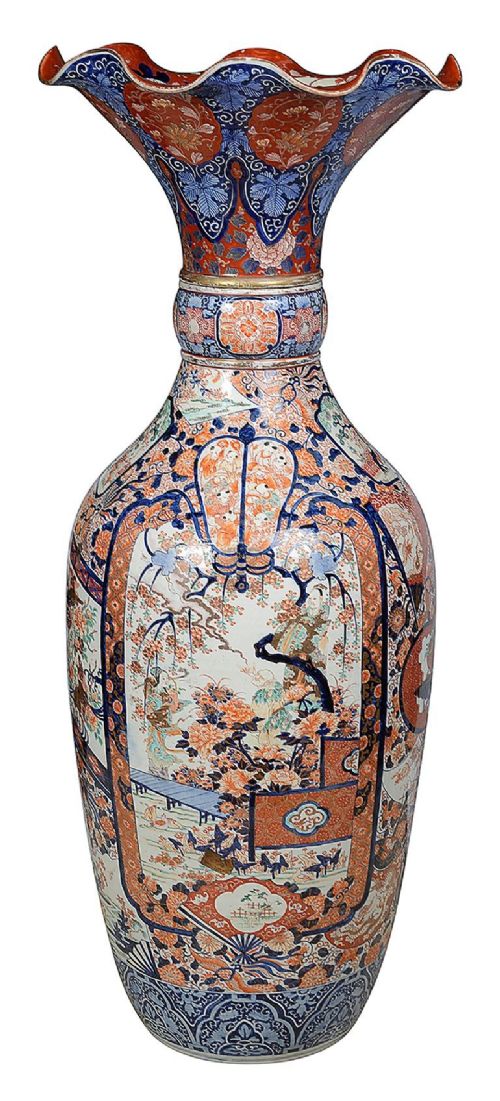
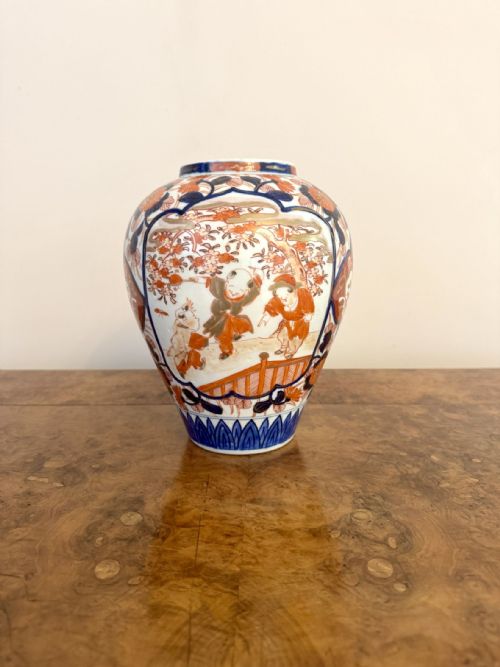
Cobalt blue imari urns encompass large floor standing vases, lidded ginger jars, and garnitures spanning the Edo, Meiji, and Victorian eras. When buyers search for this phrase, they meet porcelain pieces shaped as baluster vases, double gourds, and octagonal vessels decorated in the distinctive imari palette.
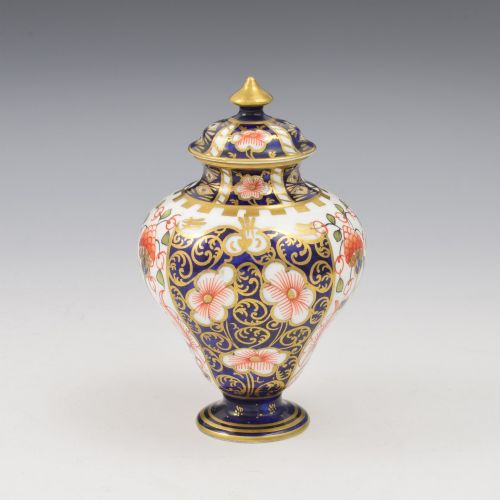
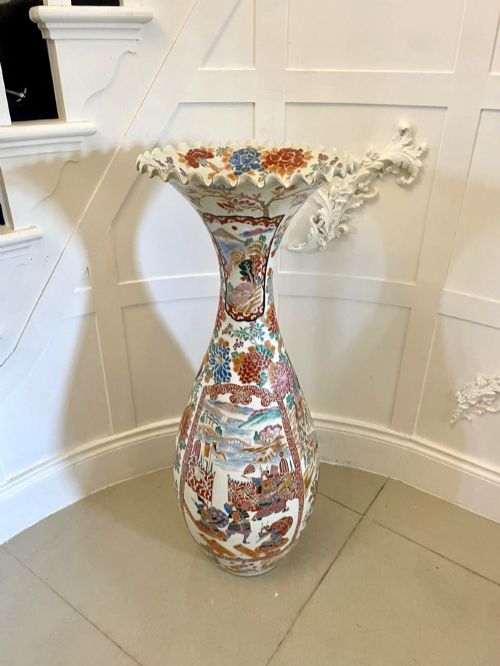
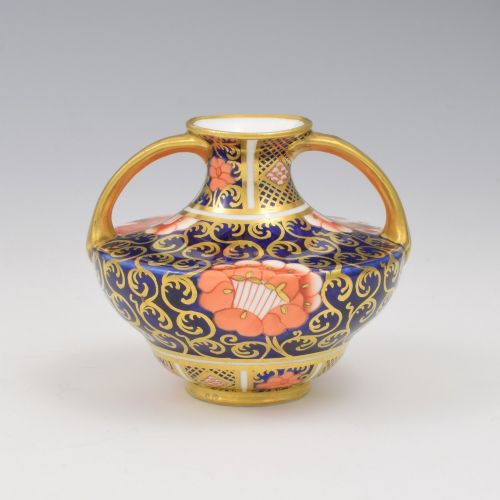
The objects on this page originate predominantly from Japanese production in Arita alongside British interpretations by makers such as Royal Crown Derby and Mason's. These range from miniature porcelain bud vases to towering floor pieces reaching nearly five feet in height.
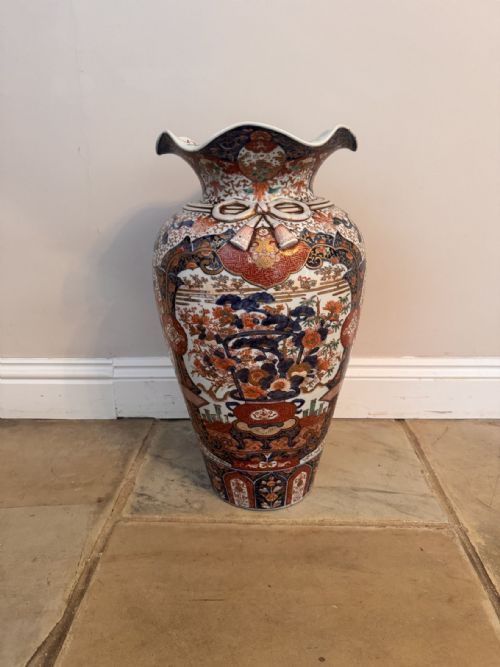
Vessels take various forms including twin-handled urns, covered jars, and potpourri containers. The decoration relies on the traditional interplay of cobalt blue and iron-red, frequently accented with gilding across both Japanese export wares and European imitative pieces.
How they were made
Potters shaped these urns from ceramic, ironstone, and hard-paste porcelain, throwing them on wheels or moulding them into fluted, baluster, and octagonal forms. Artisans then applied underglaze cobalt blue pigment before the initial high-temperature firing.
Following the first glaze firing, decorators added iron-red enamel and gold leaf or gold gilding by hand across the surface. A subsequent lower-temperature firing fixed these enamel colours and metallic highlights to the glazed porcelain body.
Object forms span ginger jars, lidded vessels, miniature bud vases, and floor standing urns reaching nearly five feet high.
What varies in quality
Quality in these pieces rests on the precision of the hand-painted detailing and the depth of the underglaze cobalt blue. Superior examples display crisp registration between the cobalt underglaze outlines and the overlaid iron-red and gilt enamel work.
The weight, throwing consistency, and structural ambition of the porcelain shape separate ordinary production from exceptional garnitures. Large floor standing vases and intricate double gourd forms demand advanced technical skill to prevent warping during kiln firing.
Royal Crown Derby·Mason s
The Cobalt Blue Imari Urns Glossary
- Imari
- A style of Japanese porcelain originating in Arita, characterised by a palette of underglaze cobalt blue, iron-red, and gilt. This aesthetic influenced European factories during the eighteenth and nineteenth centuries.
- Meiji Period
- The era of Japanese history lasting from 1868 to 1912, associated with extensive export porcelain production. Pieces from this time often exhibit detailed floral and pictorial hand painting.
- Garniture
- A set of matching vases or urns, typically numbering three, four, or five pieces designed for symmetrical display on a mantelpiece or cabinet. These sets share coordinating decorative motifs in the imari palette.
- Baluster
- A vase form featuring a rounded lower body that tapers towards a narrow neck and flared rim. This shape provides a stable foundation for complex cobalt and enamel patterns.
- Arita
- The Japanese town in Saga Prefecture where porcelain production began in the early seventeenth century. Kilns in this region produced the primary export wares decorated in the imari style.
Cobalt Blue Imari Urns: Frequently Asked Questions
How are cobalt blue imari urns dated?
Dating relies on stylistic shifts, period markers such as the Meiji or Edwardian eras, and factory backstamps where present. Japanese export pieces often align with late nineteenth-century production methods.
Material composition and potting techniques also indicate age, distinguishing eighteenth-century Arita wares from later Victorian interpretations and European copies.
What is an imari garniture set?
A garniture set consists of three or more matching vases or lidded jars designed to be displayed together as a decorative unit. These sets create symmetrical visual balance on large pieces of furniture.
Individual pieces within a garniture share identical cobalt blue and iron-red decorative schemes scaled to fit varying vase heights.
How should I clean porcelain urns?
Dust these ceramic and porcelain surfaces gently with a soft, dry brush to prevent accumulation. Avoid abrasive cloths or chemical cleaners that might damage delicate gold leaf and enamel.
Because overglaze gilding and enamels can wear over time, wet cleaning should be avoided unless handled by a professional conservator.
Are these pieces Japanese or European?
The listings include both authentic Japanese export wares from Arita and Meiji periods alongside European interpretations by factories such as Royal Crown Derby and Mason's. British makers adopted the imari palette on ironstone and porcelain.
Examining the paste, glaze characteristics, and potting style helps differentiate traditional Japanese production from nineteenth-century European imitative works.