



Pair Japanese Porcelain Vases
These pair japanese porcelain vases unite symmetry with decorative ambition, offering balanced displays from the Meiji period and beyond.
Pair Japanese Porcelain Vases
A pair japanese porcelain vases brings balanced symmetry to interiors, typically presenting matching motifs across baluster, bottle, or cylindrical forms. These objects emerge from various historical epochs, spanning the late Edo period through the Meiji era and into the early twentieth century.
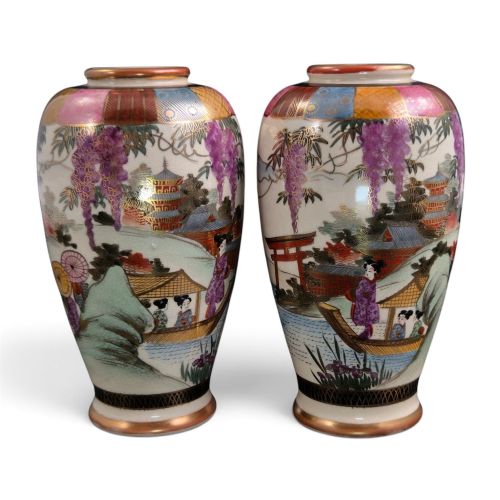
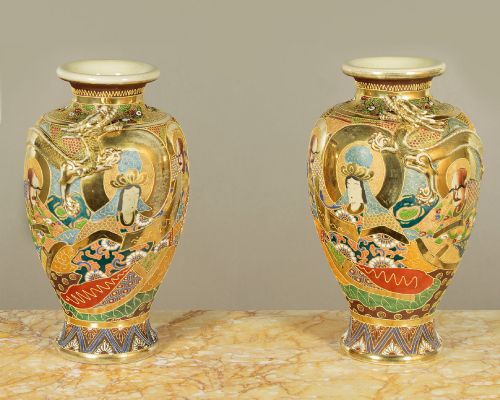
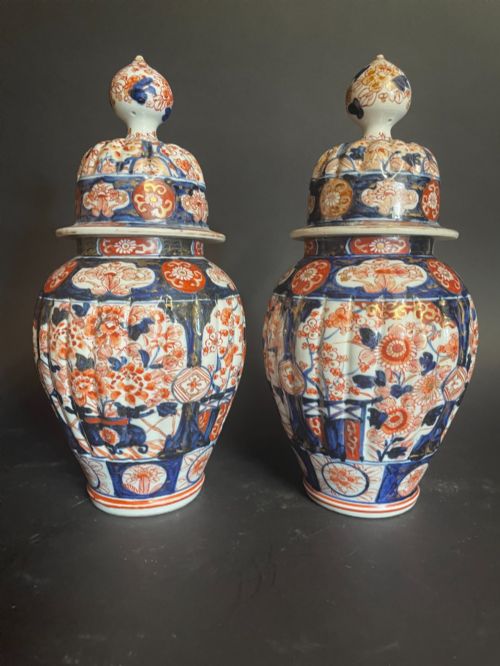
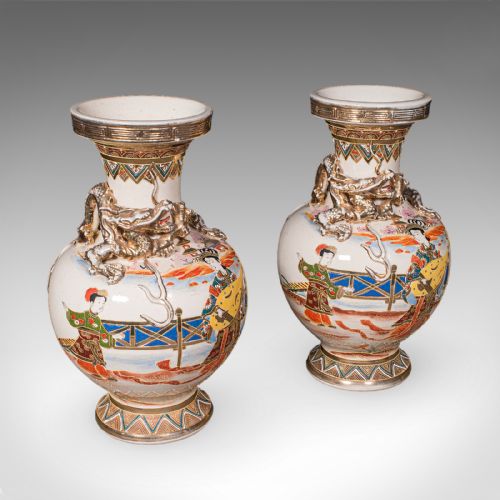
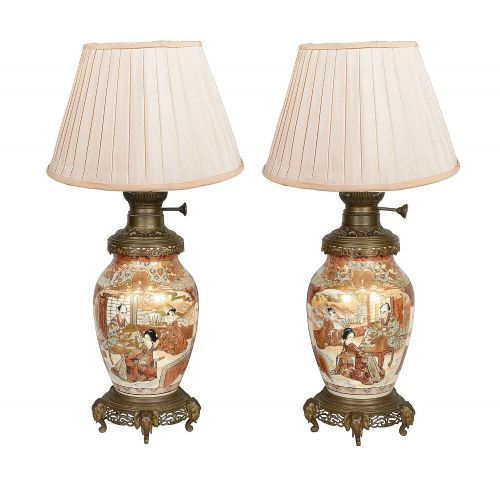
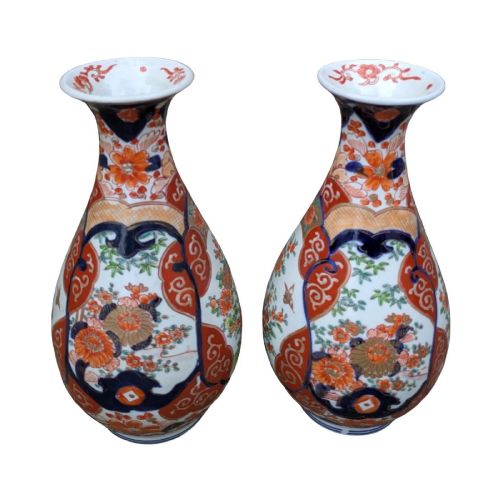
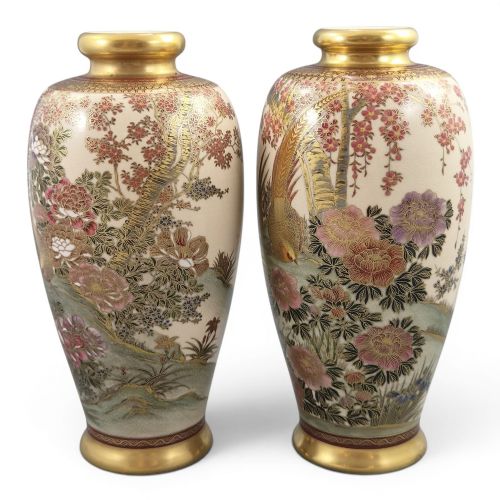
The selection encompasses distinct decorative traditions, most notably the cobalt and iron-red palettes of Imari wares, the dense polychrome enamels and gilding of Satsuma earthenwares, and the pictorial scenes found on Kutani pieces. Buyers frequently encounter forms adapted into table lamps alongside traditional lidded jars and floor-standing vessels.
Production origins extend across prominent Japanese ceramic centres such as Kyoto, Arita, and Satsuma province, occasionally including European interpretations from the nineteenth century. Surviving examples range from intimate domestic cabinet pieces to monumental display items measuring over fifty centimetres in height.
Craft and Material
Potters shaped ceramic bodies by hand or on the wheel using refined porcelain clay or local earthenwares, frequently pairing vessels with matching ceramic stands or wooden components. Artisans then applied underglaze blue pigments or prepared surfaces to receive elaborate overglaze enamel compositions.
Gilding and raised gold leaf formed a central part of the decoration, accentuating panel borders, floral motifs, and figurative scenes. Kiln firings set these mineral colours, after which select workshops added final details in lacquer or supplementary enamel layers.
A few unexpected pairs arrive with their original porcelain stands, proving that even nineteenth-century vases appreciated a supportive platform.
Factors of Quality
The precision of the painted brushwork dictates the visual success of the surface, distinguishing rapid commercial output from the controlled output of named Kyoto studios and exhibition workshops. Finer pieces demonstrate meticulous control in fine line work and facial expressions within figurative narrative panels.
The application and preservation of heavy gilding indicate the original grade of manufacture, where high-karat gold leaf remains bright and sharply defined without rubbing. Structural integrity, including the survival of original matching covers on jars and urns, elevates the standing of any matching pair.
Manpei·Kinkozan·Kato Sanhei·Tagawa·Hododa·Tashiro
The Pair Japanese Porcelain Vases Glossary
- Imari
- A style of Japanese porcelain originating from Arita, decorated in underglaze blue, iron red, and gilt. The palette traditionally combines deep cobalt tones with warm metallic accents.
- Satsuma
- A type of earthenware with a crackled ivory glaze, typically decorated with dense polychrome enamels and extensive gilding. Satsuma pieces frequently depict figures, landscapes, or floral arrangements.
- Kutani
- Japanese porcelain known for bold overglaze enamel decoration, particularly utilising rich greens, blues, purples, and yellows. Kutani motifs often incorporate pictorial scenes and nature studies.
- Baluster
- A vase form characterised by a rounded body that tapers toward the base and swells near the lower centre. This shape provides a stable and traditional silhouette for symmetrical pairs.
- Meiji Period
- The era in Japanese history spanning from 1868 to 1912, marked by significant artistic production directed toward international export markets. Work from this period includes highly detailed enamel and gilt decoration.
Pair Japanese Porcelain Vases: Frequently Asked Questions
How were these vases displayed in period interiors?
Historically, matched pairs flanked mantelpieces, cabinets, or console tables to create balanced focal points within formal rooms. Their symmetry suited the architectural framing of nineteenth-century reception spaces.
Larger floor-standing examples occupied entrance halls or corners, while smaller lidded jars and bottle shapes sat upon dedicated stands or furniture surfaces as decorative centrepieces.
Can these vases be safely used as lamps?
Many surviving examples were fitted with electrical components during the Edwardian period or later to adapt them for functional domestic lighting. These conversions allowed households to retain antique decorative elements while meeting modern illumination needs.
Buyers should examine how any wiring was installed to ensure the ceramic body remains unaltered and undamaged by the fitting process.
How do I distinguish Satsuma from Imari?
Satsuma wares are constructed from earthenware with an ivory-coloured, finely crackled glaze beneath dense enamel and gold decoration. They typically feature figurative scenes, court processions, or complex floral panels.
Imari wares are true porcelain featuring a resonant white body decorated in cobalt blue and iron red, often enhanced with sparse gilding and geometric or botanical patterns.
What indicates a true matching pair?
True pairs share identical dimensions, weight distributions, and hand-painted motifs that mirror or complement one another across both vessels. Artisans executed matching pieces concurrently to ensure uniform kiln results and brushwork style.
Slight variations in height or pigment tone often confirm hand production rather than industrial duplication, provided the overall composition remains balanced.