





Ceramic Temple Jars
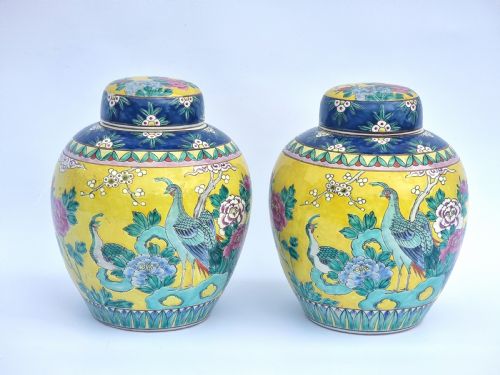
Ceramic temple jars are large lidded vessels originating from Asian traditions, prized by collectors for their striking hand-painted decoration and robust scale.
Ceramic Temple Jars
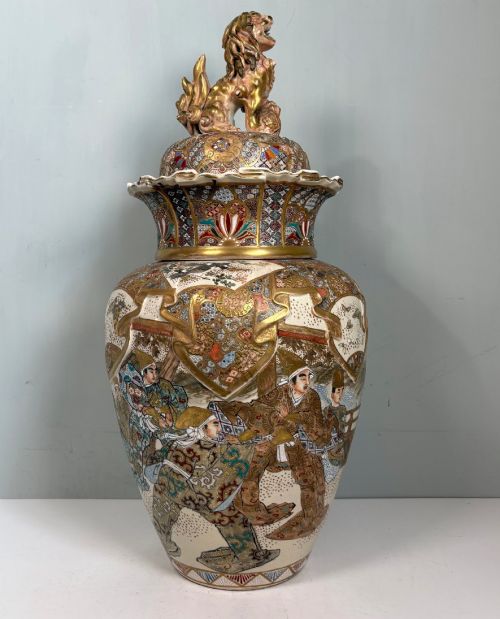
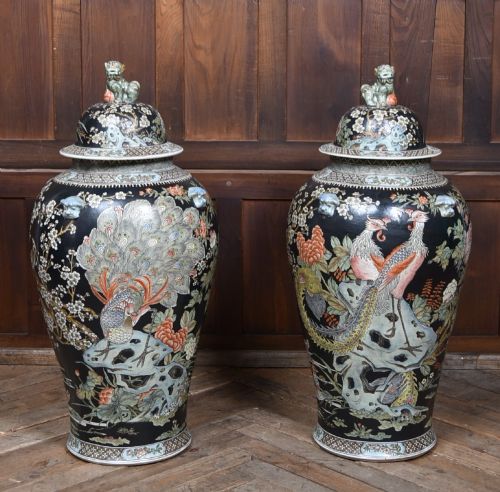
Ceramic temple jars encompass large lidded vases, ginger jars, and floor urns originating from Chinese and Japanese traditions across the seventeenth, eighteenth, nineteenth, and twentieth centuries. These vessels often take the form of baluster or ovid jars, sometimes adapted into table lamps or paired with wooden stands and ormolu mounts.
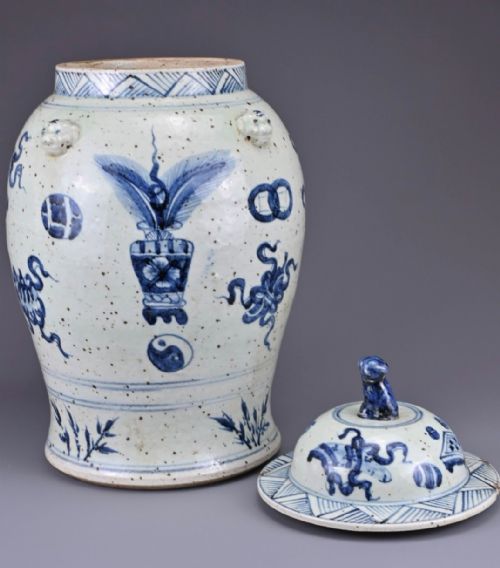
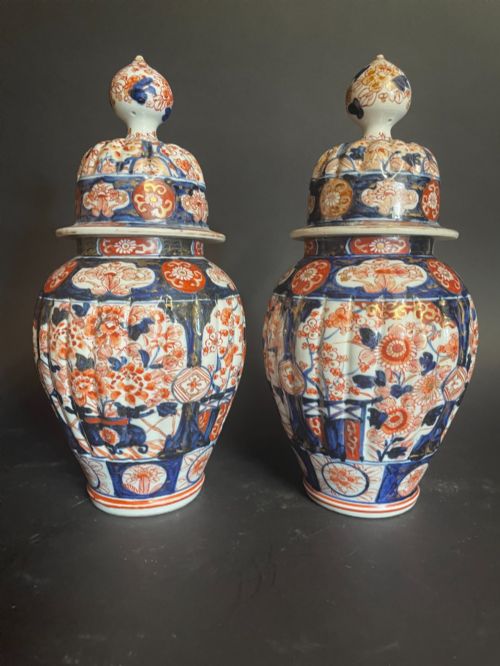
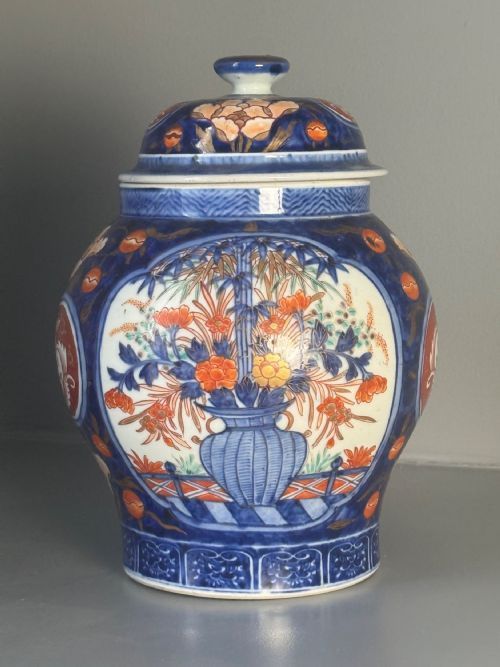
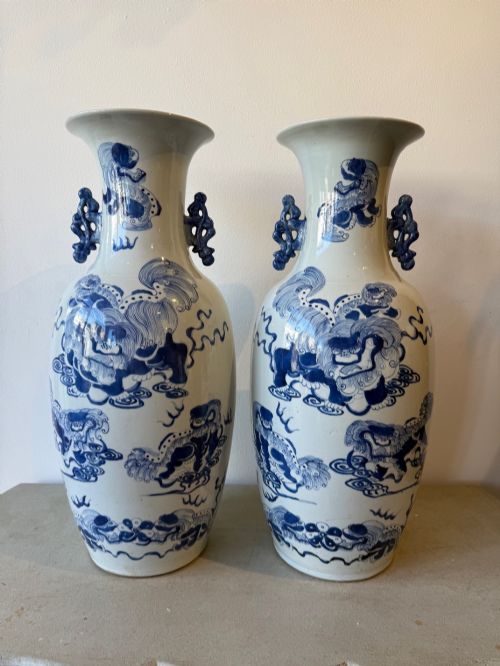
The versions most frequently met on this page include nineteenth-century Japanese Imari lidded jars and Chinese blue and white porcelain vases spanning the Qing Dynasty. Collectors also encounter Satsuma and Kutani wares, alongside European interpretations such as French decorative pieces and Samson reproductions executed in historic Asian palettes.
Materials and methods
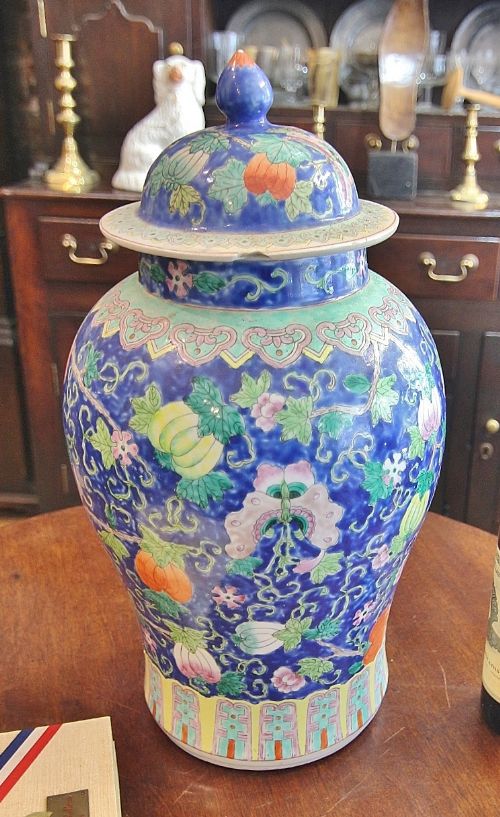
Potters constructed these vessels from porcelain, earthenware, and ironstone, shaping them into substantial forms designed to hold dry goods or serve purely decorative purposes. Surface decoration relies heavily on cobalt blue underglaze, polychrome enamels, and highlights of gold leaf, gilt, and gilding.
Firing took place in high-temperature kilns, after which artisans applied intricate hand-painted motifs ranging from traditional landscapes and floral sprays to dragons and figural scenes. Glazes were then fused to the ceramic body, sealing the pigments and providing the smooth exterior finish typical of these jars.
Some nineteenth-century jars moonlight as table lamps, proving that even a dignified temple jar appreciates a practical second career.
Distinctions in quality
Quality rests in the precision and depth of the hand-painted brushwork, where finer examples display disciplined line work and harmonious colour palettes rather than hurried execution. The weight, symmetry, and potting standard of the ceramic body itself dictate the piece's structural integrity.
The presence of intact, matching lids and original covers greatly elevates a jar's standing, as many surviving bodies lost their tops over centuries of domestic use. Additionally, the subtlety of the glaze and the careful application of gilding distinguish master workshops from mass production.
Yamashu·Samson·Masons Ironstone
The Ceramic Temple Jars Glossary
- Imari
- A style of Japanese porcelain originating in Arita, typically decorated in underglaze blue, iron red, and gilt. It gained immense popularity in Europe during the Edo period.
- Baluster
- A vase or jar form characterised by a swelling lower body that tapers towards a narrow neck and flares slightly at the rim. This shape provides stability and visual balance.
- Garniture
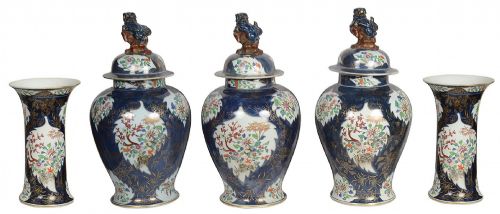
- A set of three or more matching vases or jars displayed together on a mantelpiece or cabinet top. These sets were popular in grand interiors from the seventeenth century onward.
- Doucai
- A Chinese porcelain technique involving underglaze blue outlines filled in with contrasting overglaze enamels. The method requires multiple kiln firings to achieve its distinct appearance.
- Ors
- Ormolu mounts. Gilded bronze ornamentation applied to the base or rim of a ceramic vessel, often seen on pieces adapted in Europe during the nineteenth century.
Ceramic Temple Jars: Frequently Asked Questions
How were ceramic temple jars used historically?
These vessels originally served practical functions for storing spices, medicines, or dry goods in domestic and ceremonial settings. Over time, particularly in Western export markets, they transitioned into purely decorative objects used to punctuate grand interiors.
Pairs or garnitures were often placed upon mantelpieces, tables, or specialised wooden stands to demonstrate household wealth and an appreciation for Asian craftsmanship.
How can I distinguish Japanese Imari from Chinese blue and white?
Japanese Imari porcelain is easily recognised by its distinct palette combining underglaze cobalt blue with vibrant iron red and supplementary gold leaf or gilt highlights. The clay body and painting style reflect traditions originating from Arita during the Edo period.
In contrast, Chinese blue and white jars rely exclusively on cobalt pigments beneath a clear glaze, focusing on botanical, dragon, or landscape motifs developed extensively during the Qing Dynasty.
Are these jars always sold with their original covers?
Many surviving jars have lost their matching lids over centuries of handling, cleaning, and relocation. When a jar retains its original, period-correct cover, its collectible standing increases significantly.
Listings often specify whether a lid is present or if the piece is offered strictly as an open vase.
How do I care for antique ceramic jars at home?
These pieces require gentle maintenance, utilising a soft, dry cloth to remove dust from the glazed surface and painted details. Avoid using liquid cleaners or chemical agents, especially on pieces featuring delicate gold leaf or overglaze enamel highlights.
Position the jars away from direct sunlight and areas prone to sudden temperature changes to protect both the ceramic body and any historic wooden mounts.